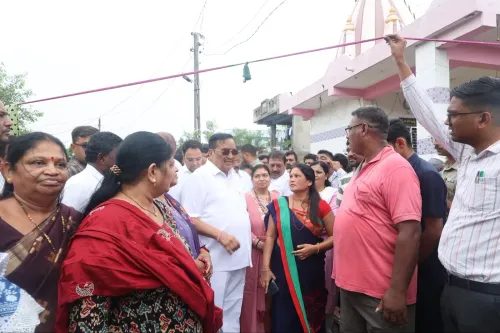
Jal Shakti Minister Paatil: BISAG Tech Drives Nal Se Jal in 700+ Districts

Synopsis
Union Jal Shakti Minister C. R. Paatil says BISAG's advanced satellite and geo-informatics tools have powered precise inspections across more than 700 districts, giving new momentum to the Nal Se Jal mission to deliver piped clean water to every rural household in India.
Key Takeaways
Paatil , Union Minister of Jal Shakti, credited BISAG technology with enabling precise inspections across more than 700 districts under the Nal Se Jal mission.
BISAG — the Bhaskaracharya Institute for Space Applications and Geo-informatics — is a Gujarat -based autonomous institute specialising in satellite and geo-spatial tools for government use.
The Jal Jeevan Mission , launched in August 2019 , aims to provide functional piped tap-water connections to every rural household in India.
The deployment of BISAG's tools at national scale is part of a broader Digital India push for real-time, satellite-verified monitoring of welfare infrastructure programmes.
Primary beneficiaries are rural households ; state water departments and the Ministry of Jal Shakti gain improved accountability data from the inspections.
Quarterly JJM coverage reports and potential formal agreements extending BISAG support to other schemes are the key developments to watch.
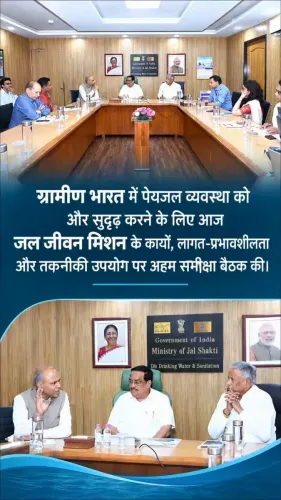
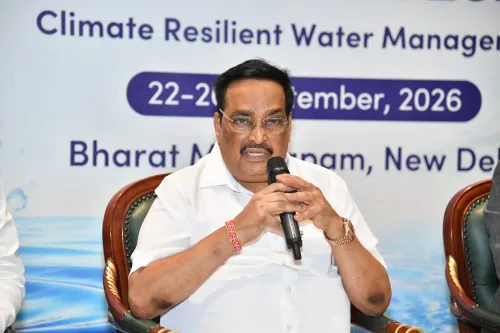
Union Jal Shakti Minister C. R. Paatil on Monday, June 8, 2026, credited advanced geo-informatics technology from BISAG with enabling precise inspections across more than 700 districts, saying the exercise has given fresh momentum to the Nal Se Jal mission to deliver piped tap water to every household.
Context
Posting in Hindi on X, Minister Paatil wrote: 'BISAG ki unnat takneek se 700 se adhik zilon mein satik nirikshan ne Nal Se Jal abhiyan ko nayi gati di hai' — 'Advanced technology from BISAG has lent new momentum to the Nal Se Jal campaign through precise inspections across more than 700 districts.' He added that the resolve to deliver clean water to every home has been strengthened through the coordination of technology, transparency and public service.
BISAG, the Bhaskaracharya Institute for Space Applications and Geo-informatics, is a Gujarat-based autonomous institute that develops satellite and geo-spatial tools for government monitoring programmes. Its deployment for a central welfare scheme signals an expanding role for state-level scientific institutions in national infrastructure delivery.
Policy Backdrop
The Jal Jeevan Mission (JJM), launched in August 2019, set out to provide functional household tap connections — nal se jal — to every rural household in India. The scheme, also widely referred to as the Nal Se Jal Abhiyan, has relied on geo-tagged dashboards and field verification to track physical progress and check inflated reporting.
Central ministries have progressively expanded the use of GIS and satellite-based monitoring to verify ground-level outcomes in large welfare infrastructure programmes. This trend is part of the broader Digital India push for real-time data transparency across sectors including drinking water, sanitation and rural development. Deploying BISAG's geo-informatics capacity at the district level is consistent with that pattern.
Stakeholders and Impact
The primary beneficiaries of the Jal Jeevan Mission are rural households across India, many of which historically depended on distant or contaminated water sources. Accurate district-level inspections help ensure that reported connections translate into actual, functioning supply — closing the gap between data and delivery.
State water departments are the implementing partners and stand to benefit from BISAG-generated field intelligence that can flag gaps, redirect resources and reduce leakages in project execution. For the Ministry of Jal Shakti, satellite-verified coverage data strengthens accountability reporting to Parliament and to the public.
What's Next
Attention will now turn to the Ministry of Jal Shakti's quarterly JJM coverage reports, which are expected to reflect the inspection findings across the 700-plus districts. Any formal agreements extending BISAG-type geo-informatics support to other centrally sponsored schemes will be a key indicator of how widely this monitoring model is adopted.
Minister Paatil's post suggests the government views technology-driven transparency as central to the mission's final push. Whether the inspection data translates into accelerated connections on the ground will be the measure by which the initiative is ultimately judged.
Point of View
Satellite-verified field inspection in its flagship water mission — a shift that addresses longstanding credibility concerns about JJM coverage figures. Deploying a Gujarat-based institute like BISAG for a national programme also reflects the Centre's comfort with leveraging state-level scientific infrastructure as it scales Digital India's monitoring ambitions. The emphasis on 'technology, transparency and public service' in a single post is calibrated messaging ahead of what will be scrutinised quarterly reporting. If the inspection data holds up, it could become a template for GIS-backed accountability across other large welfare schemes.
NationPress
23 Oct 2026
Frequently Asked Questions
What is BISAG and why is it being used for Jal Jeevan Mission?
BISAG, the Bhaskaracharya Institute for Space Applications and Geo-informatics, is a Gujarat-based autonomous institute that develops satellite and geo-spatial tools for government monitoring. It is being used to conduct precise, technology-driven inspections of Jal Jeevan Mission progress across districts to improve transparency and verify ground-level outcomes.
What is the Nal Se Jal mission or Jal Jeevan Mission?
The Jal Jeevan Mission, also called Nal Se Jal Abhiyan, is a flagship central government scheme launched in August 2019 to provide functional piped tap-water connections to every rural household in India.
How many districts has BISAG inspected under the Nal Se Jal campaign?
Union Jal Shakti Minister C. R. Paatil stated that BISAG's advanced technology has enabled precise inspections across more than 700 districts as part of the Nal Se Jal campaign.
Who is C. R. Paatil and what ministry does he head?
C. R. Paatil is a senior BJP leader and former president of the BJP Gujarat state unit who currently serves as Union Minister of Jal Shakti in the central government.
How does satellite technology help in monitoring water supply schemes in India?
Satellite and GIS-based tools allow central and state agencies to geo-tag infrastructure, verify physical progress independently, and reduce inflated reporting in large welfare programmes such as the Jal Jeevan Mission — forming a key part of the Digital India transparency push.