CR Paatil Congratulates Newly Appointed Teams of 8 Gujarat Municipal Corporations
Synopsis
Union Jal Shakti Minister C. R. Paatil on 27 May 2026 congratulated newly appointed teams of eight Gujarat municipal corporations — including Ahmedabad, Jamnagar and Porbandar — calling for citizen-centric governance, transparency and public welfare as the guiding principles of their tenures.
Key Takeaways
Paatil , Union Jal Shakti Minister and former Gujarat BJP state president, congratulated newly appointed teams of eight Gujarat municipal corporations on 27 May 2026 .
The eight corporations are Ahmedabad, Navsari, Gandhidham, Morbi, Jamnagar, Mehsana, Nadiad and Porbandar .
Paatil called for urban development driven by good governance, public facilities, cleanliness and transparency .
The message aligns local governance expectations with national schemes including Swachh Bharat Mission and AMRUT .
The BJP has governed Gujarat continuously since 1995 and controls most of the state's municipal corporations.
Rollout of AMRUT 2.0 projects and upcoming Swachh Bharat rankings will be the first measurable test for the new teams.
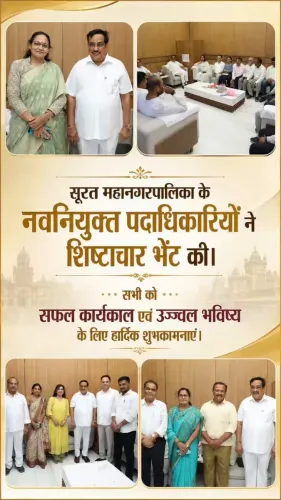
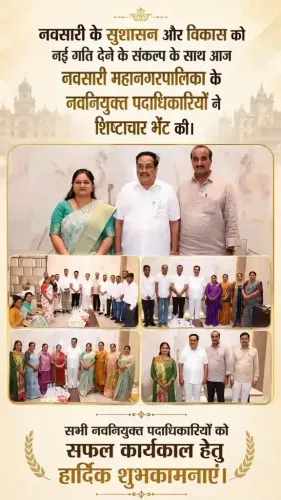
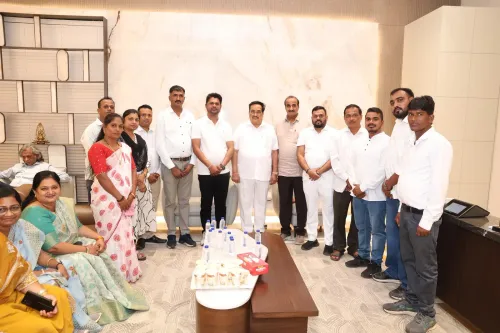
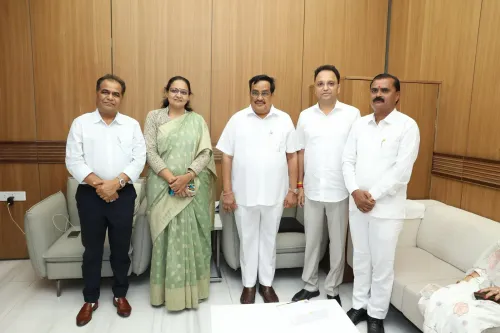
Union Jal Shakti Minister C. R. Paatil on Wednesday, 27 May 2026 extended congratulations to the newly appointed teams of eight Gujarat municipal corporations, calling on them to advance citizen-centric urban development rooted in good governance, public amenities, cleanliness and transparency.
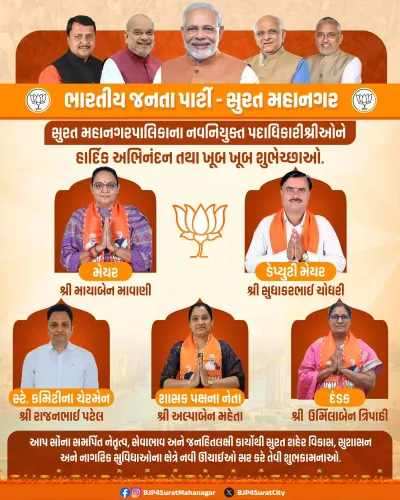
Writing in Gujarati, Paatil addressed the newly constituted bodies of Ahmedabad, Navsari, Gandhidham, Morbi, Jamnagar, Mehsana, Nadiad and Porbandar municipal corporations. 'શહેરનો નાગરિકકેન્દ્રિત વિકાસ સુશાસન, જનસુવિધાઓ, સ્વચ્છતા, પારદર્શિતાથી આગળ વધે છે' — ('Citizen-centric urban development advances through good governance, public facilities, cleanliness and transparency') — he wrote, setting out the benchmarks he expects the new teams to meet.
Context
The post follows fresh administrative appointments across the eight corporations. Paatil, a senior BJP leader and former Gujarat BJP state president, expressed hope that urban development would gain 'new direction' under the leadership of the incoming teams and that 'public aspirations' would be realised through welfare-oriented work.
He also prayed that the new teams' tenures would be 'distinguished by development-oriented decisions, public-welfare work and efforts that further strengthen public trust.'
Policy Backdrop
The language Paatil deployed — transparency, jan-suvidha (public facilities), sushasan (good governance) — directly echoes the priorities of two flagship central programmes. The Swachh Bharat Mission, launched in 2014, established national benchmarks for urban sanitation and waste management. AMRUT (Atal Mission for Rejuvenation and Urban Transformation), launched in 2015, channels central funds into water supply, sewerage and urban infrastructure in selected cities, several of which are on Paatil's list.
The 74th Constitutional Amendment of 1992 had earlier devolved powers to urban local bodies for water supply, sanitation and urban planning — functions that remain central to municipal performance assessments today.
Stakeholders and Impact
The eight corporations together serve millions of urban residents across Gujarat, from the commercial capital Ahmedabad to port cities such as Jamnagar and Gandhidham and smaller industrial and heritage towns such as Morbi and Porbandar. Civic services — water supply, sanitation, road maintenance and waste collection — are the primary interface between these bodies and ordinary citizens.
Central ministers from Gujarat routinely issue such public messages to newly constituted municipal bodies, a practice that reinforces alignment between city-level priorities and centrally sponsored schemes while signalling party discipline within BJP-governed urban Gujarat.
What's Next
Attention will now turn to the rollout of AMRUT 2.0 projects and Swachh Bharat Mission rankings for the eight corporations in the coming fiscal year. Any state government notifications formalising mayoral or standing-committee appointments will also be closely watched. The new teams' early decisions on infrastructure spending and service delivery will be the first test of the governance standards Paatil publicly outlined.
Point of View
Cleanliness and citizen service before they have taken a single formal decision. Coming from a former Gujarat BJP state president who retains deep influence in the state's urban political machinery, the statement carries implicit expectations of policy continuity with central schemes such as AMRUT 2.0 and Swachh Bharat. The choice to address all eight corporations in a single post, rather than individually, also signals a unified accountability standard being set from the top. Analysts will watch whether the new teams' early budgetary and infrastructure decisions reflect these stated priorities or diverge from them.
NationPress
20 Sept 2026
Frequently Asked Questions
Which municipal corporations did CR Paatil congratulate in May 2026?
CR Paatil congratulated the newly appointed teams of eight Gujarat municipal corporations: Ahmedabad, Navsari, Gandhidham, Morbi, Jamnagar, Mehsana, Nadiad and Porbandar.
What is CR Paatil's current position in the government?
C. R. Paatil is the Union Minister of Jal Shakti in the Government of India and is a senior BJP leader who previously served as Gujarat BJP state president.
What governance priorities did CR Paatil set out for the new municipal teams?
Paatil called on the new teams to advance citizen-centric urban development through good governance, public facilities, cleanliness, transparency, development-oriented decisions and public-welfare work.
What central schemes are relevant to Gujarat municipal corporations?
The Swachh Bharat Mission (2014) and AMRUT — Atal Mission for Rejuvenation and Urban Transformation (2015) — are the two primary central schemes that set benchmarks for cleanliness, water supply, sewerage and urban infrastructure in Gujarat's municipal corporations.
How long has the BJP governed Gujarat's municipal corporations?
The BJP has governed Gujarat continuously since 1995 and controls most of the state's municipal corporations, making it the dominant force in urban local body politics across the state.