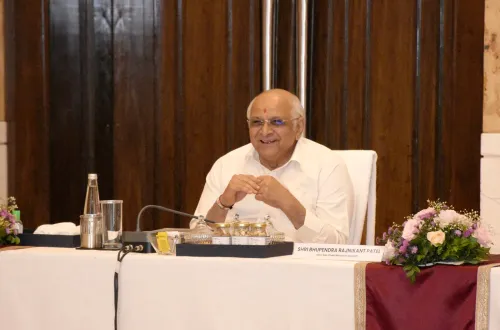
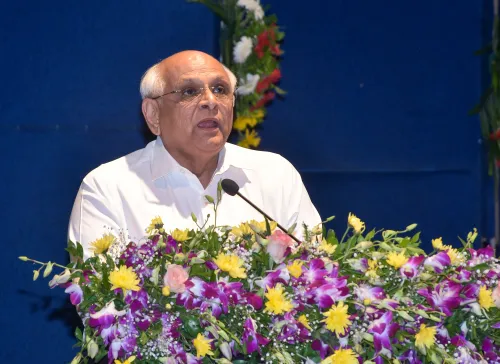
CM Bhupendra Patel allots free land to 9 new Gujarat corporations
Synopsis
Gujarat CM Bhupendra Patel has ordered free government land allotment to nine newly formed municipal corporations — including Vapi, Mehsana and Morbi — for building 11 categories of civic infrastructure such as STPs, WTPs, fire stations and town halls over five years.
Key Takeaways
Nine new municipal corporations — Vapi, Mehsana, Porbandar, Morbi, Gandhidham, Nadiad, Anand, Navsari and Surendranagar — will receive free government land.
The allotment covers 11 categories of essential civic infrastructure including STP, WTP, fire stations, underground drainage and town halls.
The free land window spans five years , giving corporations time to plan, tender and build facilities.
The decision removes a key financial barrier for newly upgraded bodies that lack reserves to acquire land at market rates.
The policy aligns with the AMRUT and AMRUT 2.0 missions and the 74th Constitutional Amendment mandate for empowered urban local bodies.
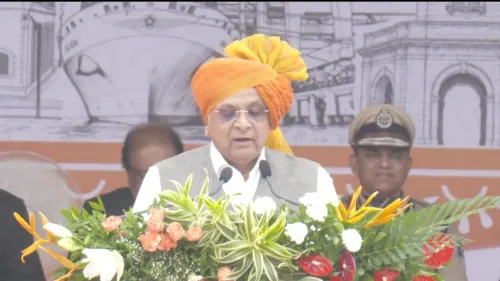
CM Bhupendra Patel framed the move as a direct measure to deliver quality urban services quickly to residents of growing tier-2 cities.
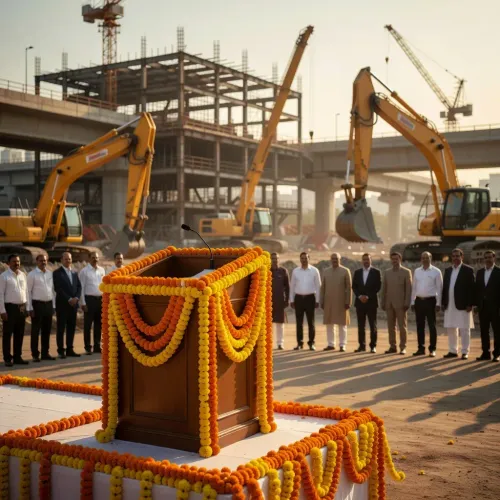
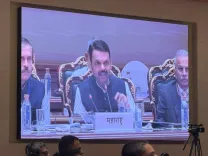
Gujarat Chief Minister Bhupendra Patel on Friday, 10 July 2026 announced a significant decision to allot government land free of cost to the state's nine newly formed municipal corporations — Vapi, Mehsana, Porbandar, Morbi, Gandhidham, Nadiad, Anand, Navsari and Surendranagar — enabling them to build essential civic infrastructure over the next five years.
Context
Posting in Gujarati on X, CM Patel said the decision was taken so that residents of the newly constituted corporations receive quality facilities quickly. He wrote: 'ગુણવત્તાસભર સુવિધાઓ ઝડપથી ઉપલબ્ધ થાય' — 'quality facilities are made available quickly' — framing the land allotment as a direct enabler of faster urban development in these towns.
The nine cities were upgraded from municipalities to full municipal corporations by the Gujarat cabinet to decentralise urban administration and match the industrial expansion and population growth seen in these tier-2 centres. Vapi, a major industrial hub in south Gujarat, and Mehsana, a dairy and engineering city in the north, are among the most prominent beneficiaries.
Policy Backdrop
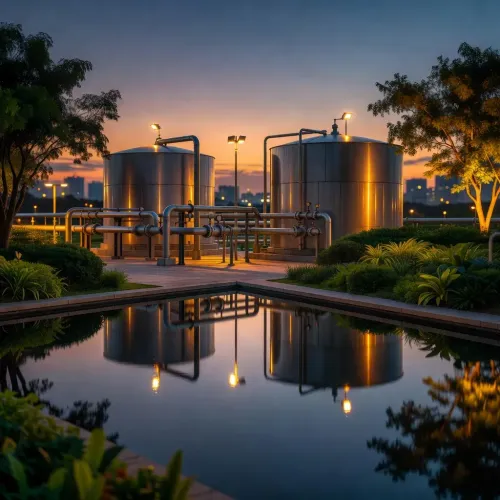
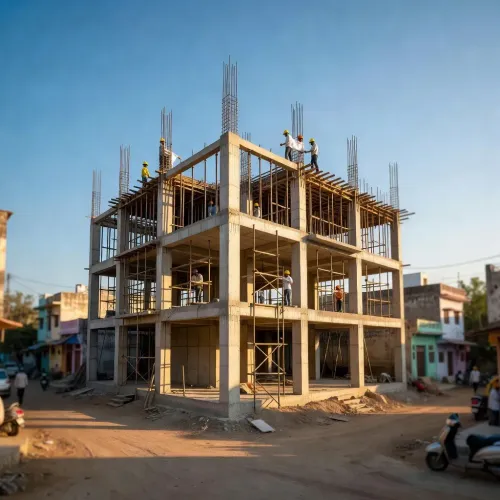
Under the decision, the corporations will receive government land at no cost for up to 11 categories of essential public-interest services. These include a Nagar Sevasadan (civic services building), fire station, Sewage Treatment Plant (STP), Water Treatment Plant (WTP), underground sewerage and drainage, pumping stations, water supply projects, solid and liquid waste management plants, storm water drainage works, Balwadi (Anganwadi) centres, and town halls, community halls and convention centres.
The move aligns with the spirit of the 74th Constitutional Amendment, which mandates empowered urban local bodies capable of delivering civic services independently. It also complements the AMRUT and AMRUT 2.0 missions — central urban infrastructure schemes active in Gujarat since 2015 — which fund water supply, sewerage and waste management projects in growing cities.
Stakeholders and Impact
The most direct beneficiaries are the residents of the nine newly upgraded urban areas, who have so far lacked the full range of civic amenities that older, established corporations provide. Free land allotment removes a critical bottleneck: newly formed corporations typically lack the financial reserves to acquire land at market rates before they can even begin construction of core facilities.
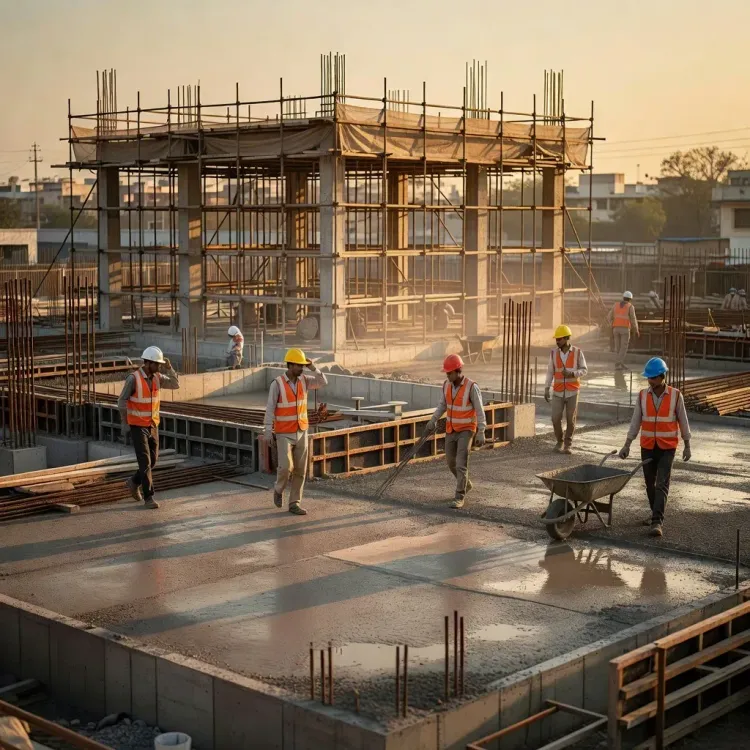
The decision is also consequential for the corporations themselves, which now have a five-year window to identify land parcels, complete tendering and commence construction of infrastructure such as STPs, WTPs and drainage networks — facilities that directly affect public health and environmental compliance in rapidly urbanising towns.
What's Next
Attention will now shift to the speed of tendering and physical execution of projects — particularly sewage treatment plants, water treatment plants and storm water drainage — within the five-year allotment window. Any supplementary state budget provisions to fund construction costs beyond the land component will be closely watched. The pace at which these nine corporations operationalise their new infrastructure will serve as a benchmark for Gujarat's broader urban governance model, and could inform similar decisions for other towns approaching corporation-level population thresholds.
Point of View
And removing that barrier accelerates the entire project pipeline. For CM Bhupendra Patel, it is also a low-cost, high-visibility move that signals proactive urban governance ahead of any local body elections in these towns. Placed alongside AMRUT 2.0 funding, the decision creates a two-layer support system — central money for construction, state land for the site — that could meaningfully compress timelines. The real test, however, will be whether tendering and execution keep pace with the five-year window, or whether the allotment becomes a paper benefit that corporations struggle to convert into brick-and-mortar infrastructure.
NationPress
9 Oct 2026
Frequently Asked Questions
Which 9 new municipal corporations will get free land in Gujarat?
The nine newly formed municipal corporations that will receive free government land are Vapi, Mehsana, Porbandar, Morbi, Gandhidham, Nadiad, Anand, Navsari and Surendranagar.
What facilities will be built on the free land allotted to Gujarat corporations?
The land can be used for 11 categories of civic infrastructure including a Nagar Sevasadan, fire station, Sewage Treatment Plant (STP), Water Treatment Plant (WTP), underground sewerage and drainage, pumping stations, water supply projects, solid and liquid waste management plants, storm water drainage, Anganwadi centres, and town halls or convention centres.
For how many years will the free land allotment be available to these corporations?
The free government land allotment is available for a period of five years, during which the corporations must identify land and undertake the construction of required civic facilities.
Why were these nine cities upgraded to municipal corporations in Gujarat?
The Gujarat cabinet upgraded these nine cities from municipalities to municipal corporations to decentralise urban administration and better match the industrial expansion and population growth occurring in these tier-2 cities.
How does this Gujarat decision relate to the AMRUT scheme?
The decision complements the AMRUT and AMRUT 2.0 central missions, which have been active in Gujarat since 2015 to fund water supply, sewerage and waste management projects. The state's free land allotment provides the sites on which AMRUT-funded infrastructure can be built.