Jal Shakti Minister Paatil: Indus Treaty waters to ease shortage in north India
Synopsis
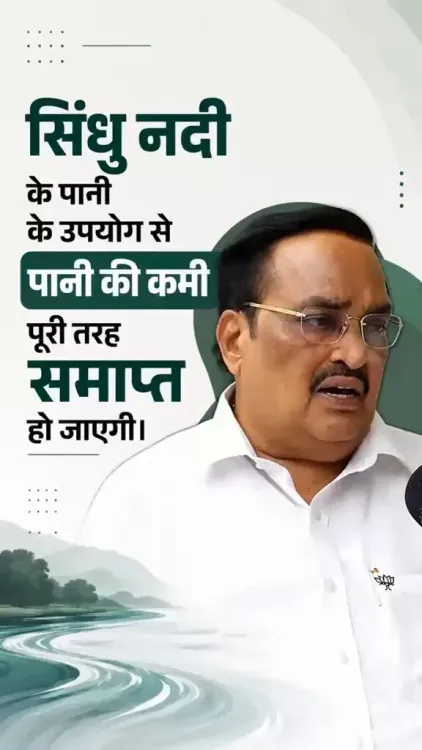
Union Jal Shakti Minister C. R. Paatil has stated that India is ensuring judicious use of its Indus Waters Treaty entitlement to increase water availability in Punjab, Haryana, Rajasthan, and Delhi, framing it as a step towards permanently resolving water scarcity in northern states under PM Modi's leadership.
Key Takeaways
Union Jal Shakti Minister C.
Paatil posted on 10 June 2026 that India is maximising use of its allocated share under the Indus Waters Treaty of 1960 .
The stated beneficiary states are Punjab, Haryana, Rajasthan, and Delhi , all heavily dependent on Indus tributary systems.
The government's approach focuses on utilising India's eastern river entitlements — Ravi, Beas, and Sutlej — within treaty provisions rather than seeking abrogation.
Infrastructure such as the Shahpur Kandi dam on the Ravi river forms part of the policy framework to channel treaty-allocated water domestically.
The Ministry of Jal Shakti , formed in 2019 , was specifically designed to consolidate water governance and accelerate such projects.
The minister linked the water utilisation push directly to PM Narendra Modi 's leadership and the government's commitment to fulfilling public aspirations.
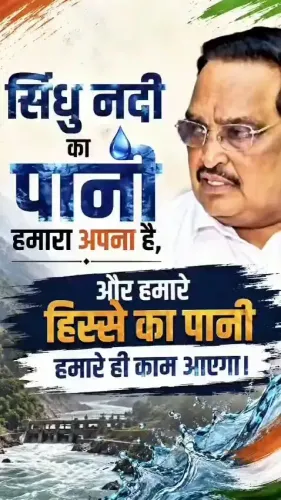
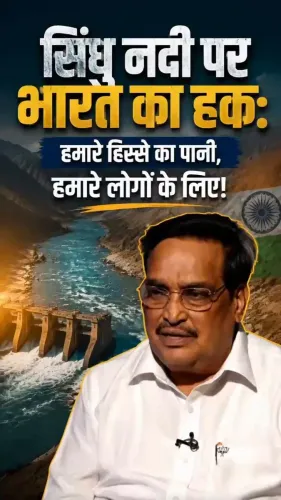
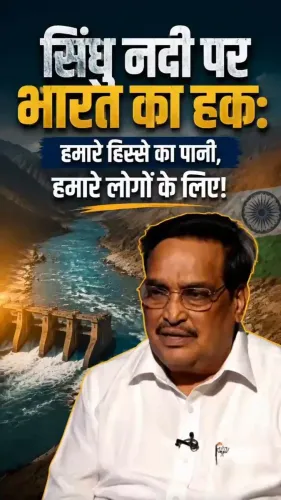
Union Jal Shakti Minister C. R. Paatil on Wednesday, 10 June 2026 stated that the government is ensuring the judicious use of India's allocated share of water under the Indus Waters Treaty, with the aim of improving water availability in Punjab, Haryana, Rajasthan, and Delhi and providing a permanent solution to water scarcity in these states.
Context
Posting in Hindi on X, Minister Paatil wrote: 'सिंधु जल समझौते के अंतर्गत हमारे हिस्से के पानी का विवेकपूर्ण उपयोग सुनिश्चित किया जा रहा है' ('Judicious use of our share of water under the Indus Waters Treaty is being ensured'), adding that this would increase water availability and permanently resolve shortages in states such as Punjab, Haryana, Rajasthan, and Delhi. He framed the effort as part of the government's continuous work to fulfil public aspirations under Prime Minister Narendra Modi's leadership.
The minister's statement signals a policy emphasis on maximising India's domestic entitlements under the 1960 Indus Waters Treaty rather than seeking formal renegotiation or abrogation of the agreement.
Policy Backdrop
The Indus Waters Treaty, brokered by the World Bank in 1960, allocates the three eastern rivers — Ravi, Beas, and Sutlej — fully to India, while the three western rivers are primarily allocated to Pakistan. India has historically utilised only a portion of its eastern river entitlement, leaving significant water flows unused.
Following the 2016 Uri attack, the government publicly committed to reviewing the treaty and accelerating projects to use India's full eastern river share. The Ministry of Jal Shakti, formed in May 2019 by merging the water resources and drinking water departments, was established in part to consolidate this national water governance mandate. The Shahpur Kandi dam project on the Ravi river, which channels water to Punjab and Jammu and Kashmir, is among the key infrastructure works advanced under this framework.
Northern India faces compounding water stress: groundwater depletion in the Indo-Gangetic plain and growing urban demand in cities such as Delhi have made fuller utilisation of surface water entitlements a priority for central planners.
Stakeholders and Impact
The states named by Minister Paatil — Punjab, Haryana, Rajasthan, and Delhi — together account for a substantial share of India's agricultural output and a combined urban population running into several crore. Farmers in these states depend heavily on canal systems fed by Indus tributaries for kharif and rabi irrigation cycles.
Households in Delhi and secondary cities in Haryana and Rajasthan face seasonal drinking water shortfalls that the government has linked to inadequate surface water storage and distribution infrastructure. Any increase in canal flow from eastern river projects would directly affect both agricultural productivity and municipal water supply in these regions.
What's Next
The government's stated goal of a 'permanent solution' to water scarcity will be tested against the completion timelines of ongoing dam, canal, and hydropower projects on India's eastern river allocations. Observers will watch for formal project commissioning announcements, as well as any communications between India, Pakistan, and the World Bank regarding project clearances under treaty provisions. Minister Paatil's post suggests that water resource utilisation under the treaty will remain a visible political and policy priority for the BJP-led government in the period ahead.
Point of View
Which carries diplomatic risk. By naming four specific states, the messaging is calibrated for a northern electorate that consistently ranks water access as a governance priority. The framing under PM Modi's leadership also positions water security as a BJP governance achievement ahead of state electoral cycles in the region. This fits a broader pattern in which the Ministry of Jal Shakti serves as a vehicle for converting national resource-security rhetoric into state-level political dividends.
NationPress
21 Sept 2026
Frequently Asked Questions
What is the Indus Waters Treaty and what is India's share?
The Indus Waters Treaty, signed in 1960 between India and Pakistan with World Bank mediation, gives India full rights over the three eastern rivers — Ravi, Beas, and Sutlej — while Pakistan receives primary rights over the three western rivers. India has historically used only part of its eastern river entitlement.
Which states will benefit from India using its Indus Waters Treaty share?
Minister Paatil specifically named Punjab, Haryana, Rajasthan, and Delhi as the states that will see improved water availability as India ensures fuller use of its treaty-allocated share.
What is the Shahpur Kandi dam project?
The Shahpur Kandi dam is a hydropower and irrigation project on the Ravi river in Punjab, designed to utilise India's eastern river allocation under the Indus Waters Treaty and supply water to Punjab and Jammu and Kashmir .
What is the Ministry of Jal Shakti?
The Ministry of Jal Shakti was formed in May 2019 by merging the water resources ministry and the drinking water and sanitation ministry, with a mandate to coordinate river development, irrigation, and treaty implementation under a single authority.
Has India threatened to withdraw from the Indus Waters Treaty?
India has not formally abrogated the treaty. After the 2016 Uri attack , the government stated it would review the agreement and maximise use of India's allocated waters, but subsequent policy action has focused on building domestic infrastructure within treaty provisions.