Jal Shakti Minister Paatil asserts India's rights on Indus River
Synopsis
Union Jal Shakti Minister C. R. Paatil has publicly asserted India's sovereign right to its share of the Indus River's waters, declaring they must serve Indian people. The statement reinforces India's long-standing position on full utilisation of its Indus Waters Treaty entitlements amid ongoing bilateral tensions with Pakistan over water use.
Key Takeaways
Paatil , Union Minister of Jal Shakti, posted on June 9, 2026 asserting India's right to its share of Indus River water for its own people.
The Indus Waters Treaty (1960) allocated the three eastern rivers to India and the three western rivers primarily to Pakistan, with India retaining limited rights on the western rivers.
India has historically maintained it has not fully utilised its treaty entitlement due to infrastructure gaps, particularly in Jammu and Kashmir .
The Jal Shakti Ministry is the nodal body overseeing treaty-linked hydroelectric and irrigation projects on the western rivers within India's permitted limits.
The statement comes amid ongoing disputes at international arbitration bodies over India's hydroelectric projects on western rivers, to which Pakistan has raised objections.
The Permanent Indus Commission remains the key bilateral mechanism for resolving technical disputes under the treaty.
Union Jal Shakti Minister C. R. Paatil on Tuesday, June 9, 2026, posted a pointed assertion on X declaring India's sovereign claim over its share of the waters of the Indus River, stating that the water belonging to India must be used for the benefit of its own people.
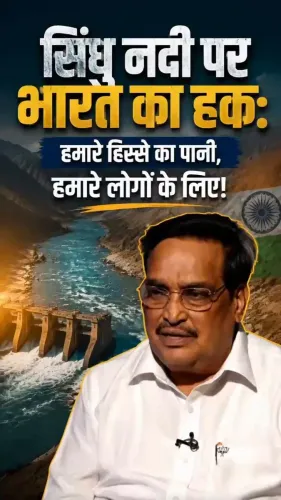
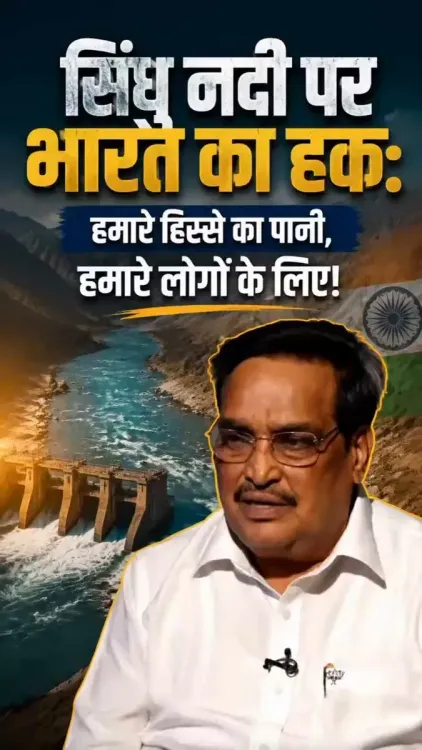
In his post, Paatil wrote: 'सिंधु नदी पर भारत का हक: हमारे हिस्से का पानी, हमारे लोगों के लिए!' — translated as 'India's right on the Indus River: our share of the water, for our people!'
Context
The Indus Waters Treaty (IWT), signed in 1960 under World Bank mediation, divided the Indus basin river system between India and Pakistan. Under the treaty, the three eastern rivers — Ravi, Beas, and Sutlej — were allocated primarily to India, while the three western rivers — Indus, Jhelum, and Chenab — were allocated primarily to Pakistan, with India retaining limited usage rights on the western rivers for irrigation, hydroelectric power, and other non-consumptive uses.
India has long maintained that it has not fully utilised its entitled share of the western rivers, citing delays in building the necessary infrastructure. Paatil's post echoes this position, calling for the complete use of India's treaty entitlements.
Policy Backdrop
Indian ministers and water policy officials have periodically made public assertions about maximising India's utilisation of Indus basin waters, particularly amid disputes over hydroelectric projects to which Pakistan has raised objections before international arbitration bodies. The Permanent Indus Commission, a bilateral body with a commissioner on each side, is mandated to meet annually to address technical and operational disputes under the treaty.
The Jal Shakti Ministry, which Paatil heads, is the nodal ministry overseeing India's water resources policy, including treaty-related infrastructure projects in Jammu and Kashmir. The ministry has been coordinating efforts to expedite hydroelectric and irrigation projects on the western rivers within India's permitted limits.
Stakeholders and Impact
The most direct beneficiaries of any increased utilisation of India's Indus water share would be farmers and communities in Jammu and Kashmir and the broader Indus basin region within India. These populations have historically awaited the completion of infrastructure that would allow water to be stored and channelled for agriculture and domestic use.
For Pakistan, which is heavily dependent on the western rivers for its agricultural economy — particularly in Punjab and Sindh provinces — any significant increase in India's upstream usage carries downstream implications, making this a perennially sensitive bilateral issue.
What's Next
Observers of India-Pakistan water diplomacy will watch for any formal developments at the Permanent Indus Commission level or any new notices related to treaty modification or project clearances. Paatil's statement, coming from the minister directly responsible for water policy, signals that the political will to fully exploit India's treaty entitlements remains firm. Whether this translates into accelerated project timelines or fresh diplomatic exchanges will be the key measure of follow-through.
Point of View
The statement carries more institutional weight than routine political rhetoric. It fits a broader pattern of the ruling dispensation framing water sovereignty as both a development imperative for Jammu and Kashmir and a matter of national assertion. The next concrete test will be whether accelerated project approvals or a fresh diplomatic posture at the Permanent Indus Commission follow this public declaration.
NationPress
23 Oct 2026
Frequently Asked Questions
What did Jal Shakti Minister C. R. Paatil say about the Indus River?
On June 9, 2026, Minister Paatil asserted that India has a sovereign right over its share of the Indus River's water and that this water must be used for the benefit of Indian people.
What is the Indus Waters Treaty?
The Indus Waters Treaty is a 1960 agreement brokered by the World Bank that divides the Indus basin river system between India and Pakistan, allocating the three eastern rivers to India and the three western rivers primarily to Pakistan.
Why has India not fully used its Indus water share?
India has cited delays in building the necessary dams, canals, and hydroelectric infrastructure — particularly in Jammu and Kashmir — as the main reason it has not yet fully utilised its treaty entitlements on the western rivers.
What is the Permanent Indus Commission?
The Permanent Indus Commission is a bilateral body with one commissioner from each country, mandated under the Indus Waters Treaty to meet annually and resolve technical and operational disputes related to water use.
How does India's Indus water use affect Pakistan?
Pakistan is heavily dependent on the western Indus rivers for agriculture in its Punjab and Sindh provinces, so any significant increase in India's upstream usage or storage has downstream implications and has historically been a source of bilateral tension.