Jal Shakti Minister Paatil Engages Commuters on Surat-Mumbai Train
Synopsis
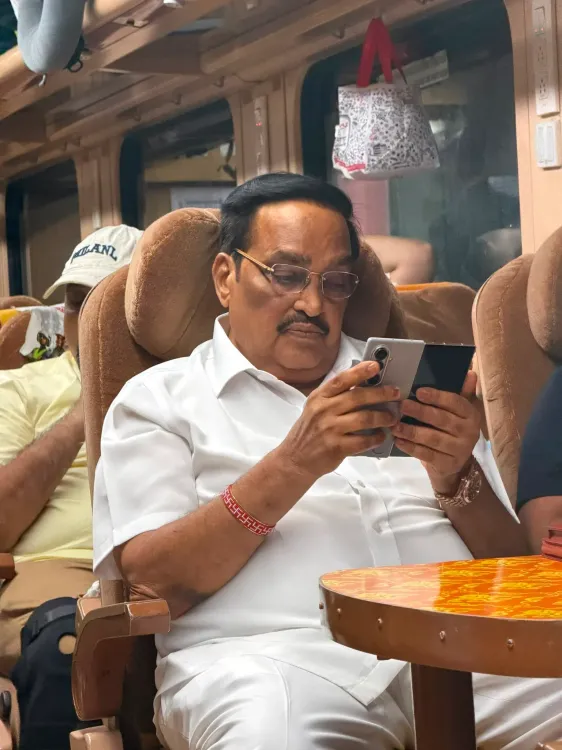
Union Jal Shakti Minister C. R. Paatil travelled the Surat–Mumbai rail route and engaged in candid conversations with co-passengers on 4 July 2026, describing the journey as an opportunity to understand public sentiment and reinforcing his commitment to public service.
Key Takeaways
Union Jal Shakti Minister C.
Paatil travelled by train between Surat and Mumbai on or before 4 July 2026 .
He engaged in personal conversations with fellow passengers during both legs of the journey.
The minister described rail travel as an opportunity to understand 'public feelings, experiences, and expectations' beyond formal ministerial work.
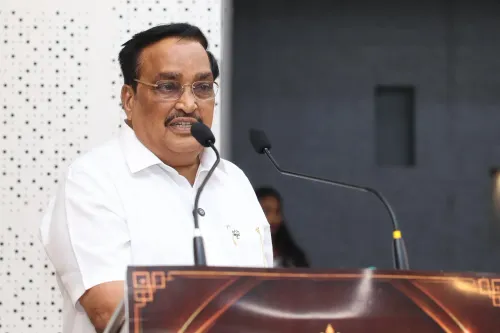
The post was accompanied by four images documenting the interactions.
Paatil is a senior BJP leader representing Navsari, Gujarat , and serves as Union Minister of Jal Shakti .
The Surat–Mumbai corridor is a key economic artery linking Gujarat and Maharashtra .
Union Jal Shakti Minister C. R. Paatil shared on Saturday, 4 July 2026 that he used the Surat–Mumbai rail route for travel and spent time in candid conversation with fellow passengers during the journey. The minister described the experience as an opportunity to understand public sentiment, aspirations, and lived experiences at close quarters.
What the Minister Said
Posting in Hindi on X, Paatil wrote: 'सूरत से मुंबई और मुंबई से सूरत की रेल यात्रा के दौरान अनेक सहयात्रियों से आत्मीय संवाद का अवसर मिला' — 'During rail travel from Surat to Mumbai and back, I had the opportunity for warm conversations with many fellow passengers.' He added that journeys are not merely a means of moving from one place to another, but also an occasion to understand public feelings, experiences, and expectations up close. He concluded by saying that the affection, trust, and warmth of the people continuously strengthens his resolve for public service.
Context
The Surat–Mumbai rail corridor is one of western India's busiest intercity routes, connecting Gujarat's commercial hub — home to major textile and diamond industries — with Maharashtra's financial capital. The route serves a large population of business travellers, traders, and migrant workers moving between the two economic centres. Indian Railways operates multiple daily services on this corridor, making it a natural artery of public life in the region.
C. R. Paatil represents Navsari in Gujarat and has deep political roots in the state, having served as BJP Gujarat state president before being elevated to the Union Cabinet as Minister of Jal Shakti. His constituency base keeps him closely tied to the Surat–South Gujarat region.
Policy Backdrop
Indian ministers routinely use social media to document direct public engagement outside formal ministry settings, projecting accessibility and a ground-level connect with citizens. Such accounts of using public transport signal a willingness to share everyday commuting experiences with ordinary travellers rather than relying exclusively on official convoys.
The post carries four images, suggesting the interactions were documented during the journey itself. While the specific content of the conversations is not independently verifiable, the minister's framing points to feedback-gathering as a deliberate part of the travel.
Stakeholders and Impact
The primary stakeholders are the millions of daily and intercity rail commuters on the Surat–Mumbai route, including traders from Surat's diamond and textile sectors, migrant workers, and ordinary families. For this constituency, a serving Union minister choosing to travel by train and engaging co-passengers directly is seen as a gesture of accessibility.
Broader observers note that such outreach can feed into a minister's understanding of ground-level concerns — from water access to civic infrastructure — that may later surface in policy or parliamentary discussions.
What's Next
Watchers of Paatil's public communications will look for whether themes raised during these train conversations — public needs, regional concerns, or water-related issues — find reflection in future Jal Shakti Ministry statements, budget interventions, or parliamentary proceedings. The post reinforces a pattern of visible public engagement that Paatil has maintained alongside his ministerial responsibilities.
Point of View
Visible public engagement outside New Delhi carries symbolic weight. The post subtly reinforces his Gujarat identity and local constituency connect ahead of any future electoral or policy cycle. Whether the feedback gathered translates into actionable policy signals will be the real measure of such outreach.
NationPress
3 Oct 2026
Frequently Asked Questions
Why did C. R. Paatil travel by train between Surat and Mumbai?
C. R. Paatil travelled by train on the Surat–Mumbai route and used the journey to have direct conversations with fellow passengers, describing it as an opportunity to understand public sentiment and expectations.
What did C. R. Paatil say about his Surat–Mumbai train journey?
He said the journey gave him a chance for warm conversations with many co-passengers and that such travel helps him understand public feelings, experiences, and aspirations beyond simply moving from place to place.
Who is C. R. Paatil?
C. R. Paatil is India's Union Minister of Jal Shakti, a senior BJP leader, and former BJP Gujarat state president. He represents the Navsari constituency in Gujarat in the Lok Sabha.
What is the Surat–Mumbai rail route?
The Surat–Mumbai rail corridor is one of western India's busiest intercity rail links, connecting Gujarat's commercial hub of Surat with Maharashtra's financial capital Mumbai, and is operated by Indian Railways.
Could the conversations on the train influence Jal Shakti Ministry policy?
It is possible that public feedback gathered during such interactions could surface in future ministry statements or parliamentary discussions, though no specific policy outcomes have been announced.