Jal Shakti Minister Paatil Highlights India Rail Growth
Synopsis
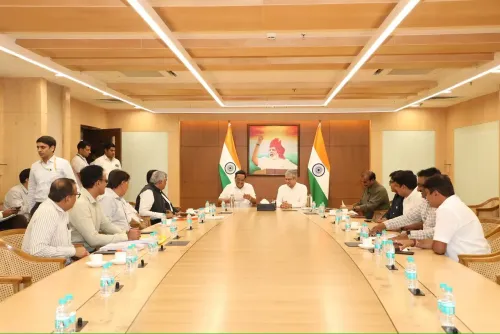
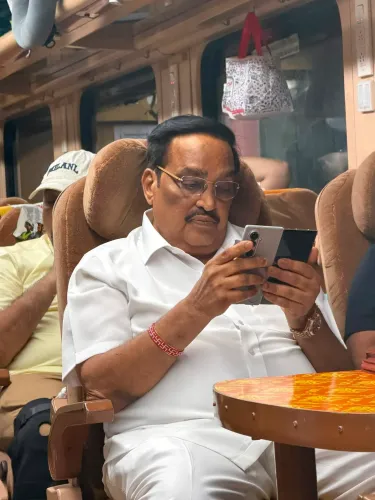
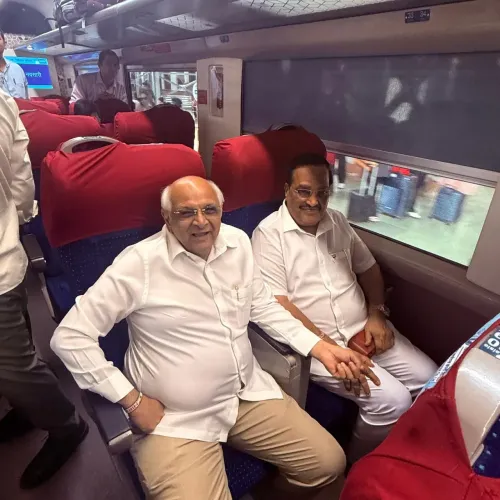
Union Jal Shakti Minister C. R. Paatil on 7 June 2026 celebrated India's rail infrastructure push on X, highlighting Vande Bharat, metro networks, and the Mumbai-Ahmedabad bullet train corridor as markers of a fast-developing 'new India'.
Key Takeaways
Union Jal Shakti Minister C.
Paatil posted on X on 7 June 2026 praising India's rail infrastructure growth.
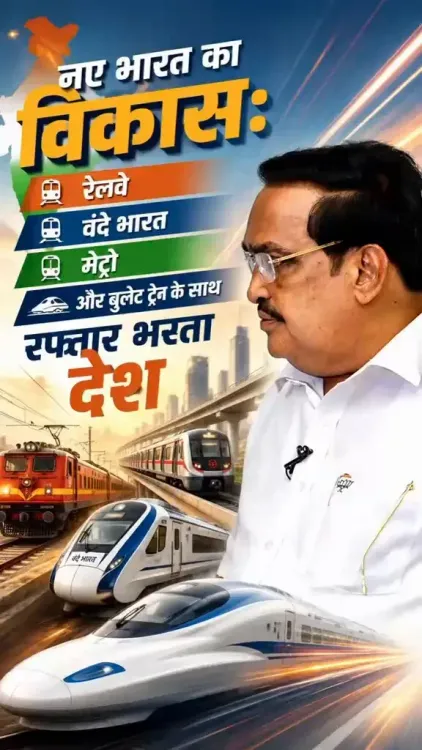
The post highlighted four pillars: conventional railways, Vande Bharat Express , metro rail, and the bullet train corridor.
The Vande Bharat Express was first launched in 2019 and has expanded to multiple intercity corridors since then.
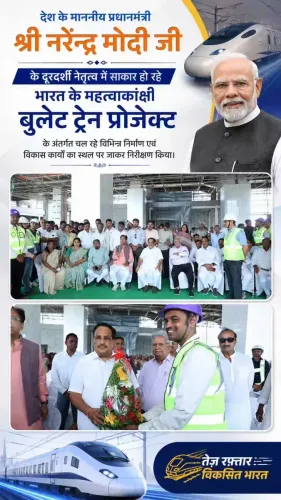
The Mumbai–Ahmedabad High-Speed Rail project has been under construction since 2017 with Japanese financial assistance.
Metro expansion across Indian cities has been supported under the AMRUT scheme launched in 2015 .
Rail infrastructure messaging remains a consistent BJP communication strategy across ministerial portfolios.
Union Jal Shakti Minister C. R. Paatil on Sunday, 7 June 2026 took to X to celebrate India's accelerating infrastructure development, spotlighting railways, Vande Bharat Express, metro networks, and the under-construction bullet train corridor as symbols of a 'new India' gaining speed.
Context
Paatil's post, written in Hindi, reads: 'Naye Bharat ka vikas' ('Development of a new India') — listing railways, Vande Bharat, metro, and bullet train as pillars of a nation picking up pace. The post was accompanied by a video, reinforcing the visual narrative of modern rail connectivity. While Paatil's primary portfolio is Jal Shakti (water resources), senior BJP ministers routinely amplify the ruling coalition's infrastructure record across sectors.
Policy Backdrop
The Vande Bharat Express, India's domestically designed semi-high-speed train, was first launched in 2019 on the New Delhi–Varanasi route and has since been expanded to dozens of corridors. The trains are manufactured under Indian Railways' fleet modernisation programme and represent a shift toward higher-speed intercity travel built with domestic engineering.
The Mumbai–Ahmedabad High-Speed Rail corridor — India's first bullet train project — received cabinet approval and a concessional loan agreement with Japan in 2015 and has been under construction since 2017. Metro rail expansion, meanwhile, has been driven in part through the Atal Mission for Rejuvenation and Urban Transformation (AMRUT), launched in 2015, which has supported urban transit infrastructure across dozens of Indian cities.
Stakeholders and Impact
The primary beneficiaries of these programmes are railway passengers and urban commuters across India's major and mid-sized cities. Vande Bharat services have reduced intercity travel time on key routes, while metro expansion has offered congestion relief in cities including Delhi, Mumbai, Bengaluru, Hyderabad, and Chennai. The bullet train corridor, once operational, is expected to transform the Mumbai–Ahmedabad travel experience significantly.
For the BJP, rail infrastructure has been a consistent communication pillar, with multiple ministers and legislators regularly highlighting project milestones to illustrate broader development momentum ahead of electoral cycles.
What's Next
Observers will watch the next Union Railway Budget presentation for fresh route additions under the Vande Bharat programme and updated timelines on the bullet train corridor's completion. Metro projects in newer cities are also expected to receive further capital allocations. Paatil's post signals that infrastructure messaging will remain central to the BJP's political communication strategy in the months ahead.
Point of View
Reflecting a coordinated BJP communication strategy where all senior leaders reinforce the same development story. The timing, in mid-2026, likely anticipates upcoming electoral or budget cycles where infrastructure delivery is a key performance metric. The enumeration of Vande Bharat, metro, and bullet train in a single post signals an intent to frame rail modernisation as a holistic, multi-tier achievement rather than isolated projects. Whether the bullet train corridor's construction progress can sustain this narrative will be the real test of the messaging's durability.
NationPress
22 Oct 2026
Frequently Asked Questions
What did C. R. Paatil post about on 7 June 2026?
C. R. Paatil posted on X celebrating India's rail infrastructure development, highlighting railways, Vande Bharat Express, metro networks, and the bullet train project as signs of a fast-growing 'new India'.
What is the Vande Bharat Express?
The Vande Bharat Express is a domestically designed semi-high-speed train service first launched by Indian Railways in 2019 on the New Delhi–Varanasi route, and since expanded to dozens of corridors across India.
When did India's bullet train project begin?
The Mumbai–Ahmedabad High-Speed Rail corridor received cabinet approval and a Japan loan agreement in 2015 and has been under construction since 2017. It is India's first bullet train project.
What is AMRUT and how does it relate to metro rail?
AMRUT, or the Atal Mission for Rejuvenation and Urban Transformation, was launched in 2015 and has supported urban infrastructure including metro rail expansion in cities across India.
Why is a Jal Shakti minister commenting on railway infrastructure?
Senior BJP ministers routinely amplify the government's infrastructure record across sectors as part of a coordinated political communication strategy, even when the subject falls outside their primary portfolio.