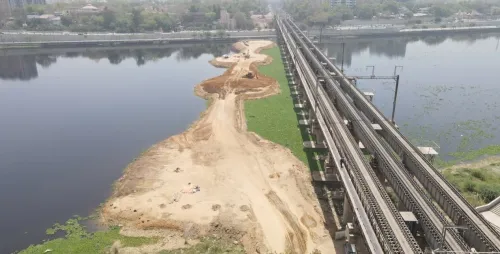
Jal Shakti Minister CR Paatil Inspects Bullet Train Project
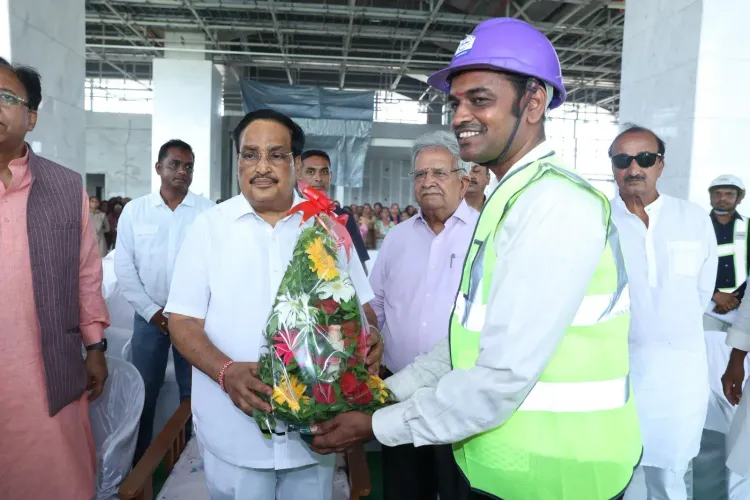
Synopsis
Union Jal Shakti Minister C. R. Paatil conducted an on-site inspection of the Mumbai-Ahmedabad High-Speed Rail Corridor on 14 June 2026, reviewing construction quality and timelines with officials and reaffirming the project's role in India's Viksit Bharat agenda.
Key Takeaways
Paatil , Union Jal Shakti Minister and senior BJP leader, personally inspected bullet train construction sites on 14 June 2026 .
The Mumbai-Ahmedabad High-Speed Rail Corridor spans 508 km and is India's first bullet train project, executed by NHSRCL with Japanese Shinkansen technology.
The project was approved by the Union Cabinet in 2017 at an estimated cost of Rs 1.08 lakh crore , with 81 per cent funded via a Japanese soft loan.
Civil works began after a ground-breaking at Vapi, Gujarat in 2021 ; the corridor is a flagship under India's National Infrastructure Pipeline .
Paatil reviewed progress, quality, timely execution, and systematic management with concerned officials during the visit.
Next milestones include NHSRCL quarterly reports on viaduct and tunnel completion and any revised timelines in the 2026-27 Union Budget cycle.
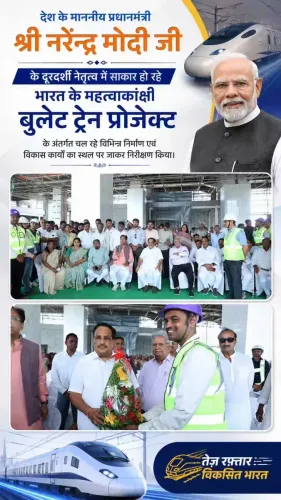
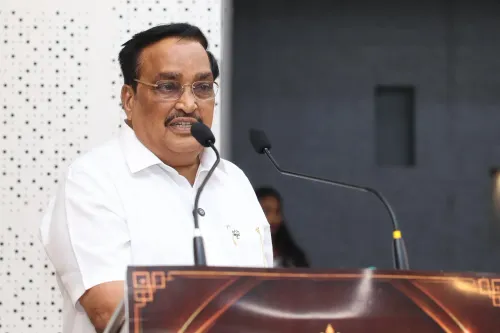
Union Jal Shakti Minister C. R. Paatil conducted an on-site inspection of construction works under India's Mumbai-Ahmedabad High-Speed Rail Corridor on Sunday, 14 June 2026, reviewing progress, quality standards, and implementation timelines with officials on the ground.
Context
Posting in Gujarati on X, Paatil described the visit as a review of ongoing development and construction activities under the bullet train project, which he characterised as being realised under 'dūradarśī netṛtva' (visionary leadership) of Prime Minister Narendra Modi. He noted discussions with concerned officials on project progress, quality, timely execution, and systematic management.
Paatil stated that building 'modern, world-class transport infrastructure is not merely a reflection of a dynamic India, but also an important step towards realising the resolve of a Viksit Bharat' — a developed India. He added that the project 'will create new opportunities for the country's economic development, connectivity, and future generations.'
Policy Backdrop
The Mumbai-Ahmedabad High-Speed Rail Corridor spans 508 kilometres and is India's first bullet train project, executed by the National High Speed Rail Corporation Limited (NHSRCL) using Japanese Shinkansen technology. The project was formally announced in December 2015 during then-Japanese Prime Minister Shinzo Abe's visit to Ahmedabad.
The Union Cabinet approved the project in 2017 at an estimated cost of Rs 1.08 lakh crore, with approximately 81 per cent financed through a Japanese official development assistance soft loan. Civil works commenced after a ground-breaking ceremony at Vapi, Gujarat in 2021. The corridor forms a central pillar of the government's National Infrastructure Pipeline, aimed at reducing logistics costs and travel time between major western Indian economic centres.
Stakeholders and Impact
The corridor directly concerns commuters and businesses across the Gujarat-Maharashtra belt, one of India's most industrially dense stretches. Faster high-speed connectivity between Mumbai and Ahmedabad is projected to ease pressure on existing rail networks and stimulate economic activity along the alignment.
Construction contractors, regional suppliers, and communities along the viaduct and tunnel sections are among the immediate stakeholders. As a senior BJP leader and former Gujarat state president, Paatil's on-site presence also signals continued political attention to the project's timely delivery in a state that holds significant electoral importance for the party.
What's Next
Attention will now turn to quarterly progress reports from NHSRCL on viaduct and tunnel completion milestones. Any revised commissioning timeline is expected to be reflected in disclosures accompanying the 2026-27 Union Budget cycle.
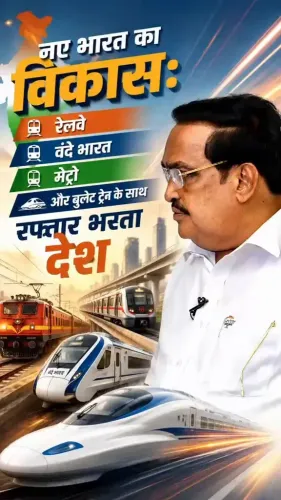
The inspection underscores the government's stated intent to maintain momentum on flagship infrastructure commitments, with the bullet train corridor increasingly serving as a benchmark for India's ambitions in high-speed rail under the #ViksitBharat framework.
Point of View
The visit reinforces the BJP's broader electoral narrative of transformative infrastructure as national ambition, particularly salient in Gujarat ahead of any future state-level political cycle. The inspection also reflects a pattern in which senior party figures conduct site visits to keep flagship projects in the public eye when construction timelines face scrutiny. Whether the visit translates into accelerated delivery or revised milestones will be the more substantive test of its intent.
NationPress
13 Sept 2026
Frequently Asked Questions
What is the Mumbai-Ahmedabad bullet train project?
The Mumbai-Ahmedabad High-Speed Rail Corridor is India's first bullet train project, spanning 508 km and using Japanese Shinkansen technology. It was approved by the Union Cabinet in 2017 at an estimated cost of Rs 1.08 lakh crore, with 81 per cent financed through a Japanese soft loan, and is being executed by the National High Speed Rail Corporation Limited (NHSRCL).
Why did CR Paatil inspect the bullet train project?
Union Jal Shakti Minister C. R. Paatil conducted the inspection on 14 June 2026 to review construction progress, quality standards, timely execution, and systematic management of the Mumbai-Ahmedabad High-Speed Rail Corridor, discussing findings with concerned officials on site.
When did construction on India's bullet train begin?
Civil works on the Mumbai-Ahmedabad bullet train corridor began after a ground-breaking ceremony held at Vapi, Gujarat in 2021 under the National High Speed Rail Corporation Limited.
What is Viksit Bharat and how does the bullet train relate to it?
Viksit Bharat, meaning 'Developed India,' is the central government's overarching development vision. The bullet train corridor is positioned as a flagship project under this framework, aimed at modernising inter-city connectivity and stimulating economic growth between Mumbai and Ahmedabad.
What is the current status of the Mumbai-Ahmedabad bullet train project?
As of mid-2026, civil works including viaduct and tunnel construction are ongoing under NHSRCL. Quarterly progress reports from NHSRCL and disclosures linked to the 2026-27 Union Budget cycle are expected to provide updated commissioning timelines.