Jal Shakti Minister Paatil Inspects Bullet Train Project Sites
Synopsis
Union Jal Shakti Minister C. R. Paatil visited construction sites of India's first bullet-train project — the 508-km Mumbai-Ahmedabad High-Speed Rail Corridor — on 15 June 2026, sharing video of on-ground progress and crediting PM Modi's leadership for the project's momentum.
Key Takeaways
Union Jal Shakti Minister C.
Paatil conducted an on-site inspection of the Mumbai-Ahmedabad High-Speed Rail Corridor on 15 June 2026 .
The corridor spans 508 km and is India's first bullet-train project, using Japanese Shinkansen technology.
The project was approved by the Union Cabinet in December 2015 at an initial estimated cost of Rs 1.08 lakh crore , subsequently revised upward.
JICA (Japan International Cooperation Agency) is the primary source of concessional funding and technical assistance.
The Mumbai-Ahmedabad corridor remains the only high-speed rail line under active construction in India; feasibility studies for other routes are ongoing.
Key construction milestones include tunnelling near Mumbai and viaduct works through Gujarat .
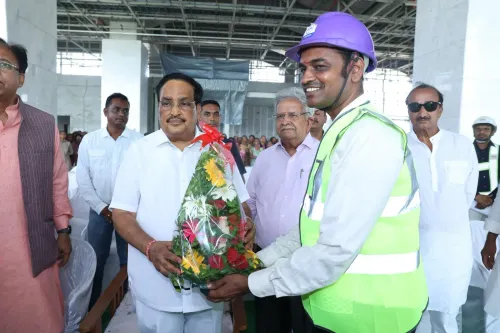
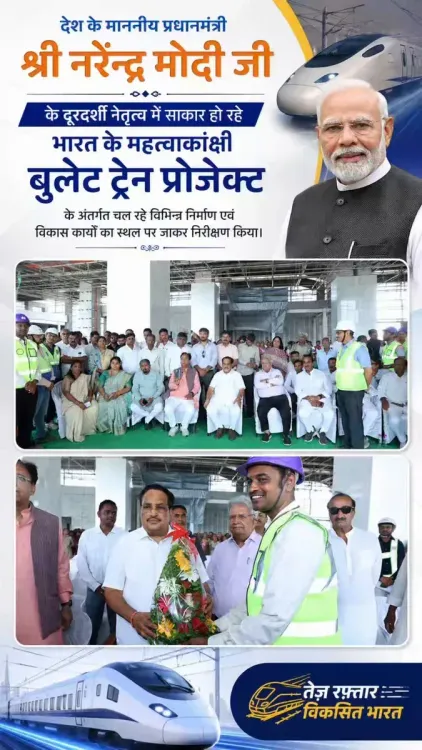
Union Jal Shakti Minister C. R. Paatil on Monday, 15 June 2026, conducted an on-site inspection of ongoing construction and development works under India's Mumbai-Ahmedabad High-Speed Rail Corridor, sharing a video glimpse of the ground-level progress. Paatil attributed the project's momentum to the 'visionary leadership' of Prime Minister Narendra Modi.
Posting on X, the minister wrote — 'देश के माननीय प्रधानमंत्री श्री नरेंद्रभाई मोदी सर के दूरदर्शी नेतृत्व में साकार हो रहे भारत के महत्वाकांक्षी बुलेट ट्रेन प्रोजेक्ट' — ('India's ambitious bullet-train project being realised under the visionary leadership of the country's honourable Prime Minister Narendra Modi') — and noted that he visited the sites in person to inspect the various construction and development works underway.
Context
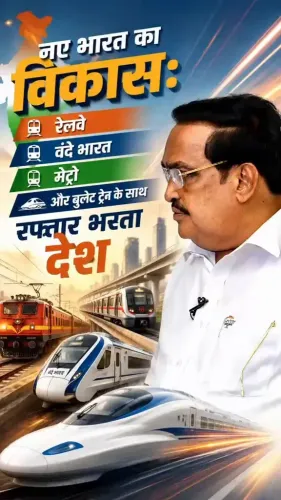
The Mumbai-Ahmedabad High-Speed Rail Corridor is a 508-kilometre route connecting Mumbai and Ahmedabad using Japanese Shinkansen technology. It is India's first dedicated bullet-train project and remains the only such corridor currently under active construction in the country. Paatil's inspection visit underlines the cross-ministerial political attention the project commands at the senior Cabinet level.
Policy Backdrop
The corridor was announced in December 2015 during then-Japanese Prime Minister Shinzo Abe's state visit to India, and the Union Cabinet approved it the same month at an estimated cost of Rs 1.08 lakh crore — a figure that has since been revised upward. The bulk of concessional funding and technical assistance is being provided by JICA (Japan International Cooperation Agency). The project sits within a wider rail modernisation agenda that also encompasses dedicated freight corridors and station redevelopment programmes.
Prime Minister Modi has consistently positioned high-speed rail as a flagship infrastructure priority. Feasibility studies for additional high-speed corridors across India are ongoing, but the Mumbai-Ahmedabad route remains the sole line in the active construction phase.
Stakeholders and Impact
The corridor directly concerns commuters and residents across Gujarat and Maharashtra, the two states it traverses. Once operational, the line is projected to cut travel time between the two cities from roughly six hours by conventional rail to under three hours. Land acquisition, viaduct construction, and tunnelling — particularly in the Mumbai urban stretch — have been the most closely watched milestones.
Senior political figures from both states have periodically highlighted the project's progress as a symbol of infrastructure ambition. Paatil's on-site visit, shared publicly with video documentation, signals continued high-level political engagement with the corridor's delivery.
What's Next
Key milestones to watch include the completion of critical tunnelling work near Mumbai, progress on viaduct spans through Gujarat, and any parliamentary updates on revised timelines or cost escalations. The government has not announced a revised commercial operations date publicly. Observers will track whether the pace of civil works accelerates ahead of any politically significant deadlines.
Point of View
Shared publicly on social media, reflects the BJP government's consistent strategy of keeping flagship infrastructure projects visible at the senior Cabinet level, even when the inspecting minister holds a portfolio unrelated to railways. The Mumbai-Ahmedabad corridor has served as a political touchstone since its 2015 announcement, and any signal of active high-level oversight helps manage public expectations around timelines that have stretched beyond original projections. The cross-ministerial attention also suggests the project retains strong political capital within the ruling coalition, even as cost revisions and construction complexities continue to draw scrutiny.
NationPress
15 Sept 2026
Frequently Asked Questions
What is the Mumbai-Ahmedabad bullet train project?
The Mumbai-Ahmedabad High-Speed Rail Corridor is India's first bullet-train project — a 508-km line connecting Mumbai and Ahmedabad using Japanese Shinkansen technology, approved by the Union Cabinet in December 2015 at an estimated cost of Rs 1.08 lakh crore.
Why did Jal Shakti Minister C. R. Paatil inspect a bullet train project?
Minister Paatil conducted the inspection as a senior BJP leader and Cabinet minister, reflecting the political importance the ruling party attaches to the corridor; his visit was a site inspection to review ongoing construction and development works.
What is the current status of the Mumbai-Ahmedabad bullet train project in 2026?
As of June 2026, the corridor is under active construction, with key works including viaduct spans and tunnelling — particularly in the Mumbai urban stretch — among the critical milestones being tracked.
Who is funding the India bullet train project?
The bulk of concessional funding and technical assistance is provided by JICA (Japan International Cooperation Agency), making it one of the largest Japanese ODA-backed infrastructure projects in India.
How much does the Mumbai-Ahmedabad bullet train project cost?
The Union Cabinet originally approved the project at Rs 1.08 lakh crore in December 2015; the estimated cost has since been revised upward, though a final revised figure has not been officially confirmed publicly.