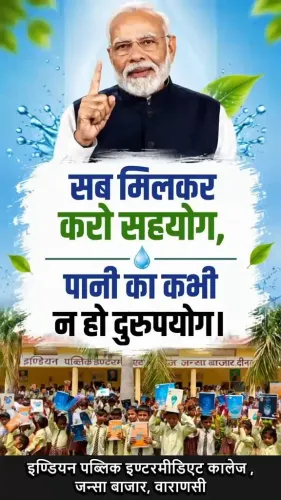
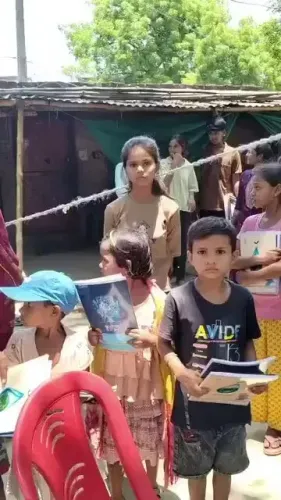
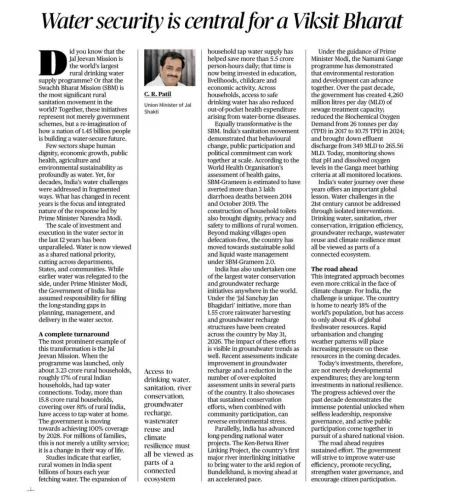
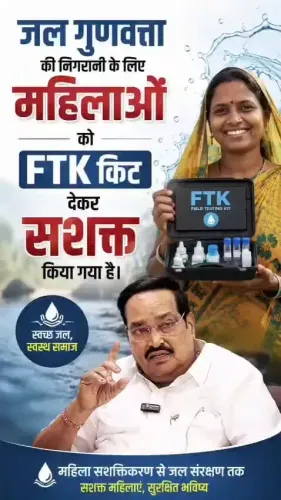
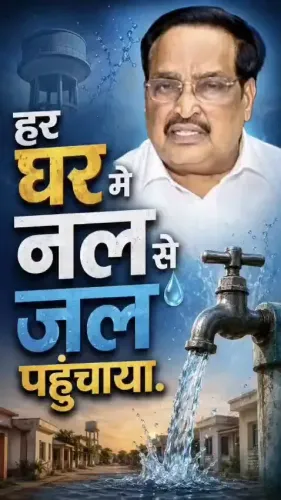
Jal Shakti Minister Paatil highlights women water testers in Varanasi villages
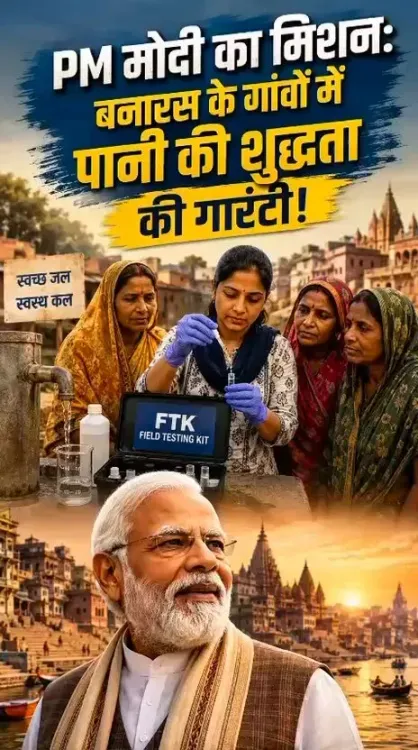
Synopsis
Union Jal Shakti Minister C. R. Paatil has highlighted how women in Varanasi's rural villages are being trained as 'Jal Rakshaks' under the Jal Jeevan Mission, using field testing kits to independently monitor drinking water quality — framing the initiative as a model of self-reliant, community-led water governance.
Key Takeaways
Union Jal Shakti Minister C.
Paatil posted on 17 June 2026 about the Jal Jeevan Mission's progress in rural Varanasi .
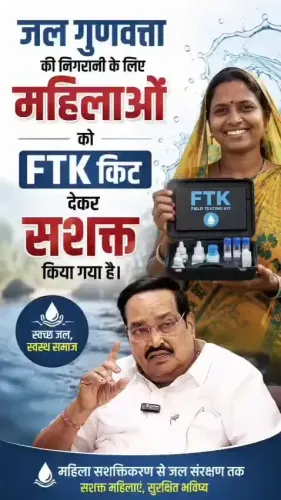
Women volunteers in Varanasi villages have been designated 'Jal Rakshaks' (water protectors) and trained to test drinking water quality independently.
Each village has been provided with field testing kits , enabling women to check water purity without waiting for centralised laboratory testing.
The Jal Jeevan Mission was launched in August 2019 with the dual goal of universal rural tap water access and community-based water quality monitoring.
Varanasi — Prime Minister Narendra Modi's parliamentary constituency — has been a prominent focus district for JJM implementation and reporting.
The initiative is framed as part of the broader Atmanirbhar Bharat push, emphasising women's active role in local health and resource governance.
Union Jal Shakti Minister C. R. Paatil on Wednesday, 17 June 2026 highlighted the progress of the Jal Jeevan Mission in rural Varanasi, saying women in the district's villages have been trained as 'Jal Rakshaks' — water guardians — and equipped with field testing kits to independently monitor drinking water quality at the household level.
Posting in Hindi on X, the minister wrote: 'बनारस के गांवों में अब सिर्फ घर-घर पानी ही नहीं पहुँच रहा, बल्कि उसकी 100% शुद्धता की गारंटी भी दी जा रही है!' ('In the villages of Banaras, not only is water now reaching every home, but a 100% purity guarantee is also being provided!'). He credited the mission's progress to the leadership of Prime Minister Narendra Modi and the Jal Shakti Ministry.
Context
The post describes a community-based water quality monitoring model in which women volunteers in Varanasi's rural areas — referred to as 'Jal Rakshaks' (water protectors) — have been provided field testing kits and trained to test drinking water on their own. Paatil noted that women in every village of Varanasi are now using technology to oversee the health of their communities, rather than depending on traditional sources such as wells or hand pumps.
The minister concluded the post with a reference to Kashi (the ancient name for Varanasi), calling it a resolve for a 'self-reliant and healthy Kashi', and signed off with the devotional phrase 'Har Har Mahadev' — a salutation associated with the city's identity as a centre of Shaiva worship.
Policy Backdrop
The Jal Jeevan Mission (JJM) was launched in August 2019 with the stated objective of providing functional household tap water connections to every rural home in India. Beyond supply, the scheme incorporated water quality surveillance as a key component, envisaging community-level testing to supplement government monitoring infrastructure.
The Jal Shakti Ministry, formed in 2019 by merging the ministries of water resources and drinking water and sanitation, oversees JJM's implementation across states. Uttar Pradesh, home to Varanasi — Prime Minister Modi's parliamentary constituency — has been a focal district for scheme delivery and reporting. The progressive integration of women volunteers into quality-testing roles reflects the scheme's broader design principle of decentralised, community-owned water governance.
Stakeholders and Impact
The primary beneficiaries highlighted in the post are rural women in Varanasi's villages, who have been repositioned from passive recipients of water supply to active monitors of water quality. The training-and-kit model is intended to reduce dependence on centralised laboratory testing and enable faster, localised detection of contamination.
Village households — particularly those that previously relied on open wells or hand pumps — stand to benefit from more consistent quality checks. The 'Jal Rakshak' framing also positions the initiative within the government's wider emphasis on women's participation in local resource governance and the Atmanirbhar Bharat (self-reliant India) narrative.
What's Next
Uttar Pradesh's quarterly progress reports under the Jal Jeevan Mission are expected to provide granular data on the scale of field testing kit distribution and the number of women trained across the district. Any updates to rural water quality parameters or programme coverage targets may also surface in the next session of Parliament, where JJM's implementation record has drawn periodic legislative scrutiny.
The Varanasi model, if formally documented as a replicable pilot, could influence how other high-priority districts structure community-level water quality monitoring under the mission's remaining implementation phase.
Point of View
The messaging shifts the narrative from state provision to community agency, a rhetorical move aligned with the Atmanirbhar Bharat brand. Varanasi's repeated positioning as a model district for scheme delivery also reinforces its symbolic weight as the Prime Minister's constituency. The post's claims about 100% purity guarantees, however, remain unverified, and the gap between aspirational framing and independently audited outcomes will be the real test of the programme's credibility.
NationPress
20 Sept 2026
Frequently Asked Questions
What is the Jal Jeevan Mission and when was it launched?
The Jal Jeevan Mission is a central government scheme launched in August 2019 to provide functional household tap water connections to every rural home in India, with a component for community-level water quality monitoring.
Who are 'Jal Rakshaks' in Varanasi?
'Jal Rakshaks' — meaning water protectors — are women volunteers in Varanasi's rural villages who have been trained under the Jal Jeevan Mission to use field testing kits and independently check the quality of drinking water in their communities.
What are field testing kits used for under JJM?
Field testing kits are portable tools distributed to trained community volunteers, enabling them to test drinking water for quality parameters at the village level without relying solely on centralised laboratory analysis.
What is C. R. Paatil's role in the Jal Jeevan Mission?
C. R. Paatil is the Union Minister of Jal Shakti, the ministry responsible for overseeing the Jal Jeevan Mission's implementation across India, including rural water supply and quality monitoring programmes.
Why is Varanasi a focus area for Jal Jeevan Mission implementation?
Varanasi is Prime Minister Narendra Modi's parliamentary constituency and has been consistently highlighted as a model district for central scheme delivery, making it a prominent site for showcasing JJM's progress in Uttar Pradesh.