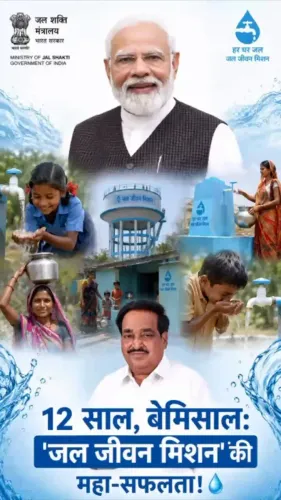
Jal Shakti Minister Paatil highlights FTK kits for women under JJM
Synopsis
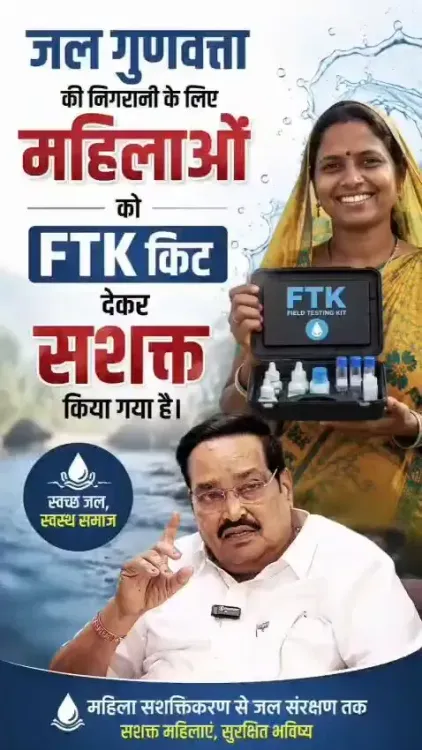
Union Jal Shakti Minister C. R. Paatil highlighted on 13 June 2026 how women have been empowered with Field Test Kits under the Jal Jeevan Mission to monitor drinking water quality at the village level, marking 12 years of Modi-led governance.
Key Takeaways
Union Jal Shakti Minister C.
Paatil posted on 13 June 2026 highlighting FTK distribution to women for water quality monitoring.
The post was made under the BJP campaign hashtag #12YearsOfSeva , marking 12 years of Narendra Modi 's leadership since May 2014.
The Jal Jeevan Mission , launched in August 2019 , includes community-level water quality surveillance as a core component.
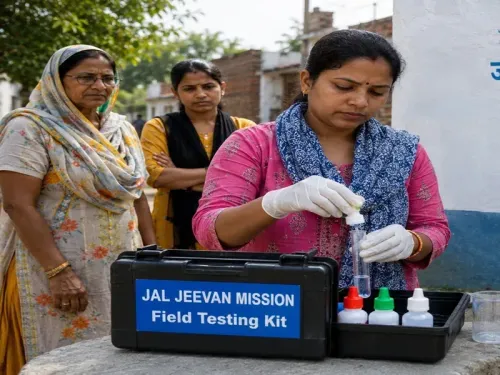
Field Test Kits (FTKs) enable women and Gram Panchayat members to test water for pH, turbidity, and contaminants without laboratory access.
The initiative formalises the role of rural women as frontline water quality monitors, building on earlier National Rural Drinking Water Programme guidelines.
State-level JJM progress reports and the upcoming monsoon session of Parliament are expected to shed further light on FTK utilisation.
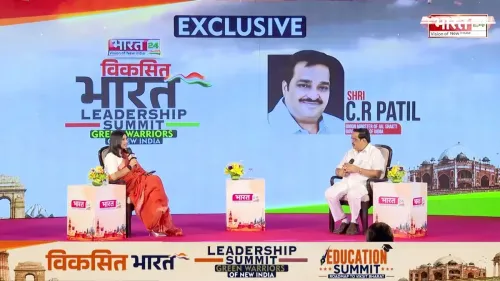
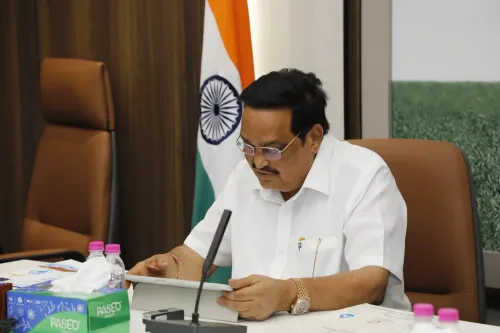
Union Jal Shakti Minister C. R. Paatil on Saturday, 13 June 2026 highlighted the empowerment of women through Field Test Kit (FTK) distribution for drinking water quality monitoring, crediting the initiative to the leadership of Prime Minister Narendra Modi.
Context
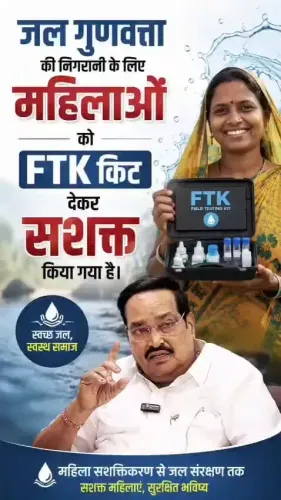
Posting on X under the hashtag #12YearsOfSeva ('12 years of service'), Minister Paatil wrote: 'माननीय प्रधानमंत्री श्री @narendramodi सर के नेतृत्व में जल गुणवत्ता की निगरानी के लिए महिलाओं को FTK किट देकर सशक्त बनाया गया है' — meaning, 'Under the honourable Prime Minister Shri Narendra Modi's leadership, women have been empowered by providing them FTK kits for water quality monitoring.' The post is part of a broader BJP campaign marking what the party describes as 12 years of governance under Modi, who became Prime Minister in May 2014.
The hashtag frames the FTK initiative as one of several achievements being catalogued across ministries. Paatil's ministry, Jal Shakti, oversees drinking water and sanitation policy at the central level.
Policy Backdrop
The Jal Jeevan Mission (JJM), launched in August 2019, is the flagship central scheme aimed at providing every rural household with a functional tap water connection. A core component of the mission is community-level water quality surveillance, for which Field Test Kits were introduced as an accessible, low-cost tool.
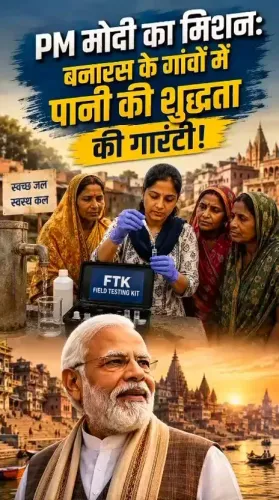
FTK kits allow community members — primarily women and members of Gram Panchayats (village councils) — to test drinking water for parameters such as pH, turbidity, and chemical contaminants without requiring laboratory infrastructure. This design choice was deliberate: it placed the first line of water safety monitoring in the hands of local communities rather than centralised agencies.
The approach builds on guidelines from the earlier National Rural Drinking Water Programme, which recognised community participation as essential to sustainable water quality management. Under JJM, the role of women in water testing was formalised and scaled through structured training and kit distribution.
Stakeholders and Impact
Rural women are the primary beneficiaries and agents of this initiative. By training women to conduct field tests, the programme simultaneously addresses water safety and gender inclusion — two stated priorities of the JJM framework. Village Water and Sanitation Committees are the institutional vehicles through which kits are distributed and results are recorded.
The broader implication is a shift from passive water consumers to active quality monitors at the grassroots level. Stakeholders including state governments, Panchayati Raj institutions, and rural health bodies are involved in the supply chain and training ecosystem that makes FTK deployment functional.
What's Next
State-level JJM progress reports on water quality testing coverage will be a key indicator of how widely FTK kits have penetrated rural communities. Any parliamentary updates during the upcoming monsoon session on FTK utilisation rates and water quality outcomes would provide a fuller picture of on-ground impact. With the #12YearsOfSeva campaign ongoing, further ministerial posts cataloguing JJM milestones are likely in the coming days.
Point of View
Using the Jal Jeevan Mission's women-centric FTK component as a proof point for gender-inclusive development. The choice of this specific initiative is politically significant: it ties water security — a basic need with deep rural resonance — to women's agency, reinforcing a narrative that the government has pursued consistently since JJM's 2019 launch. The post also signals that the Jal Shakti Ministry is actively curating its legacy record ahead of any future electoral cycle. Whether the on-ground scale of FTK deployment matches the political messaging is a question that parliamentary scrutiny and state audit reports will eventually need to answer.
NationPress
20 Sept 2026
Frequently Asked Questions
What is an FTK kit used for in India's water scheme?
A Field Test Kit (FTK) is a portable tool that allows community members — especially women — to test drinking water for parameters like pH, turbidity, and chemical contaminants at the village level without needing a laboratory, under the Jal Jeevan Mission.
What is the Jal Jeevan Mission?
The Jal Jeevan Mission is a flagship central government scheme launched in August 2019 to provide every rural household in India with a functional household tap connection, along with community-level water quality monitoring mechanisms.
Who is C. R. Paatil?
C. R. Paatil is the Union Minister of Jal Shakti in India's central government, a senior BJP leader and former president of the BJP's Gujarat state unit.
What is #12YearsOfSeva?
#12YearsOfSeva is a BJP campaign hashtag marking 12 years since Narendra Modi became Prime Minister in May 2014, under which BJP leaders and ministers are highlighting government initiatives across sectors.
How are women involved in water quality monitoring under JJM?
Under the Jal Jeevan Mission, women and Gram Panchayat members are trained and provided with Field Test Kits to conduct regular water quality checks in their villages, making them active participants in grassroots water safety surveillance.