Jal Jeevan Mission UP: Women test water in 97,070 villages, earn via FTKs
Synopsis
Uttar Pradesh has quietly built a decentralised water-safety network by training women in 97,070 villages to test drinking water using Field Testing Kits — paying them ₹20 per test. With 63,700 samples already tested this financial year, the Jal Jeevan Mission is doubling as both a public health safeguard and a rural women's employment scheme.
Key Takeaways
Trained women volunteers are conducting water quality testing in 97,070 villages across Uttar Pradesh under the Jal Jeevan Mission .
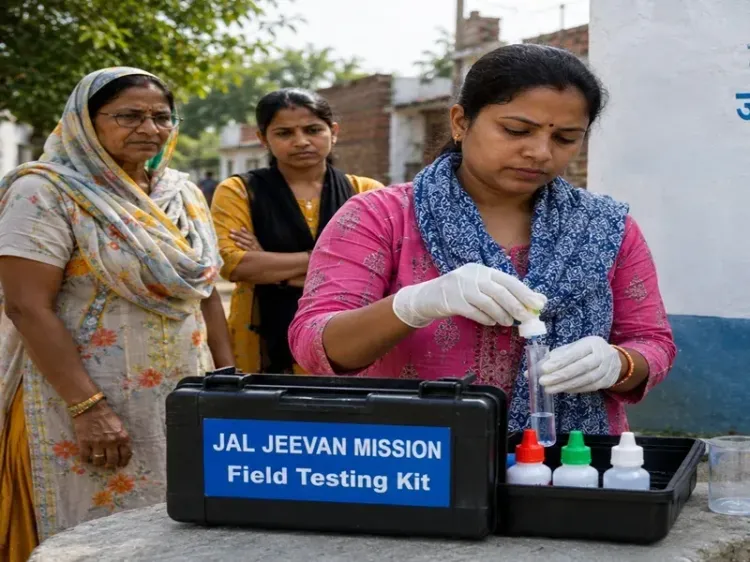
Groups of five women each have been provided Field Testing Kits (FTKs) in nearly all Gram Panchayats and revenue villages.
Approximately 63,700 water quality samples have been tested in the current financial year.
Women receive ₹20 per test , with a maximum of ₹400 for up to 20 tests , creating a self-employment income stream.
Since the Jal Jeevan Mission's launch in 2019 , an additional 12.48 crore households nationally have received tap water connections, up from 3.23 crore at launch.
The Jal Jeevan Mission, the Centre's flagship drinking water scheme, has emerged as a significant economic lifeline for rural women in Uttar Pradesh, with trained women volunteers now actively conducting water quality testing across 97,070 villages in the state. The programme, scaled up under the Yogi Adityanath-led state government, has simultaneously advanced clean water access and created a structured self-employment pathway for thousands of women at the grassroots level.
How the Field Testing Kit Programme Works
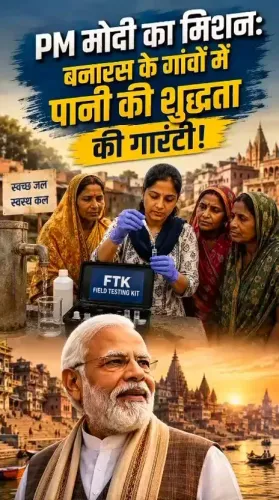
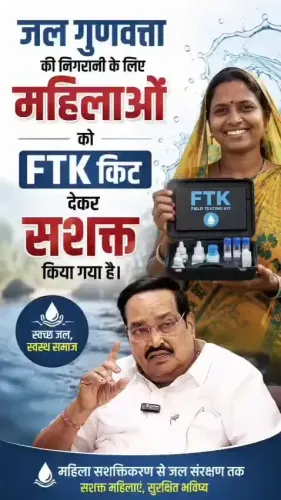
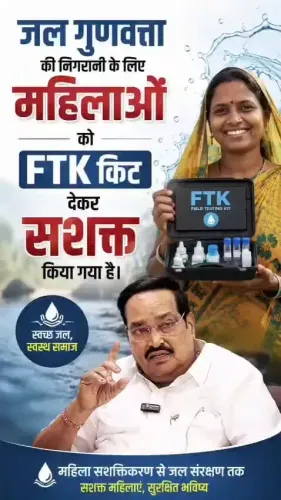
At the core of the initiative is the Field Testing Kit (FTK) campaign, under which groups of five women each have been equipped with kits in nearly all Gram Panchayats and revenue villages across the state. These women are trained to test water samples from drinking water sources — including pipelines, tube wells, and household taps — for the presence of harmful chemicals and bacteria.
According to Prabhas Kumar, Special Secretary and Executive Director of the Namami Gange and Rural Water Supply Department, approximately 63,700 water quality samples have already been tested in the current financial year alone. 'Under this mission, groups of 05 women each have been provided with Field Testing Kits in almost all Gram Panchayats and revenue villages across the state,' Kumar said. 'The continuity of this quality testing process can be gauged from the fact that around 63,700 water quality samples have already been tested so far in the current financial year,' he added.
Economic Empowerment Through Honorarium
The programme carries a direct financial benefit for participating women. Each volunteer receives ₹20 per water test, with a ceiling of ₹400 for up to 20 tests per cycle. While individually modest, the earnings represent a meaningful supplement for rural households with limited formal income opportunities.
This honorarium structure has effectively converted a public health function into a decentralised employment model — one that does not require women to leave their villages or acquire formal qualifications beyond the FTK training.
Impact on Water Safety and Disease Prevention
Beyond economic outcomes, the programme has strengthened the state's early-warning infrastructure for waterborne disease prevention. When women volunteers detect contamination in a source, they are required to immediately alert the department, enabling faster remedial action than the earlier, more cumbersome centralised testing procedures allowed.
This comes amid longstanding concerns in rural Uttar Pradesh about groundwater quality, including fluoride and arsenic contamination in several districts. The decentralised FTK model, according to officials, compresses the response time significantly compared to laboratory-dependent testing.
Jal Jeevan Mission: Scale of Expansion
The broader Jal Jeevan Mission, launched in 2019, has driven one of India's fastest infrastructure expansions in the water sector. At the time of its launch, only 3.23 crore households nationally had access to tap water connections. Since then, an additional 12.48 crore households have received tap water connections, according to official data — a scale of rollout that has drawn both domestic and international attention.
In Uttar Pradesh specifically, the programme now covers more than 97,000 villages, with the FTK component ensuring that the quality of water reaching these newly connected households is independently verified at the village level. As the scheme matures, the state government is expected to expand both the coverage and the honorarium framework for participating women volunteers.
Point of View
While attaching a modest but real income incentive. The risk is that ₹20 per test and a ₹400 ceiling keep earnings too low to be transformative, making this supplementary income rather than genuine economic empowerment. The bigger question mainstream coverage misses: with 12.48 crore new household connections added nationally, independent quality verification at scale is not optional — it is the difference between a pipe and safe water. Whether the FTK honorarium can be structured to sustain long-term volunteer participation, rather than fade after initial enthusiasm, will determine whether this becomes a replicable national model or a well-intentioned pilot.
NationPress
27 Sept 2026
Frequently Asked Questions
What is the Field Testing Kit programme under Jal Jeevan Mission in UP?
It is an initiative under the Jal Jeevan Mission in which groups of five women each are equipped with Field Testing Kits to test drinking water quality in their villages. The programme covers approximately 97,070 villages in Uttar Pradesh and pays women ₹20 per test, up to ₹400 for 20 tests.
How many water samples have been tested under this programme?
Around 63,700 water quality samples have been tested in the current financial year alone, according to Prabhas Kumar, Special Secretary and Executive Director of the Namami Gange and Rural Water Supply Department.
How much do women earn from the water testing work?
Women volunteers receive ₹20 per water quality test, with a maximum payment of ₹400 for conducting up to 20 tests. The honorarium is designed to provide supplementary income for rural women.
How has the Jal Jeevan Mission expanded since its launch?
When the Jal Jeevan Mission was launched in 2019, only 3.23 crore households nationally had tap water access. Since then, an additional 12.48 crore households have received connections, making it one of India's fastest infrastructure expansions in the water sector.
What happens when contaminated water is detected through FTK testing?
When women volunteers identify contaminated or suspicious water sources, they are required to immediately alert the Namami Gange and Rural Water Supply Department. This enables faster remedial action to prevent waterborne diseases, replacing an earlier process that was described as lengthy and cumbersome.