Pachna Dam water dispute resolved after 20 years; Jaipur talks yield consensus
Synopsis
After 20 years, 74 villages, repeated court interventions, and at least one collapsed negotiation, Rajasthan's Pachna Dam water dispute has finally been settled — brokered personally by Chief Minister Bhajanlal Sharma's ministers in Jaipur. The resolution pits the irrigation needs of 35 command-area villages against the water-security fears of 39 submergence-zone villages, making this consensus as politically delicate as it is long overdue.
Key Takeaways
The Pachna Dam water-sharing dispute in Karauli district, Rajasthan , has been resolved after nearly 20 years .
A consensus was reached at a high-level meeting in Jaipur on 30 June , convened on the directions of Chief Minister Bhajanlal Sharma .
The dispute involved 74 villages — 35 command-area villages demanding irrigation water and 39 submergence-zone villages opposing diversion.
Cabinet Ministers Kirodi Lal Meena , Jawahar Singh Bedham , and Suresh Rawat led the negotiations.
The Rajasthan High Court had recently flagged non-compliance with earlier directions to release water, adding judicial pressure on the state.
A previous meeting at Jaipur's Shiksha Sankul had ended without agreement, with farmer representatives walking out.
A 20-year-old water-sharing dispute over the Pachna Dam in Karauli district, Rajasthan, has been resolved after both sides reached a consensus at a high-level meeting convened in Jaipur on 30 June, under the directions of Chief Minister Bhajanlal Sharma. The breakthrough ends one of eastern Rajasthan's most entrenched inter-village water conflicts, affecting 74 villages across two competing groups.
Key Developments
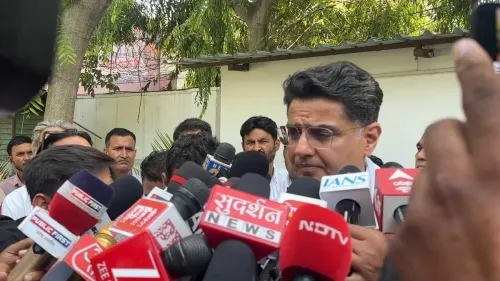
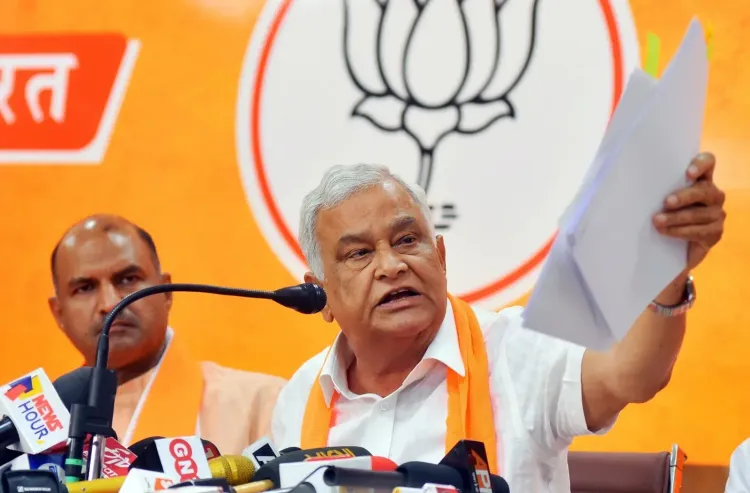
Cabinet Ministers Kirodi Lal Meena, Jawahar Singh Bedham, and Suresh Rawat, alongside senior state officials, conducted extensive negotiations with representatives of both factions. Following prolonged discussions, both parties agreed to a settlement and publicly thanked Chief Minister Sharma and the state government for facilitating the dialogue.
The agreement is being viewed as a significant administrative achievement, given that earlier attempts — including a meeting at Jaipur's Shiksha Sankul — had collapsed, with farmer representatives walking out and disagreements surfacing over the draft terms.
The Two Sides of the Dispute
At the heart of the conflict were two opposing sets of interests. Farmers from 35 command-area villages had long demanded the release of irrigation water through the canal network, arguing that the prolonged stoppage had crippled agricultural output and caused heavy financial losses over two decades.
Opposing them were residents of 39 villages located in the dam's submergence zone, who contended that diverting water into the canals would reduce availability in their own region and deepen local scarcity. The standoff had repeatedly triggered protests, political interventions, and court proceedings.
Court Pressure and Political Intervention
The Rajasthan High Court had recently expressed displeasure over the state's failure to release water despite earlier judicial directions, pressing the government to ensure compliance. That legal pressure, combined with sustained ministerial engagement, is credited with finally moving both sides toward agreement.
Notably, this is not the first time political capital was spent on Pachna — the dispute had seen multiple rounds of failed negotiations over the years, making this resolution particularly significant for the communities involved.
What the Resolution Means
The consensus is expected to restore irrigation arrangements in the affected command area, providing relief to farmers who have endured nearly two decades of water insecurity. For the submergence-zone villages, the settlement reportedly addresses concerns over local water availability, though the precise terms of the agreement have not been made public.
Officials and community leaders are now expected to oversee implementation, with the state government's role shifting from mediator to executor. How effectively the agreed framework is enforced on the ground will determine whether this resolution holds or reignites tensions.
Point of View
Not the negotiating table. Whether the 35 command-area villages actually receive irrigation flows — and whether the 39 submergence-zone villages see their concerns addressed in practice — will determine if this is a durable settlement or a press-conference peace.
NationPress
1 Jul 2026
Frequently Asked Questions
What is the Pachna Dam dispute in Rajasthan?
The Pachna Dam dispute is a nearly 20-year-old water-sharing conflict in Karauli district, Rajasthan, involving 74 villages split between those demanding irrigation water through canals and those opposing diversion due to local water scarcity fears. It has seen repeated protests, court cases, and failed negotiations before the June 2025 breakthrough.
How was the Pachna Dam dispute resolved?
The dispute was resolved at a high-level meeting in Jaipur on 30 June, convened on the directions of Chief Minister Bhajanlal Sharma. Cabinet Ministers Kirodi Lal Meena, Jawahar Singh Bedham, and Suresh Rawat led negotiations with representatives of both groups until a consensus was reached.
Why did the Pachna Dam dispute last nearly 20 years?
The dispute persisted because two sets of villages had directly opposing interests — 35 command-area villages needed canal irrigation water for farming, while 39 submergence-zone villages feared that releasing water would worsen their own local scarcity. Multiple rounds of negotiations, including a recent meeting at Jaipur's Shiksha Sankul, ended without agreement.
What role did the Rajasthan High Court play in the Pachna Dam case?
The Rajasthan High Court recently expressed displeasure over the state government's failure to release water despite earlier judicial directions, and asked the government to ensure compliance. This judicial pressure is seen as a key factor in accelerating the final resolution.
Which villages are affected by the Pachna Dam water dispute?
A total of 74 villages in Karauli district are affected — 35 villages in the dam's command area, which depend on canal irrigation, and 39 villages in the submergence zone, which had opposed water diversion citing local scarcity concerns.