Op Sindoor anniversary: Ex-DGMO Ghai says Pakistan 'requested to stop' strikes
Synopsis
On the first anniversary of Operation Sindoor, ex-DGMO Lt Gen Rajiv Ghai revealed that Pakistan was 'compelled to negotiate' and 'requested' India to halt strikes — a striking admission that reframes how the operation ended. With nine precision strikes, indigenous weapons, and a multi-agency coordination model, Ghai declared it the new 'gold standard' for Indian military operations.
Key Takeaways
Lt Gen Rajiv Ghai , former DGMO, stated that Pakistan "requested" India to stop strikes during Operation Sindoor .
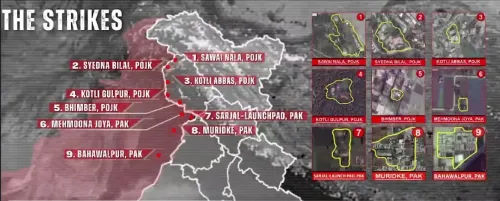
The operation involved nine standoff precision strikes — seven by the Army and two by the Air Force — targeting terror hubs in PoK and the Pakistan heartland.
Indigenous systems including BrahMos and Akash missile systems played a "decisive role"; over 65% of defence equipment used was domestically manufactured.
India ceased hostilities only after Pakistan was "compelled to negotiate," avoiding a prolonged conflict.
Ghai declared the multi-agency coordination model — spanning intelligence, cyber, BSF, and armed forces — the template for future operations .
The press conference was also attended by Air Marshal Awadhesh Kumar Bharti (DGAO) and Vice Admiral A.N.
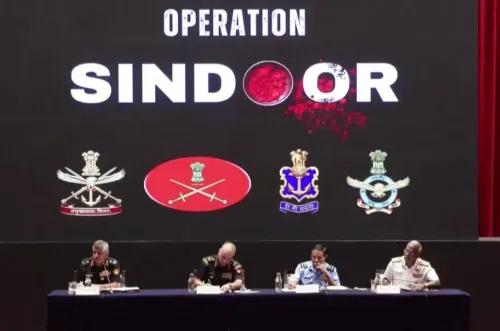
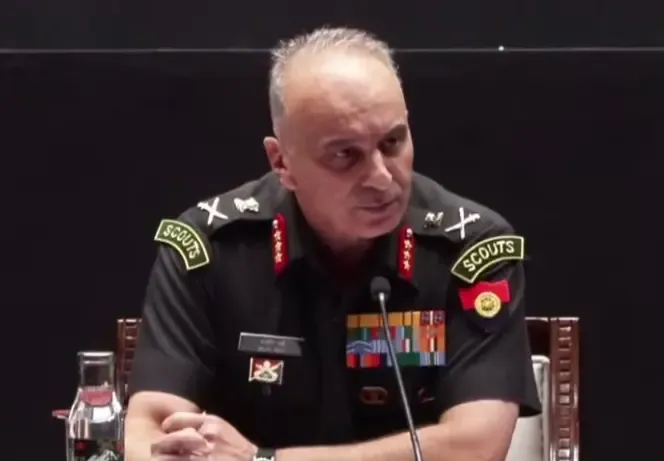
Lieutenant General Rajiv Ghai, who served as Director General of Military Operations (DGMO) during Operation Sindoor, said on Thursday, 7 May 2025, that Pakistan had been "compelled to negotiate" with India and had "requested to stop" strikes during the operation. Ghai was speaking at a press conference in New Delhi marking one year of the military operation, which was launched against Pakistan-based terror infrastructure following the Pahalgam terror attack.
Operation Sindoor: A Defining Strategic Moment
Ghai described Operation Sindoor as potentially a "defining moment" in India's strategic journey. He said the Union government gave the military two clear directions — "clear objectives and the operational ability to achieve it." The objectives, he noted, were to destroy terror ecosystems, disrupt their planning, and deter future aggression from these bases, all of which were "very unambiguously spelt out." The armed forces were simultaneously provided with the resources to plan and execute the operation independently.
He called the balance between firm direction at the top, professional autonomy, and flexibility at the operational level the "key to success" of Operation Sindoor, adding that the operation is now being regarded as a "gold standard" — both militarily and strategically — across the world.
Nine Precision Strikes Across PoK and Pakistan Heartland
Highlighting the joint Tri-services' efforts, Ghai said the operation included nine standoff precision strikes — seven by the Army and two by the Air Force. He stated: "The precisions were timed with perfection and inflicted maximum damage in each established terror hub, deep in Pakistan Occupied Kashmir (PoK) and Pakistan heartland."
Ghai also credited India's air defence architecture — which he described as "carefully and deliberately laid out" — for ensuring that Pakistan's attempted responses "went in vain."
Indigenous Weapons Proved to Be a Force Multiplier
Underlining the role of domestic defence production, the former DGMO said a significant percentage of the weapon systems, ammunition, rockets, missiles, sensors, and electronic warfare suites deployed were developed and manufactured in India. "The BrahMos, Akash missile system, advanced surveillance and targeting systems along with indigenous ammunition, all played a decisive role," he said.
Ghai added: "Indigenous equipment meant not only just self-reliance but the flexibility to tailor these to our operational requirements." He asserted that Operation Sindoor proved that 'Aatmanirbhar' is not just a slogan but a "force multiplier," noting that over 65 percent of India's defence equipment is now manufactured domestically.
Exit Strategy: India Stopped When Pakistan Sought Halt
On the question of how India chose to end hostilities, Ghai was unambiguous. He clarified that India decided to cease hostilities when Pakistan was "compelled to negotiate and requested us to stop." Referring to the "ill effects" of prolonged conflicts around the globe, he emphasised that the operation's targets were achieved "without locking India into a long-drawn war or conflict."
Multi-Agency Coordination to Serve as Template
Ghai credited all arms of the Indian state for functioning in coordination during the operation. Intelligence agencies provided accurate information critical to precision targeting; cyber and information warfare units maintained information dominance; the government managed the international environment, internal security, and public reassurance; and the armed forces executed the kinetic phase with discipline, precision, and minimal collateral impact. He also significantly credited the Border Security Force (BSF) for its role.
He said this "multi-agency, multi-domain coordination" will remain the template for "future operations," and emphasised that Operation Sindoor was "just the beginning." Concluding with a verse from poet Dushyant Kumar Tyagi — "Sirf hungama khada karna mera maqsad nahi. Meri koshish hai ki yeh soorat badalni chahiye" — Ghai asserted that India's fight against terror will continue.
The press conference was also attended by Air Marshal Awadhesh Kumar Bharti, who served as Director General of Air Operations (DGAO), and Vice Admiral A.N. Pramod, Director General of Naval Operations (DGNO), both of whom served in their respective roles during Operation Sindoor.
Point of View
The end of hostilities was presented in ambiguous diplomatic language; a serving DGMO-level officer now saying Pakistan sought the halt on record changes the strategic optics significantly. Equally notable is the emphasis on indigenous weapons as a 'force multiplier' — this is not just a defence procurement talking point but a signal that Aatmanirbhar Bharat has moved from policy aspiration to battlefield validation. The unanswered question is verification: independent assessment of strike outcomes, casualty figures, and the precise terms under which Pakistan 'requested' a halt remain undisclosed, making accountability difficult.
NationPress
21 Sept 2026
Frequently Asked Questions
What did ex-DGMO Rajiv Ghai say about how Operation Sindoor ended?
Lt Gen Rajiv Ghai stated that India ceased hostilities during Operation Sindoor when Pakistan was 'compelled to negotiate and requested us to stop.' He made these remarks at a press conference in New Delhi on 7 May 2025, marking one year of the operation.
How many strikes were carried out during Operation Sindoor?
Operation Sindoor involved nine standoff precision strikes in total — seven by the Army and two by the Air Force. According to Ghai, these targeted established terror hubs deep in Pakistan Occupied Kashmir (PoK) and the Pakistan heartland.
What indigenous weapons were used in Operation Sindoor?
The operation deployed the BrahMos missile, the Akash missile system, advanced surveillance and targeting systems, and indigenous ammunition, among other domestically produced weapon systems. Ghai noted that over 65% of India's defence equipment is now manufactured domestically.
What was the strategic objective of Operation Sindoor?
The stated objectives were to destroy terror ecosystems, disrupt their planning, and deter future aggression from Pakistan-based terror bases. The operation was launched in response to the Pahalgam terror attack.
Who else attended the Operation Sindoor anniversary press conference?
Along with Lt Gen Rajiv Ghai, the press conference was attended by Air Marshal Awadhesh Kumar Bharti, who served as Director General of Air Operations (DGAO), and Vice Admiral A.N. Pramod, Director General of Naval Operations (DGNO), both of whom held key roles during Operation Sindoor.