The Dilemma of Peace: Pakistan as a Mediator in Global Terrorism
Synopsis
Explore the unsettling irony of Pakistan, a nation long accused of harboring terrorists, positioning itself as a peace broker. This article delves into the contradictions of U.S. diplomacy amid a backdrop of historical terrorism and ongoing conflicts, raising questions about accountability and strategic partnerships.
Key Takeaways
Pakistan's dual identity : It presents itself as a peace broker despite a history of terrorism.
U.S. diplomacy : A shift in U.S. perspective raises questions about the reliability of alliances.
Historical context : Past terrorist incidents linked to Pakistan continue to influence current geopolitical dynamics.
Peace and terrorism : The paradox of engaging a nation with a troubled past in peace negotiations.
Accountability matters : The need for enforceable conditions in international partnerships.
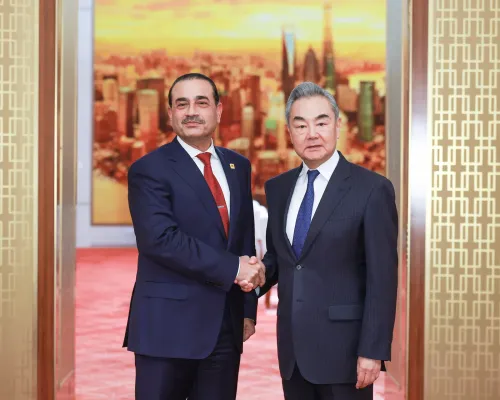
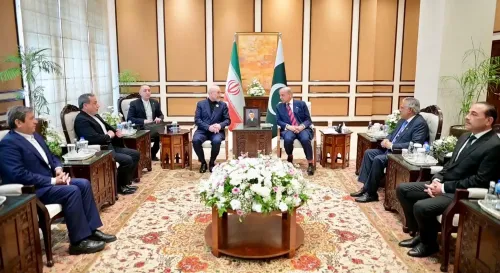
New Delhi, April 12 (NationPress) What could be more ironic -- or more disconcerting -- than a nation long accused of harboring terrorists positioning itself as a facilitator for peace negotiations? This contradiction is not just hard to overlook; it’s even more challenging to rationalize.
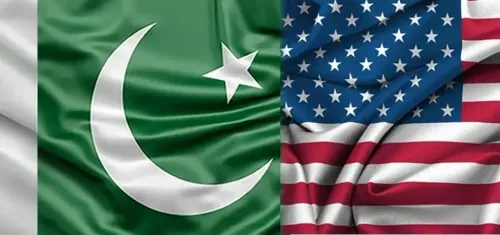
The irony deepens when one reflects on the fact that the United States -- a country that endured one of the most devastating terrorist attacks in contemporary history -- now finds itself depending, directly or indirectly, on Pakistan to pave the way for peace. This is the same Pakistan that provided refuge to Osama bin Laden, the orchestrator of 9/11, in Abbottabad, remarkably close to a military academy.
It’s profoundly unsettling to witness Pakistan assume the role of diplomatic host, striving to rebrand itself as a legitimate mediator for dialogue and stability. Yet, the essential elements required to cultivate trust -- consistency and credibility -- have seldom been associated with a country that has repeatedly cast a long shadow over global terrorism.
Founded in 1947 on religious grounds, Pakistan's development has been less about internal unity and more about external conflict, especially with India. The history is indisputable -- four wars, decades of cross-border skirmishes, and a persistent reliance on non-state actors. These episodes are not mere historical footnotes; they continue to shape the precarious security landscape of the region today.
The latest reminder surfaced on April 22, 2025, in Pahalgam, where terrorists brutally murdered 25 tourists and a local pony operator, an act that sent shockwaves around the globe. The immediate global outrage, including from the United States, was palpable.
For years, Pakistan's image on the international stage has been marred by allegations of deep-state connections with extremist factions. These issues transcend South Asia, with traces often leading back to operatives, funding channels, or ideological networks rooted in Pakistan, despite routine denials that have grown increasingly difficult to accept.
The events of September 11, 2001, illustrate this starkly. Nineteen hijackers executed coordinated assaults on the United States, leading to the collapse of the World Trade Center towers, an attack on the Pentagon, and a crash in Pennsylvania that claimed nearly 3,000 lives, fundamentally altering global security paradigms.
The investigations that ensued raised alarming questions. Khalid Sheikh Mohammed, the key planner of the attacks, was apprehended in Pakistan -- not in a remote hideaway, but in a bustling urban area. Osama Bin Laden’s presence in Abbottabad only intensified disbelief over how such individuals could remain undetected for extended periods.
This makes the current scenario all the more perplexing.
Consider Donald Trump’s own history. In 2018, as President, he openly accused Pakistan of engaging in "lies and deceit," questioning the billions of dollars in American aid and alleging that Islamabad had provided safe havens to terrorists while benefiting from U.S. support.
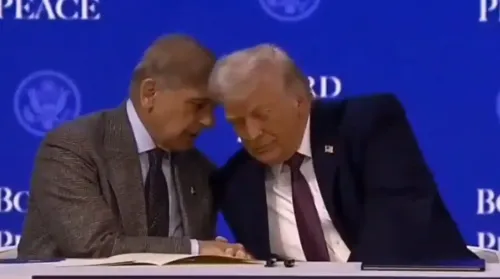
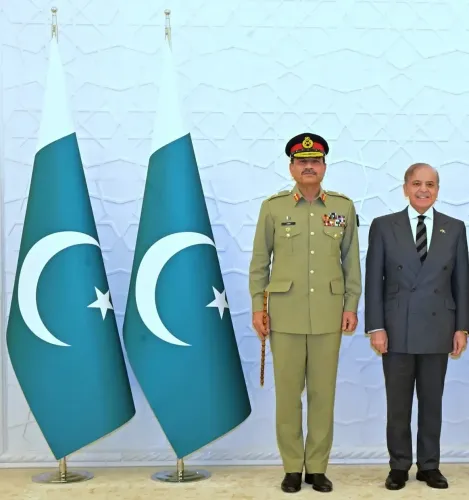
Now, the shift in tone is striking. Trump seems to have rediscovered Pakistan as a vital ally. He has lauded General Asim Munir, even dubbing him a "favorite Field Marshal," despite the general’s history of incendiary rhetoric tied to religion and region, including statements made just prior to the April 2025 Pahalgam attack.
India responded with Operation Sindoor, a measured assault on terror networks. In contrast, Trump adopted a differing narrative -- taking credit for reducing tensions between New Delhi and Islamabad and even suggesting a Nobel Peace Prize for himself. In doing so, he has effectively legitimized a state he once labeled as complicit in terrorism, positioning it as a mediator in a conflict that threatens global stability.
This situation highlights not diplomacy, but a disintegration of political consistency -- particularly in Washington. The same leader who once cautioned the world about Pakistan's duplicity now seems prepared to overlook it.
Yet, the reality remains unchanged. Pakistan has not fundamentally dismantled the infrastructure that has historically defined its global reputation. Networks that have destabilized regions and taken innocent lives continue to cast a long shadow. From harboring Osama Bin Laden to facilitating cross-border terrorism, the evidence is neither scant nor ambiguous. Unfortunately, all this is being conveniently ignored.
Thus, we find ourselves facing a troubling paradox -- a nation with such a history being portrayed as a peace facilitator, while the world’s most powerful country looks away, conveniently bypassing its dark chapters, such as the 26/11 Mumbai attacks, where American lives were also lost; the 2019 Pulwama incident; the 2001 Indian Parliament attack; or the ongoing terrorism in Kashmir that has claimed thousands of lives and displaced many.
This sends a perilous message. It implies that accountability is flexible, that uncomfortable histories can be rewritten, and that strategic utility can overshadow persistent behavioral patterns.
By legitimizing Pakistan without demanding irreversible change, the U.S. risks bolstering the very ecosystem it claims to combat, namely those regimes that support terrorism. After all, peace cannot be outsourced to a state that has frequently been part of the dilemma.
(Deepika Bhan can be contacted at deepika.b@ians.in)
Point of View
The examination of Pakistan's role as a peace broker invites scrutiny. The historical context of terrorism tied to Pakistan and the U.S. response highlights the complexities of international diplomacy, urging a careful reassessment of strategic partnerships.
NationPress
7 Oct 2026
Frequently Asked Questions
Why is Pakistan viewed as a controversial peace broker?
Pakistan is seen as controversial due to its historical connections with terrorist groups and incidents of harboring known terrorists, raising doubts about its credibility in facilitating peace.
What were the significant terrorist incidents linked to Pakistan?
Significant incidents include the 9/11 attacks, the 26/11 Mumbai attacks, and cross-border terrorism affecting India, which have all highlighted Pakistan's troubling history.
How has U.S. policy towards Pakistan shifted over the years?
U.S. policy has fluctuated from strong criticism of Pakistan's support for terrorism to a recent embrace, often ignoring past grievances in favor of strategic interests.
What implications does this have for global security?
The implications are profound; legitimizing a state with a history of terrorism risks undermining global security efforts and could embolden terrorist networks.
What can be done to ensure accountability in international relations?
Establishing clear conditions for cooperation and holding nations accountable for their actions is essential to maintaining integrity in international relations.