Death penalty for paper leak masterminds, says Rajasthan LoP Tika Ram Jully
Synopsis
Rajasthan's Leader of Opposition Tika Ram Jully isn't just backing fast-track courts for paper leak cases — he's demanding they carry the power to hang the masterminds. With leaks documented across 2024, 2025 and 2026, and a NEET case allegedly shielded by political connections still unresolved, his call signals that the examination integrity crisis is fast becoming one of India's sharpest political fault lines.
Key Takeaways
Tika Ram Jully , Rajasthan Leader of Opposition , demanded the death penalty for paper leak masterminds on 24 July .
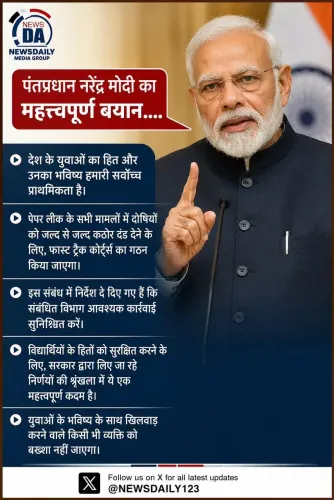
He backed PM Modi's fast-track court proposal but insisted those courts must have the power to award capital punishment .
Jully cited a student from Sikar who reportedly could not cope after a paper leak, and a family in Rajasthan that allegedly cleared NEET year after year.
An accused in a 2024 paper leak case was given a clean chit on Thursday; Jully said leaks occurred in 2024, 2025 and 2026 .
Rajasthan already has anti-paper leak laws providing 10 years to life imprisonment , but Jully said implementation remains inadequate.
He called out thousands of unfilled vacancies in Rajasthan and demanded swift, transparent recruitments to restore student confidence.
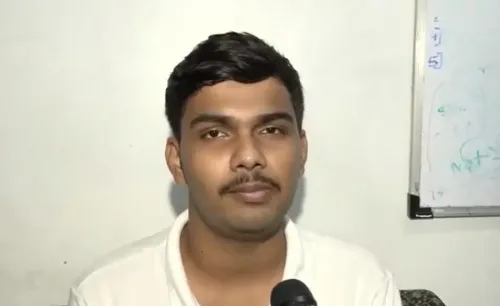
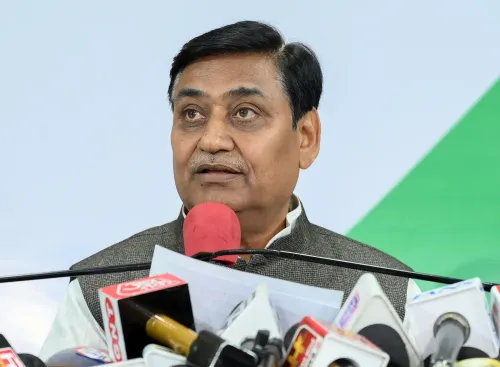
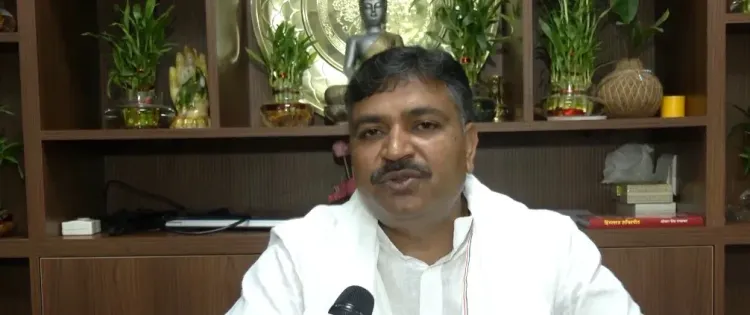
Rajasthan Leader of Opposition Tika Ram Jully on Friday, 24 July called for the death penalty for masterminds behind examination paper leak rackets, describing such crimes as 'the murder of students' futures.' Speaking in an interview from Jaipur, Jully backed Prime Minister Narendra Modi's proposal to establish fast-track courts for paper leak cases — but insisted those courts must carry the power to award capital punishment.
The Case for Capital Punishment
Jully argued that paper leaks constitute a crime equivalent in severity to taking a life. 'We have seen students unable to bear this trauma take their own lives,' he said, pointing to the case of a student from Sikar in Rajasthan who reportedly could not cope with the shock of a paper leak after two years of preparation for a medical entrance examination. He contended that fast-track courts, as proposed by the Prime Minister, must go further and include the provision for capital punishment for those found guilty of orchestrating such rackets.
NEET and Repeated Leaks: A Pattern of Failure
Jully raised pointed concerns about the NEET controversy, citing what he described as a suspicious pattern in Rajasthan where children from a single family reportedly cleared the examination year after year. He demanded a thorough and impartial investigation into such cases, noting that an accused in a paper leak case from 2024 was given a clean chit as recently as Thursday. 'There were paper leaks in 2024, in 2025 and in 2026 too. This needs to be checked now,' he said. Jully also questioned why the First Information Report (FIR) in the family-linked NEET case was filed by the Central Bureau of Investigation (CBI) and not by Rajasthan Police, calling for that anomaly to be probed. He alleged the family in question has links to the Bharatiya Janata Party (BJP), and said strict action remains pending.
Student Protests and Government Response
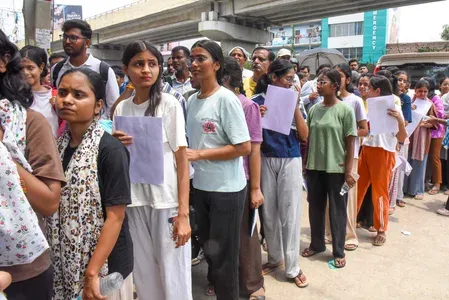
With student protests against examination irregularities spreading across India and reaching Jaipur, Jully urged governments to choose dialogue over suppression. He criticised instances where protesters were reportedly detained or forcefully dispersed, arguing that in 'Mahatma Gandhi's country, peaceful protests inspired by Gandhian principles should be respected.' He noted that many students have crossed the age limit for recruitment while waiting for examinations and appointments, compounding their frustration.
Accountability at Every Level
Jully rejected the argument that appointing a new Education Secretary signals adequate corrective action. He alleged that the incoming officer has faced corruption allegations, while no charge sheet or suspension was initiated against the outgoing officer. 'Accountability cannot be selective,' he said. He called for transparent appointments, independent investigations and swift completion of pending recruitments — noting that thousands of vacancies remain unfilled in Rajasthan. Notably, Rajasthan already has one of the country's more stringent anti-paper leak laws, providing for punishment ranging from ten years' imprisonment to life imprisonment, along with dismissal of guilty government officials. Jully argued that the law exists; what is missing is consistent implementation and political will.
What Needs to Happen Next
The Rajasthan LoP outlined a multi-pronged path forward: expedite pending recruitments, hold officials accountable irrespective of political affiliation, ensure independent investigations into every suspicious case, and make fast-track courts capable of delivering the most stringent sentences. Whether the Centre moves in that direction — particularly on the NEET family case — will be closely watched by student groups and opposition parties alike.
Point of View
But it points to a real institutional failure: paper leaks have occurred across three consecutive years — 2024, 2025 and 2026 — and accountability has been conspicuously absent at every level. The clean chit handed to a 2024 accused just days before this interview, combined with the CBI-not-police anomaly in the NEET family case, suggests the problem is less about weak laws and more about selective enforcement. Rajasthan already has some of the country's toughest paper leak statutes; the question is why they haven't deterred repeat offenders. Fast-track courts will only matter if the political will to prosecute — regardless of party affiliation — is genuine.
NationPress
24 Jul 2026
Frequently Asked Questions
What did Rajasthan LoP Tika Ram Jully demand regarding paper leaks?
Tika Ram Jully demanded the death penalty for masterminds behind examination paper leak rackets, arguing the crime is equivalent to destroying lives. He also called for fast-track courts handling such cases to carry the power to award capital punishment.
What is PM Modi's proposal on paper leak cases?
Prime Minister Narendra Modi announced the establishment of fast-track courts specifically to deal with examination paper leak cases. Jully backed the proposal but said it must go further by including a provision for capital punishment.
What concerns has Jully raised about the NEET controversy in Rajasthan?
Jully cited a suspicious pattern where children from a single family in Rajasthan reportedly cleared NEET year after year, and alleged the family has BJP links. He questioned why the FIR was filed by the CBI rather than Rajasthan Police, and said strict action remains pending despite the investigation.
How widespread is the paper leak problem according to Jully?
According to Jully, paper leaks occurred in 2024, 2025 and 2026. He noted that an accused in a 2024 paper leak case was given a clean chit as recently as Thursday, which he said reflects the inadequacy of accountability measures.
What laws does Rajasthan already have against paper leaks?
Rajasthan has one of India's more stringent anti-paper leak laws, providing for punishment ranging from ten years' imprisonment to life imprisonment, along with dismissal of guilty government officials. Jully acknowledged the law exists but said consistent implementation and political will are still lacking.