NEET paper leak fast-track courts set up in 4 states under new anti-cheating law
Synopsis
Hours after PM Modi's public pledge on X, the Centre moved to set up fast-track courts in four High Court jurisdictions to try NEET paper leak accused under a brand-new anti-cheating law — one that carries 5-year imprisonment and a ₹10 lakh fine. With four FIRs already filed, this is the first real-world test of the Public Examinations (Prevention of Unfair Means) Act, 2024.
Key Takeaways
The Central Government is setting up fast-track courts in four states to try NEET paper leak accused on a priority basis.
Courts will be constituted under the jurisdictions of Bombay , Calcutta , Delhi , and Madhya Pradesh High Courts; two cases fall under Bombay HC.
Accused will be prosecuted under the Public Examinations (Prevention of Unfair Means) Act, 2024 , carrying up to 5 years imprisonment and a ₹10 lakh fine.
Four FIRs have been registered under the Act so far in connection with the NEET leak.
The law also covers exams conducted by UPSC , SSC , RRB , IBPS , and all NTA -administered tests.
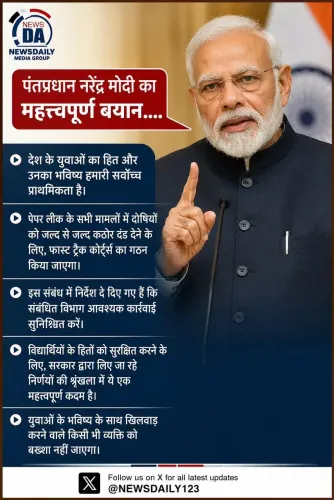
PM Modi said on X on 23 July : 'Those who try to harm the future of our youth will not be spared.'
The Central Government has initiated the process of establishing fast-track courts in four states to ensure swift and stringent justice in the NEET paper leak case, according to highly placed sources. The move follows Prime Minister Narendra Modi's announcement on 23 July that those responsible for the leak would face accelerated legal proceedings and severe punishment.
The Legal Framework
Accused in the NEET paper leak case will be prosecuted under the Public Examinations (Prevention of Unfair Means) Act, 2024 — a new anti-cheating law that carries a maximum imprisonment of 5 years and a penalty of ₹10 lakh upon conviction. According to sources, four FIRs have already been registered under this Act in connection with the NEET leak.
The law's scope extends beyond NEET alone. It also covers paper leaks related to examinations conducted by the Union Public Service Commission (UPSC), Staff Selection Commission (SSC), Railway Recruitment Board (RRB), Institute of Banking Personnel Selection (IBPS), all Central Government ministry and department recruitment exams, and every entrance and recruitment examination conducted by the National Testing Agency (NTA).
Where the Courts Will Be Set Up
Four fast-track courts are being constituted on a priority basis within the jurisdictions of the Bombay, Calcutta, Delhi, and Madhya Pradesh High Courts. Of the four pending cases currently before High Courts, two fall under the Bombay High Court's jurisdiction.
The Central Government is set to issue formal requests to the respective state governments and High Courts to constitute these special courts, mandating daily hearings and speedy disposal of cases, sources said.
What PM Modi Said
Earlier on 23 July, Prime Minister Modi took to X to underline the government's commitment to protecting the interests of India's youth. 'Nothing is more important than the welfare and future of our youth. Those who try to harm the future of our youth will not be spared,' Modi said in his post.
The announcement came amid sustained public outrage over the alleged irregularities in the NEET-UG 2024 examination, which is conducted by the NTA and serves as the sole gateway for admissions to medical colleges across India.
Why This Matters
The NEET paper leak controversy has triggered a national debate over the integrity of competitive examinations, with millions of aspirants and their families demanding accountability. This is not the first time paper leaks have shaken India's examination ecosystem — similar controversies have previously dogged state-level and central recruitment exams.
The deployment of a dedicated legal mechanism signals a shift from reactive inquiry to institutionalised deterrence. Notably, the Public Examinations (Prevention of Unfair Means) Act, 2024 was enacted earlier this year, and the NEET cases now represent its first major test in practice.
What Comes Next
With formal requests to states and High Courts expected imminently, legal proceedings in the fast-track courts are anticipated to begin shortly. The outcome of these cases will serve as a critical benchmark for how effectively the new anti-cheating legislation can deliver on its deterrence promise.
Point of View
But the real question is whether fast-track courts can deliver convictions at a pace that restores student confidence — not just generate headlines. India's track record with special courts is mixed: they are often constituted swiftly but proceed slowly once the political spotlight dims. With only four FIRs filed so far in a scandal that allegedly affected hundreds of thousands of aspirants, the scope of accountability remains narrow. The NEET crisis has exposed systemic vulnerabilities in centralised examination architecture; fast-track courts address the symptom, not the structural flaw.
NationPress
21 Oct 2026
Frequently Asked Questions
What are the fast-track courts being set up for the NEET paper leak case?
The Central Government is establishing special fast-track courts in four High Court jurisdictions — Bombay, Calcutta, Delhi, and Madhya Pradesh — to hear NEET paper leak cases with daily hearings and speedy disposal. The courts will try accused under the Public Examinations (Prevention of Unfair Means) Act, 2024.
What punishment do accused face under the new anti-cheating law?
Under the Public Examinations (Prevention of Unfair Means) Act, 2024, those found guilty face up to 5 years of imprisonment and a penalty of ₹10 lakh. Four FIRs have already been registered under this Act in connection with the NEET paper leak.
Which exams does the Public Examinations (Prevention of Unfair Means) Act, 2024 cover?
The Act covers all examinations conducted by the NTA, UPSC, SSC, RRB, and IBPS, as well as recruitment exams for Central Government ministries and departments. The NEET paper leak cases are among the first to be prosecuted under this law.
What did PM Modi say about the NEET paper leak?
On 23 July, PM Modi posted on X stating: 'Nothing is more important than the welfare and future of our youth. Those who try to harm the future of our youth will not be spared.' His post preceded the government's formal announcement of fast-track courts.
How many cases are currently pending in High Courts related to the NEET leak?
According to sources, around four cases related to the NEET paper leak are currently pending in High Courts. All of these will now be transferred to the newly constituted fast-track courts, with two of the four falling under the Bombay High Court's jurisdiction.