India's exam paper leak crisis: Fast-track courts, new law, and a decades-long failure
Synopsis
India's exam paper leak epidemic is not a new-government problem — it is a decades-old structural failure that has survived every regime. The 2024 law and Modi's fast-track court announcement are the most aggressive federal response yet, but with convictions historically near zero, the real test is whether the judiciary can move faster than the political will to protect the accused.
Key Takeaways
Exam paper scams have persisted across governments and political eras, with convictions remaining negligible despite repeated arrests.
The West Bengal teacher-recruitment scam, linked to WBSSC drives between 2014 and 2016 , allegedly involved hundreds of crores of rupees and led to the annulment of thousands of appointments.
The Vyapam scam in Madhya Pradesh , which surfaced around 2013–2014 , saw dozens of connected individuals die under mysterious circumstances.
The UGC-NET was cancelled in 2024 after papers were reportedly compromised, affecting nearly nine lakh students.
The Public Examinations (Prevention of Unfair Means) Act, 2024 criminalises organised exam fraud across national agencies including NTA , UPSC , SSC , and Railways.
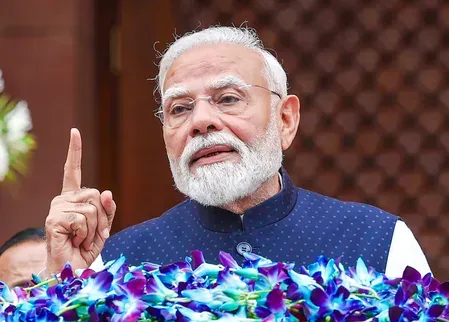
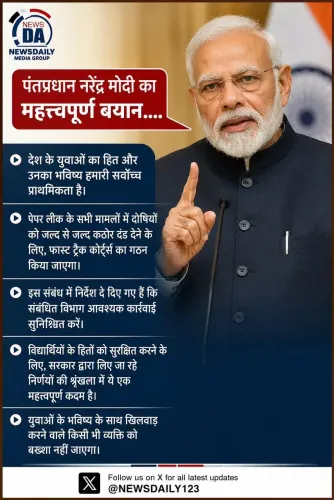
PM Modi has announced fast-track courts under the Bombay , Calcutta , Delhi , and Madhya Pradesh High Courts to hear paper leak cases daily.
Examination paper scams have systematically eroded public trust in India's education and recruitment systems across political regimes and decades, leaving millions of aspirants in limbo. The introduction of the Public Examinations (Prevention of Unfair Means) Act, 2024, and Prime Minister Narendra Modi's recent announcement of fast-track courts dedicated to paper leak cases mark the most concerted federal response yet — but critics argue enforcement has lagged the legislation.
A Pattern Spanning Governments and Decades
State-level recruitment examinations have repeatedly been marred by leaks, exposing a nexus of officials, politicians, and middlemen manipulating exam papers and results. Despite arrests and inquiry commissions, convictions have remained rare, and numerous cases remain unresolved. The pattern is not confined to any single party or state — it has persisted across administrations, making it a structural failure rather than a partisan one.
Notably, each wave of arrests has been followed by prolonged trials that rarely produce verdicts, effectively insulating perpetrators and discouraging future whistleblowers.
West Bengal Teacher Recruitment Scam
The West Bengal teacher-recruitment scandal stands as one of the most significant education corruption cases in recent memory. Jobs for teachers and non-teaching staff in government schools were allegedly sold for money rather than awarded on merit through the official process of the West Bengal School Service Commission (WBSSC).
The irregularities are linked to recruitment drives conducted between 2014 and 2016 under the All India Trinamool Congress (TMC) government. Investigations revealed that thousands of candidates who had not qualified in written exams or interviews were allegedly appointed in exchange for payments reportedly running into hundreds of crores of rupees. Genuine candidates who had cleared the exams were denied positions, while unqualified individuals reportedly took classes.
The scandal came to light after whistleblowers and aggrieved candidates approached the Calcutta High Court, which ordered probes into the recruitment process. Thousands of appointments were subsequently annulled, leaving schools understaffed and students without teachers.
The Vyapam Scam: Corruption and Mysterious Deaths
Earlier, the Vyapam scam in Madhya Pradesh emerged as one of India's largest and most notorious examination and recruitment scandals. Beginning in the early 2000s and surfacing publicly around 2013–2014, it exposed a massive network involving politicians, bureaucrats, middlemen, and exam officials.
At its core, the scam revolved around the manipulation of entrance and recruitment examinations. Candidates who allegedly paid bribes were permitted to cheat, have proxies write their papers, or were given access to leaked question papers. The case took a darker turn when dozens of individuals connected to it — including students, officials, and journalists — died under mysterious circumstances, fuelling suspicions of foul play and cover-ups. These deaths gave the Vyapam scam national prominence and made it a symbol of systemic corruption in India's recruitment ecosystem.
NEET, UGC-NET, and the Breadth of the Crisis
The National Eligibility-cum-Entrance Test (NEET) — the single gateway for medical admissions to MBBS and BDS courses — has also faced allegations of paper leaks despite being introduced as a reform to standardise admissions. The University Grants Commission's National Eligibility Test (UGC-NET) was cancelled in 2024 after papers were reportedly compromised, affecting nearly nine lakh students.
Railway recruitment examinations, teacher eligibility tests in Odisha and Maharashtra, and police constable examinations in Uttar Pradesh and West Bengal have all faced similar disruptions. Each time, arrests were made, but convictions largely remained elusive — underscoring a systemic gap between enforcement action and judicial outcomes.
New Law and Fast-Track Courts: Will They Break the Cycle?
Recognising the scale of the crisis, the Union government enacted the Public Examinations (Prevention of Unfair Means) Act, 2024, covering exams conducted by national agencies including the National Testing Agency (NTA), Union Public Service Commission (UPSC), Staff Selection Commission (SSC), Railways, and IBPS, as well as state boards. The Act prescribes stringent penalties, including imprisonment, for those found guilty of leaking papers or facilitating unfair means.
Prime Minister Narendra Modi has since announced the establishment of fast-track courts dedicated to paper leak cases, set up under the jurisdiction of the Bombay, Calcutta, Delhi, and Madhya Pradesh High Courts. These courts are designed to hear cases daily and deliver quicker judgments. Whether they will break the cycle of endless trials and delayed justice — a cycle that has historically protected perpetrators — remains to be seen.
Point of View
But India has a long history of institutional responses to exam scams that generate headlines without producing convictions. The 2024 Act is the strongest legislative tool yet, but legislation without enforcement infrastructure is a ceiling, not a floor. What is missing from the current response is a transparent, publicly auditable conviction rate — without that metric, successive governments will keep announcing 'crackdowns' while the nexus of officials, politicians, and middlemen rebuilds after every cycle. The deeper question is whether fast-track courts will be adequately staffed and insulated from the same political pressures that have historically delayed these cases.
NationPress
22 Oct 2026
Frequently Asked Questions
What is the Public Examinations (Prevention of Unfair Means) Act, 2024?
It is a central law enacted in 2024 that criminalises organised examination fraud, covering exams conducted by national agencies including the NTA, UPSC, SSC, Railways, and IBPS, as well as state boards. It prescribes stringent penalties including imprisonment for paper leaks and facilitation of unfair means.
What are the fast-track courts announced by PM Modi for paper leak cases?
PM Modi announced dedicated fast-track courts for paper leak cases, set up under the jurisdiction of the Bombay, Calcutta, Delhi, and Madhya Pradesh High Courts. These courts are designed to hear cases daily and deliver faster judgments, aiming to end the cycle of prolonged trials.
What was the West Bengal teacher-recruitment scam?
The West Bengal teacher-recruitment scam involved the alleged sale of teaching and non-teaching posts in government schools, linked to recruitment drives by the WBSSC between 2014 and 2016 under the TMC government. Thousands of unqualified candidates were reportedly appointed in exchange for payments worth hundreds of crores of rupees, and the Calcutta High Court ordered probes that led to the annulment of thousands of appointments.
Why was UGC-NET cancelled in 2024?
The UGC-NET was cancelled in 2024 after question papers were reportedly compromised before the examination, affecting nearly nine lakh students. It was among several high-profile exam disruptions that prompted the government to fast-track legislation and judicial reforms.
What was the Vyapam scam?
The Vyapam scam was a massive examination and recruitment fraud in Madhya Pradesh that began in the early 2000s and came to national attention around 2013–2014. It involved politicians, bureaucrats, and middlemen enabling candidates to cheat or access leaked papers in exchange for bribes, and became notorious after dozens of individuals connected to the case died under mysterious circumstances.