How is the Parliamentary Affairs Ministry Operating in a Paperless Manner?
Synopsis
In a groundbreaking move, the Ministry of Parliamentary Affairs has embraced a paperless approach by leveraging key digital platforms. This shift not only streamlines operations but also promotes sustainability by saving countless trees. Discover how technology is reshaping the functioning of government bodies in India.
Key Takeaways
Transition to paperless operations enhances efficiency.
Digital platforms streamline various administrative tasks.
Significant reduction in paper usage promotes sustainability.
Real-time tracking and transparency are improved.
Future enhancements will include AI-driven features .
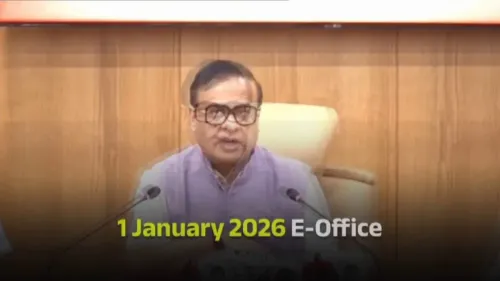
New Delhi, Dec 18 (NationPress) The Ministry of Parliamentary Affairs has successfully transitioned to a paperless operational model by utilizing seven pivotal digital platforms, such as e-Office and the National e-Vidhan Application (NeVA), as reported to Parliament.
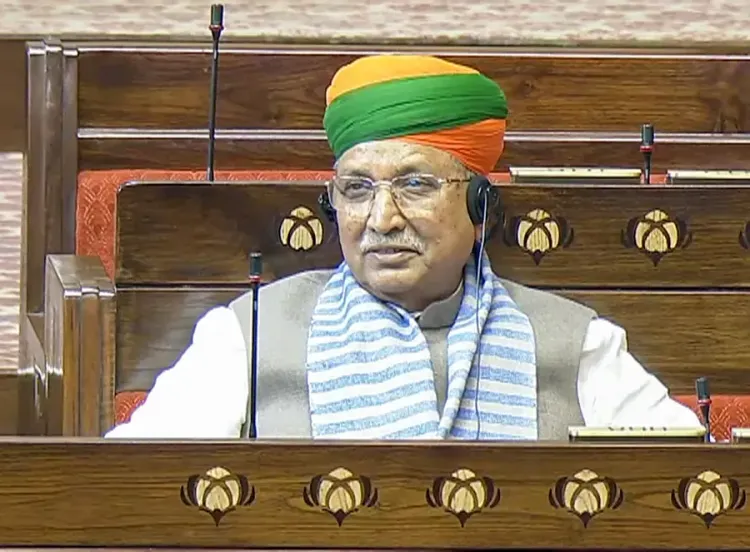
The tangible advantages of this extensive digital initiative are clear, highlighted by the total eradication of backlog (complete resolution of all references and files) and a significant decrease in administrative delays linked to the movement of physical documents and paper usage, stated Minister of State for Parliamentary Affairs Arjun Ram Meghwal in a written statement in the Lok Sabha.
Among the notable features of this digital advancement are e-Office for streamlined file movement and approvals, e-HRMS for efficient management of service and HR issues, the Consultative Committee Management System for comprehensive digital oversight of consultative committee meetings, and the Claims and Inventory Management System for transparent procurement and asset management, he elaborated on Wednesday.
The National e-Vidhan Application (NeVA) facilitates legislative digital workflows within State-UT Legislatures, while the Online Assurance Monitoring System (OAMS) allows for real-time monitoring of parliamentary assurances. Furthermore, the dedicated portal for the National Youth Parliament Scheme has enhanced digital operations, he noted.
Meghwal added that other advantages stemming from digital adoption include real-time visibility and an audit trail for all transactions, resulting in unmatched transparency, secure and easily accessible electronic record-keeping, and a substantial reduction in processing times.
During the Special Campaign 5.0 (from October 2 to 31, 2025), the Ministry of Parliamentary Affairs accomplished a “zero-pendency and zero-paper” status by resolving all pending references and undertaking rigorous cleanliness and waste-segregation initiatives.
The Ministry is advocating NeVA as a benchmark for green governance, claiming it saves millions of trees annually.
He mentioned that all officers and staff within the Ministry have taken the Swachhata pledge. Under the Swachh Bharat initiative, the Ministry aims for near-complete reduction of paper usage across all State/UT legislatures through full adoption of NeVA and digitization of historical records.
The Ministry's future strategy focuses on upgrading NeVA for State-UT Legislatures into an AI-driven platform by incorporating real-time multilingual machine translation features (text-to-text, speech-to-text, text-to-speech, and speech-to-speech) in various official languages. This will empower users to access content in their desired regional languages, generate House proceedings, facilitate AI-driven live transcription, create searchable archives, and deploy intelligent multilingual chatbots.
These innovations are set to significantly reduce printed materials while promoting linguistic inclusivity.
Point of View
I firmly believe that the transition to a paperless system in the Ministry of Parliamentary Affairs is a commendable step forward. It not only enhances operational efficiency but also aligns with the global push for sustainability and environmental responsibility. This initiative showcases the government's commitment to leveraging technology for better governance and public service.
NationPress
16 Oct 2026
Frequently Asked Questions
What is the National e-Vidhan Application (NeVA)?
The National e-Vidhan Application (NeVA) is a digital platform that facilitates legislative workflows in State-UT Legislatures, streamlining various processes and enhancing efficiency.
How does the Ministry plan to achieve zero paper usage?
The Ministry aims for near-zero paper usage through complete adoption of NeVA and the digitization of legacy records, promoting a sustainable approach to governance.
What are the benefits of the paperless system?
Benefits include reduced administrative delays, enhanced transparency, instant visibility of transactions, and significant savings in paper consumption.
What initiatives were taken during Special Campaign 5.0?
During Special Campaign 5.0, the Ministry achieved zero-pendency by resolving all pending references and conducted cleanliness drives.
How does the Ministry ensure multilingual accessibility?
The Ministry plans to integrate real-time multilingual machine translation capabilities into NeVA, allowing users to access content in their preferred languages.