Parliament sits just 70 days a year now, says Shashi Tharoor
Synopsis
Parliament now meets for roughly 70 days a year, compared with up to 170 in the 1950s, says Shashi Tharoor. He warned that the Monsoon Session, still open after 115 days, could be revived to push through the delimitation Bill. He also said India should seek firm assurance from Washington on its proposed tariffs of up to 25%.
Key Takeaways
Shashi Tharoor said Parliament now sits about 70 days a year, down from 120 to 170 days in the 1950s .
He alleged that the Gujarat Assembly met only 50 to 55 days a year in Modi's final years as Chief Minister.
The Monsoon Session has stayed formally unprorogued for over 115 days , and the Winter Session has not been notified, he said.
Tharoor said the government may revive the Monsoon Session to pass the delimitation Bill , which the Congress opposes.
On proposed US tariffs of up to 25 per cent , he urged waiting for the final outcome and sought assurance that any rate would be final.
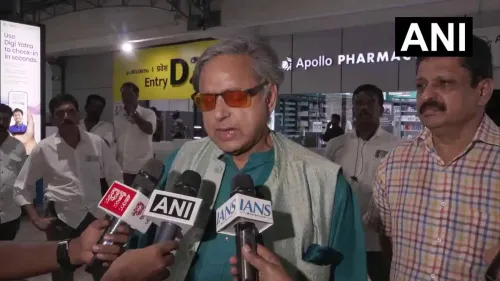
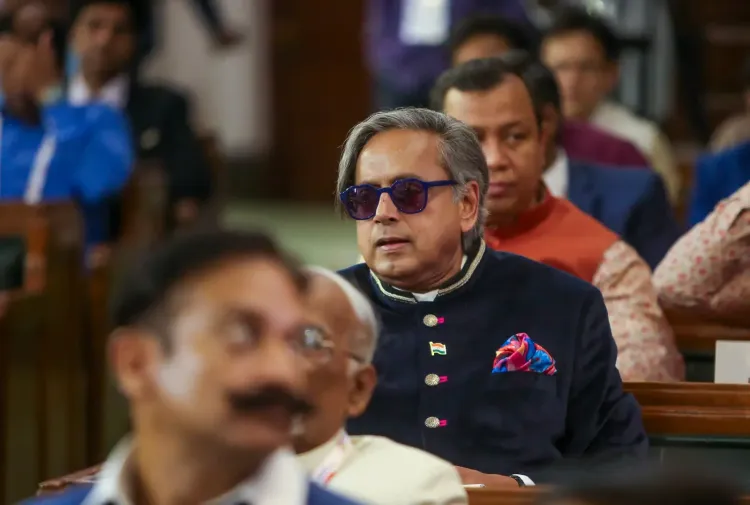
Congress MP Shashi Tharoor on Thursday, 26 November 2026, said Parliament now sits for only about 70 days a year, down from 120 to 170 days annually in the 1950s. Speaking in Thiruvananthapuram, he accused the Narendra Modi government of weakening Parliament's role as a forum for debate and for holding the executive to account. He also raised concerns about delays in closing the Monsoon Session and scheduling the Winter Session, and spoke about the United States' proposed tariffs of up to 25 per cent on India.
Key Allegations on Parliamentary Functioning
Tharoor described the government's approach to parliamentary democracy as unusual. “As far as we are concerned, we find the government's approach to parliamentary democracy incredibly strange,” he said.
He compared the current situation with Modi's years as Chief Minister of Gujarat. Tharoor claimed that sittings of the Gujarat Legislative Assembly were also cut during that period. He alleged that in Modi's final years as Chief Minister, the Assembly met for only about 50 to 55 days a year.
“We certainly don't want Parliament to do that. Parliament used to be a minimum of 120 to 170 days in the 1950s. Now, it's come down to just about 70 days,” he said.
The Congress MP alleged that the government did not want Parliament to work as a debating forum where citizens could raise their concerns. “Instead, they seem to just want a rubber stamp where they can pass whatever legislation they urgently need to pass. They're reducing the days, day after day after day,” he said.
Push for an Advance Parliamentary Calendar
Tharoor called for the parliamentary calendar to be published well ahead of time. He noted that several countries announce their legislative schedules nine to 12 months in advance, and some do so even earlier.
He said advance scheduling would help MPs plan their work and travel. It would also make sure they are available to raise issues on behalf of their constituents.
Monsoon Session Delay and Delimitation Concerns
Tharoor also objected to the delay in proroguing the Monsoon Session. According to him, it has remained formally open for more than 115 days.
He said the Winter Session would normally have begun by now. However, it has not been formally scheduled, and the required two weeks' notice has not been issued, he said.
Tharoor suggested the government may want to keep the option of briefly reconvening the Monsoon Session to pass legislation. He named the proposed delimitation Bill as one example. The Indian National Congress (Congress) has serious reservations about that Bill.
“These are very important national issues affecting the future of future generations. They require serious discussion. They should not be treated in this cavalier fashion,” he said.
Views on the US Tariff Proposal
On the United States' fresh proposal to impose tariffs of up to 25 per cent on India, Tharoor called the development a matter of concern. He pointed out that trade negotiations between the two countries have not formally concluded.
He cited statements from Indian negotiators, the US Trade Representative, the US Commerce Secretary and India's External Affairs Minister. According to him, these indicated that most parts of the deal were complete, with only final formalities pending. “Therefore, we need to wait for the outcome before drawing any conclusions,” he said.
Tharoor also pointed to what he described as unpredictable US trade policy under President Donald Trump. He said Washington could agree to an arrangement and later change its position. “There needs to be some assurance from the US that whatever number they come up with is the final number, and the Indian exporters can then factor it into their work,” he said.
He added that India should not expect a return to the lower tariff levels it had earlier under the Trump administration. Instead, he said, India should aim for the best possible outcome under current conditions. “We would take advantage of what is being offered to us, in terms of our competitors,” Tharoor said.
What Happens Next
The pressure is now on the Centre to announce dates for the Winter Session and formally close the Monsoon Session. Exporters, meanwhile, are waiting for clarity on the final shape of the India-US trade arrangement.
Point of View
So this is a decades-long institutional decline and not one government's doing alone. That does not let the current government off the hook. A Monsoon Session kept technically open for over 115 days, with no notice for the Winter Session, gives the executive unusual control over when Parliament meets and what it debates. The more important issue is the delimitation Bill. Changes to representation that will shape politics for generations need full scrutiny in the House, not a hurried passage. A fixed parliamentary calendar is a modest reform, and support for it should come from across party lines.
NationPress
26 Nov 2026
Frequently Asked Questions
What did Shashi Tharoor say about Parliament's sitting days?
Tharoor said Parliament now sits for about 70 days a year, compared with 120 to 170 days annually in the 1950s. He accused the Modi government of treating Parliament as a rubber stamp instead of a forum for debate and accountability.
Why is the Monsoon Session still not closed?
According to Tharoor, the Monsoon Session has remained formally unprorogued for more than 115 days. He suggested the government may want to reconvene it briefly to pass legislation such as the proposed delimitation Bill.
Has the Winter Session of Parliament 2026 been announced?
Tharoor said the Winter Session has not been formally scheduled, and the required two weeks' notice has not been issued, even though it would normally have begun by now.
What did Tharoor say about the US proposal of 25% tariffs on India?
Tharoor called the proposal of tariffs of up to 25 per cent a matter of concern but said trade talks have not formally concluded. He said the US should give assurance that any agreed rate is final so Indian exporters can plan around it.
What reform did Tharoor suggest for Parliament?
He proposed publishing the parliamentary calendar well in advance, as several countries do nine to 12 months ahead. He said this would help MPs plan their work and stay available to raise their constituents' concerns.