CM Pema Khandu on Dissent, Elders, and India's Civilisational Roots
Synopsis
Arunachal Pradesh CM Pema Khandu argues on X that India's civilisational tradition — from the Upanishads to Adi Shankaracharya — already offers a model of principled dissent, and that shock-value abuse of elders is not free expression but a confusion of it.
Key Takeaways
Arunachal Pradesh CM Pema Khandu posted a cultural commentary on 1 August 2026 distinguishing legitimate dissent from abuse-driven protest.
He argues that Western-influenced 'hyper-individualism' is being uncritically adopted by Indian youth as a protest template.
Khandu cites Lord Buddha , Lord Mahavira , and Adi Shankaracharya's 8th-century nationwide debates as evidence of India's own robust tradition of public disagreement.
He specifically criticises ridiculing elders, abusing parents, and demeaning senior citizens as a form of performative 'progressiveness.' His core distinction: freedom of expression grants the right to disagree; India's civilisational values define how to do so with 'grace, reason, and respect.'
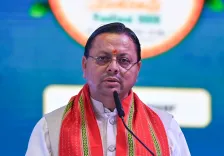
When Arunachal Pradesh Chief Minister Pema Khandu speaks about protest culture, he is not calling for silence — he is making a distinction. On Saturday, 1 August 2026, Khandu posted a pointed cultural commentary arguing that India's own tradition of dissent is far older and richer than any trend imported from the West, and that abusing elders in the name of free expression is not progress — it is a confusion of the two.
The West is not the default setting
Khandu's central argument cuts straight to a live tension in Indian public life. 'Dissent is a fundamental right,' he wrote, 'but many young people today have adopted a culture of protest influenced by contemporary Western trends of hyper-individualism, where abusive language is often used to create shock value and attract attention.' The assumption he challenges — that if something is practised in the West, it must be the right way — is one he calls a category error. What evolved in one civilisational context, he argues, need not become the standard for another. This is not a fringe position inside the BJP. Senior leaders have periodically returned to the idea that India's philosophical heritage offers its own, arguably more rigorous, model of public debate — one that does not require insult to be effective.From the Upanishads to Shankaracharya: India's long tradition of argument
Khandu grounds his case in a lineage that is hard to dismiss. He points to students questioning gurus in the Upanishads, the transformative critiques of Lord Buddha and Lord Mahavira, and Adi Shankaracharya's nationwide philosophical debates in the 8th century — a figure who walked the length of the subcontinent specifically to argue, in public, with anyone willing to engage. These were not polite conversations. They were rigorous, high-stakes intellectual contests. They just were not abusive ones. The implicit point: radical dissent and civilisational respect are not opposites. India's own record proves they can coexist.The specific behaviour Khandu names
The post does not stay at the philosophical level. Khandu names a concrete pattern — 'the tendency to ridicule senior citizens, abuse parents, or demean elders merely to create shock value or appear progressive' — and calls it 'deeply misguided.' The framing is precise: this is not a critique of dissent itself, but of a specific performance of it that mistakes rudeness for courage. 'Freedom of expression gives us the right to disagree,' he writes. 'Our civilizational values teach us how to disagree with grace, reason, and respect.' The line will land differently depending on where you stand — as a timely corrective to a real cultural drift, or as an establishment figure drawing the boundaries of acceptable protest. That debate, playing out across Indian social media, is exactly the one Khandu appears to be entering — not ending.Point of View
Mahavira, and Shankaracharya, he positions the argument above partisan ground, making it harder to dismiss as mere conservatism. The sharper political subtext is a pushback against a style of youth activism — visible on Indian campuses and social media — that draws its aesthetic from Western protest movements. Whether this reads as a genuine philosophical intervention or as an attempt to define the boundaries of acceptable dissent will depend entirely on the audience — and that ambiguity is almost certainly intentional.
NationPress
16 Sept 2026
Frequently Asked Questions
What did Pema Khandu say about protest culture?
Khandu argued that many young Indians have adopted a Western-influenced protest style built on abusive language and shock value, and that India's own tradition — from the Upanishads to Adi Shankaracharya — offers a better model of principled, respectful dissent.
What examples did Pema Khandu give of India's tradition of dissent?
He cited students questioning gurus in the Upanishads, the philosophical critiques of Lord Buddha and Lord Mahavira, and Adi Shankaracharya's 8th-century public debates across India as examples of deep, rigorous dissent within Indian civilisation.
Is Pema Khandu against freedom of expression?
No. Khandu explicitly states that 'dissent is a fundamental right' and that freedom of expression gives people the right to disagree — his argument is about the manner of disagreement, not the right itself.
What behaviour did Pema Khandu criticise specifically?
He criticised the tendency to ridicule senior citizens, abuse parents, and demean elders as a way to appear progressive or generate attention, calling it 'deeply misguided.'