Pinarayi hails UN nod for Kerala's extreme poverty push
Synopsis
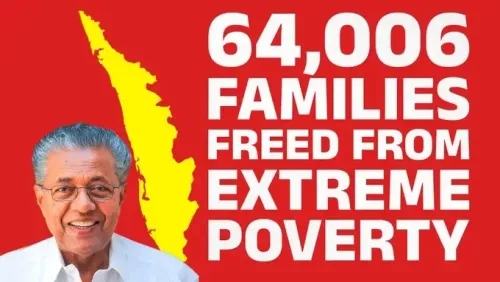
Former Kerala CM Pinarayi Vijayan has cited the UN Human Rights Commissioner's recognition of Kerala's extreme poverty elimination as a 'moment of pride,' credited the LDF government's grassroots-driven programme, and warned the current UDF administration against letting the initiative lose momentum.
Key Takeaways
The UN Human Rights Commissioner recognised Kerala's achievement in eliminating extreme poverty, an acknowledgement Vijayan described as 'a moment of pride for every Malayali.' Vijayan credited the milestone to the LDF government's people-centred development approach and decentralised grassroots participation model.
The LDF had launched a dedicated Extreme Poverty Eradication Programme after the 2021 assembly election, working through household-level interventions and local self-government bodies.
Vijayan warned that the current UDF government 'appears to be neglecting this landmark programme,' raising continuity concerns.
Kerala has historically been an outlier in India on human development indicators, with decades of sustained social-sector investment underpinning its poverty metrics.
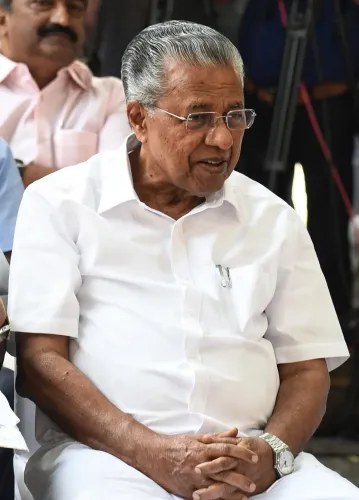
A global human-rights body has taken notice — and Kerala's former Chief Minister wants to make sure the momentum is not squandered. Kerala Chief Minister Pinarayi Vijayan on Friday, 6 November 2026, invoked the UN Human Rights Commissioner's recognition of Kerala's achievement in eliminating extreme poverty, calling it 'a moment of pride for every Malayali' — and used it to fire a pointed warning at the current state government.
Vijayan credited the milestone squarely to the Left Democratic Front (LDF) government's 'commitment to people-centred development and grassroots participation.' The LDF, led by the Communist Party of India (Marxist), had governed Kerala since 2016, launching a dedicated Extreme Poverty Eradication Programme after the 2021 assembly election that worked through targeted household-level interventions and decentralised mobilisation to identify and lift the state's poorest families.
UN recognition and what it signals for Kerala's development model
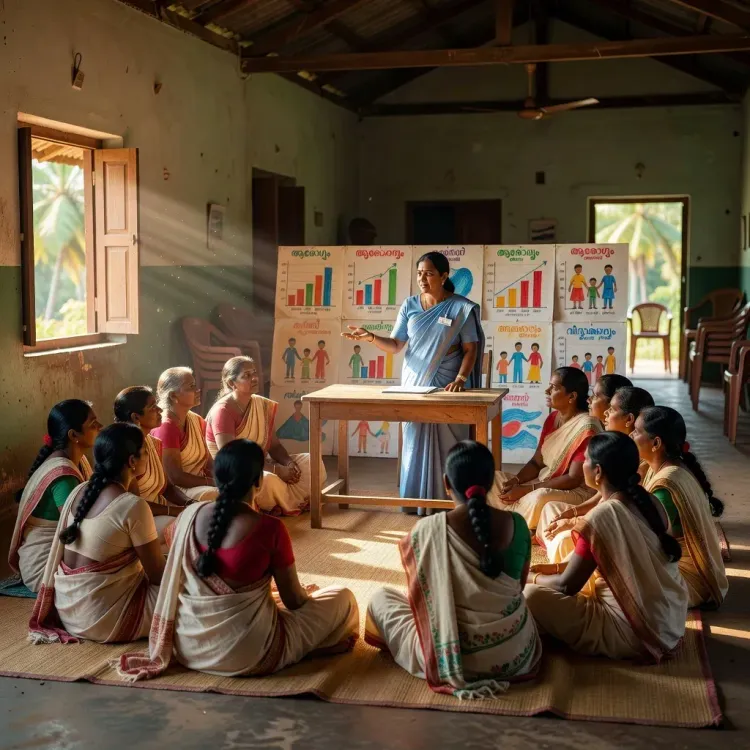
Acknowledgement from the Office of the UN High Commissioner for Human Rights carries weight beyond symbolism. Kerala has long been treated as an outlier within India — a state that chose sustained social-sector investment and decentralised planning over industrial-led growth, and reaped dividends in literacy, health, and poverty metrics across decades. An international human-rights body citing that record reinforces the distinctiveness of the so-called 'Kerala model' on a global platform. The Extreme Poverty Eradication Programme represented the LDF's most structured effort to operationalise that model at the household level — mapping vulnerable families, bundling welfare entitlements, and deploying local self-government institutions as delivery vehicles. Grassroots participation, particularly through women's neighbourhood groups, was central to its design.Vijayan's rebuke of the UDF and the continuity question
Vijayan did not let the moment of pride stand alone. He added a sharp political edge, saying it was 'unfortunate that the present UDF government appears to be neglecting this landmark programme.' The United Democratic Front, the Congress-led alliance that has historically alternated power with the LDF in Kerala, operates within the same broad social-development framework but has differed in the degree of emphasis it places on grassroots mobilisation. By invoking the UN recognition, Vijayan is effectively raising the stakes: allowing an internationally validated anti-poverty programme to fade is no longer just a domestic policy dispute — it becomes a question of whether Kerala honours a commitment the world has taken note of. 'The fight against extreme poverty cannot be allowed to lose momentum,' he wrote — a line framed less as nostalgia and more as a demand. Whether the current state government responds formally, and whether the UN Human Rights Office pursues follow-up monitoring of Kerala's programme, will determine how this recognition translates from a headline into durable policy accountability.Point of View
He makes it harder for a successor government to quietly wind down the programme without appearing to repudiate a globally validated achievement. The move fits a broader CPI(M) pattern of leveraging Kerala's human-development reputation to draw ideological contrasts with the UDF's governance style. It also signals that the LDF, now in opposition, intends to hold the UDF accountable on welfare continuity as a central political theme. The invocation of grassroots participation is deliberate: it ties the programme's legitimacy not just to the government that launched it, but to communities that would notice its absence.
NationPress
6 Nov 2026
Frequently Asked Questions
What did the UN Human Rights Commissioner say about Kerala?
The UN Human Rights Commissioner recognised Kerala's achievement in eliminating extreme poverty, an acknowledgement that Pinarayi Vijayan described as 'a moment of pride for every Malayali.'
What is Kerala's Extreme Poverty Eradication Programme?
It is a targeted welfare initiative launched by the LDF government after the 2021 Kerala assembly election, designed to identify the poorest households and deliver bundled entitlements through local self-government bodies and grassroots mobilisation.
Why is Pinarayi Vijayan criticising the UDF government?
Vijayan alleges that the current UDF government is neglecting the LDF-launched Extreme Poverty Eradication Programme and warns that the 'fight against extreme poverty cannot be allowed to lose momentum.'
What is the Kerala model of development?
The Kerala model refers to the state's long-standing approach of prioritising social-sector spending, decentralised planning, and community participation over industrial-led growth, producing high indicators in literacy, health, and poverty reduction.
What is the LDF and UDF in Kerala politics?
The Left Democratic Front (LDF) , led by CPI(M), and the United Democratic Front (UDF) , led by the Congress party, are the two main political alliances in Kerala that have alternated in power for decades.