Piyush Goyal Japan visit: Investment push, semiconductor and industrial ties deepened
Synopsis
Piyush Goyal's Japan tour wasn't a diplomatic formality — it was a capital mobilisation mission. With semiconductor demand projected at $150 billion by 2032 and over 30 major Japanese financial institutions and corporations engaged, India is making a structured pitch to become Japan's preferred manufacturing and technology partner in Asia.
Key Takeaways
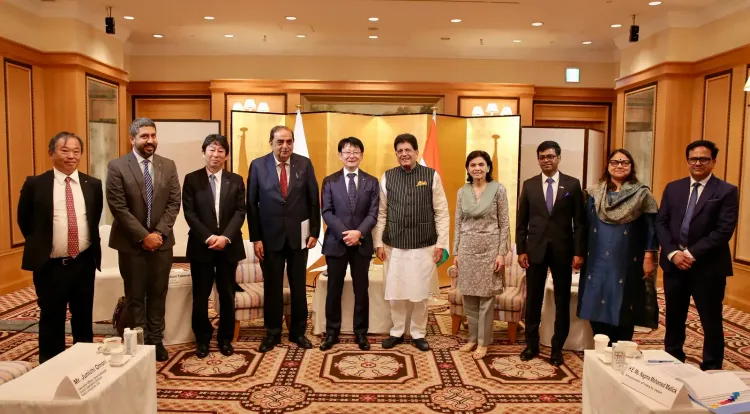
Commerce Minister Piyush Goyal concluded an official visit to Japan , covering Tokyo , Nagoya and Osaka , on 27 August .
Discussions were held with leadership from more than 30 major Japanese companies and financial institutions , including MUFG , Mizuho , Nomura and Nippon Life .
India's semiconductor demand is projected to reach $150 billion by 2032 ; Goyal outlined a six-pillar strategy to build a competitive domestic ecosystem.
Over 80 Japanese companies from the Chubu region participated in the India-Japan Next Generation Economic Partnership roadshow in Nagoya .
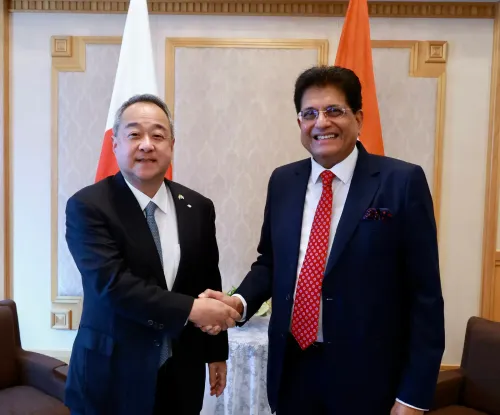
Goyal met Japan's Minister of Economy, Trade and Industry, Akazawa Ryosei , and senior officials from JETRO , JBIC and JICA .
The visit aimed to deepen the Special Strategic and Global Partnership and open new avenues for MSME and Tier-II/III supplier integration.
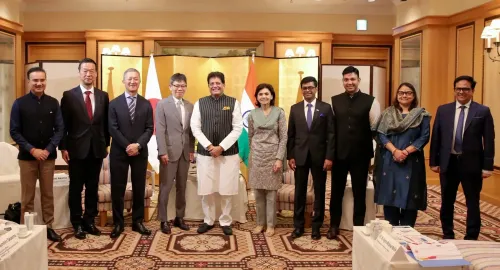
Commerce and Industry Minister Piyush Goyal concluded a high-level official visit to Japan, engaging with senior government leaders, financial institutions and business executives across Tokyo, Nagoya and Osaka to accelerate Japanese investment in India and deepen bilateral economic cooperation across strategic sectors. The government said on Thursday, 27 August that the visit has reaffirmed the strong momentum in the Special Strategic and Global Partnership between the two nations.
High-Level Engagements Across Three Cities
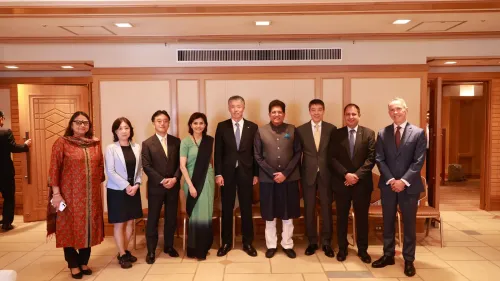
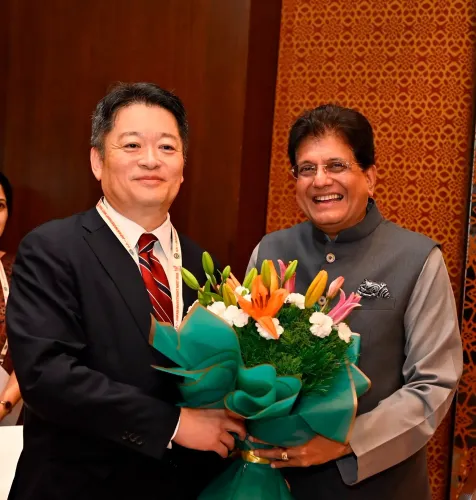
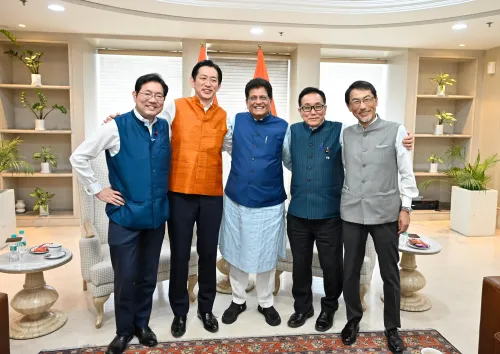
Goyal held extensive discussions with leadership from more than 30 major Japanese companies and financial institutions with significant or growing interests in India. The engagements spanned trade, investment, resilient supply chains, technology partnerships and business-to-business collaboration, with a particular focus on integrating India's Tier-II and Tier-III supplier ecosystem and MSMEs into broader bilateral frameworks.
The minister also chaired sector-specific roundtables that brought together a wide cross-section of Japanese and Indian businesses, providing a platform for identifying concrete investment and commercial opportunities.
Mobilising Long-Term Japanese Capital for India
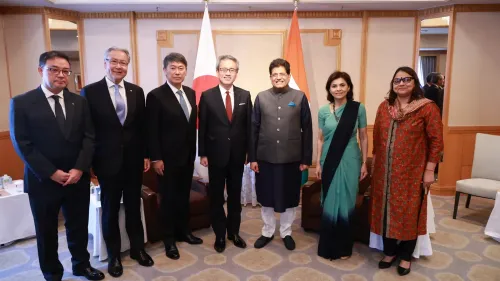
A central focus of the visit was attracting long-term institutional capital from Japan. Goyal engaged with leading financial institutions including MUFG, Mizuho, Nomura, Nippon Life, Development Bank of Japan and Morgan Stanley MUFG Securities, among others. The discussions explored deepening capital flows into India's expanding infrastructure, manufacturing, technology and financial ecosystem.
Semiconductor Ambitions at the Fore
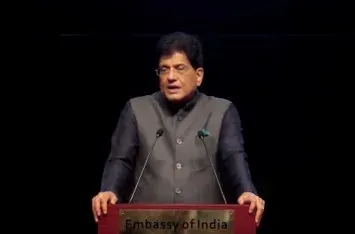
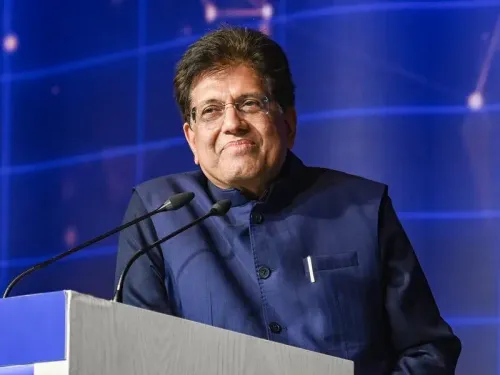
Goyal highlighted India's ambition to build a globally competitive semiconductor ecosystem, with domestic semiconductor demand projected to reach $150 billion by 2032. He outlined the government's six-pillar strategy covering chip design, semiconductor machinery and materials, fabrication, ATMP/OSAT, research and development, and talent development — signalling a structured, long-term roadmap to Japanese partners who are themselves major players in the global semiconductor supply chain.
Government-to-Government Dialogue
Goyal held bilateral discussions with Japan's Minister of Economy, Trade and Industry, Akazawa Ryosei, along with senior representatives of JETRO, JBIC and JICA. Topics covered trade and investment facilitation, manufacturing cooperation, infrastructure development and greater Japanese corporate participation in India's growth trajectory.
Chubu Region Roadshow: 80-Plus Companies
Goyal addressed the 'India-Japan Next Generation Economic Partnership' roadshow in Nagoya, organised in collaboration with Chukeiren and leading business organisations from the Chubu region. More than 80 Japanese companies participated, with discussions spanning automobiles, aerospace, machine tools, semiconductors, electronics, auto components and small and medium enterprises. This comes amid a broader push by India to diversify its foreign investment base and reduce supply-chain dependencies — a goal that aligns closely with Japan's own strategic interest in building resilient, China-plus-one alternatives.
The visit is expected to translate into concrete investment commitments and partnership frameworks in the months ahead, as both governments work to operationalise the outcomes of the high-level engagements.
Point of View
But the semiconductor focus is new and specific. The $150 billion demand projection by 2032 is an ambitious number; the six-pillar strategy suggests the government has moved past sloganeering toward structural planning. The real question is whether Japanese institutional capital, historically cautious on India due to regulatory unpredictability, converts intent into committed inflows. The MUFG-to-Nippon Life lineup signals serious institutional interest, but engagement and investment are different columns on the balance sheet.
NationPress
27 Aug 2026
Frequently Asked Questions
What was the purpose of Piyush Goyal's Japan visit?
Commerce and Industry Minister Piyush Goyal visited Japan to accelerate Japanese investment in India, strengthen industrial partnerships and expand bilateral economic cooperation across strategic sectors. The visit covered Tokyo, Nagoya and Osaka and included meetings with over 30 major Japanese companies and financial institutions.
Which Japanese financial institutions did Goyal meet during the visit?
Goyal engaged with MUFG, Mizuho, Nomura, Nippon Life, Development Bank of Japan and Morgan Stanley MUFG Securities, among other major investment and financial institutions. The discussions focused on deepening capital flows into India's infrastructure, manufacturing and technology sectors.
What is India's semiconductor demand projection and strategy?
India's semiconductor demand is projected to reach $150 billion by 2032. The government has outlined a six-pillar strategy covering chip design, semiconductor machinery and materials, fabrication, ATMP/OSAT, research and development, and talent development to build a globally competitive semiconductor ecosystem.
What happened at the India-Japan roadshow in Nagoya?
Goyal addressed the 'India-Japan Next Generation Economic Partnership' roadshow in Nagoya, organised with Chukeiren and leading Chubu-region business bodies. More than 80 Japanese companies participated, with discussions covering automobiles, aerospace, machine tools, semiconductors, electronics, auto components and SMEs.
What is the Special Strategic and Global Partnership between India and Japan?
The Special Strategic and Global Partnership is the highest-tier diplomatic framework governing India-Japan relations, covering trade, investment, defence, technology and people-to-people ties. Goyal's visit was described by the government as reaffirming strong momentum in this partnership and providing fresh impetus to economic cooperation.