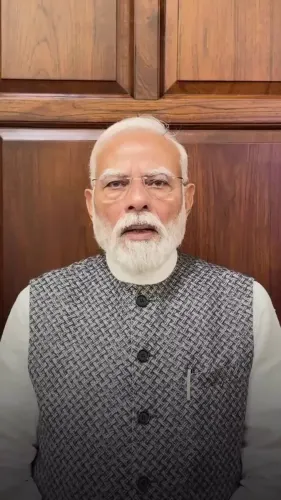
Piyush Goyal calls on India to fly #HarGharTiranga on Aug 15
Synopsis
Union Commerce Minister Piyush Goyal has called on Indians to hoist the national flag at home on 15 August under the Har Ghar Tiranga campaign, urging citizens to honour freedom fighters and celebrate independence with pride.
Key Takeaways
Union Minister Piyush Goyal posted on X on 11 August 2026 urging citizens to participate in the #HarGharTiranga campaign on 15 August .
The Har Ghar Tiranga campaign was launched in July 2022 by the Ministry of Culture under the Azadi Ka Amrit Mahotsav framework.
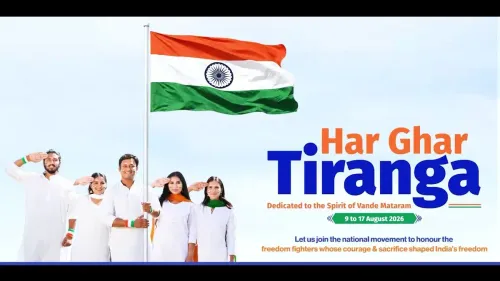
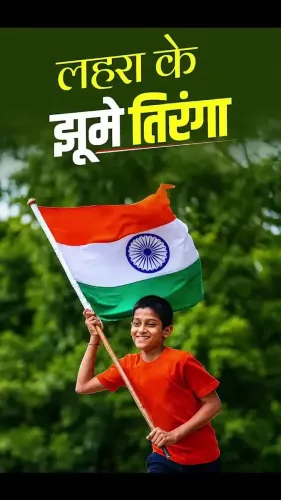
The campaign encourages every Indian household to hoist the national flag on Independence Day.
Goyal's appeal emphasises tribute to freedom fighters alongside the visible display of the tricolour.
Official participation figures are typically released by the Ministry of Culture in the days surrounding Independence Day .
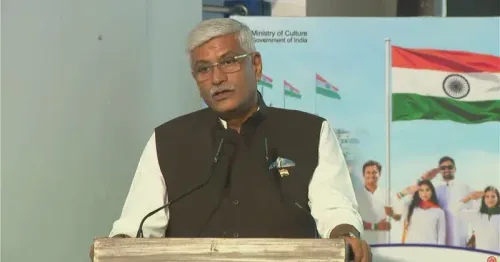
Four days before the tricolour rises over the Red Fort, Union Commerce and Industry Minister Piyush Goyal has called on every Indian household to hoist the national flag on 15 August — honouring the freedom fighters who made independence possible and turning the day into a visible, street-level celebration of nationhood.
Posting on X on 11 August 2026, Goyal wrote: 'आइए, 15 अगस्त को स्वतंत्रता सेनानियों को श्रद्धांजलि देते हुए, आन-बान-शान से #HarGharTiranga लहराएं और आजादी का उत्सव मनाएं।' — 'Come, on 15 August, let us pay tribute to the freedom fighters, fly the #HarGharTiranga with pride and honour, and celebrate the festival of freedom.'
What the Har Ghar Tiranga campaign is
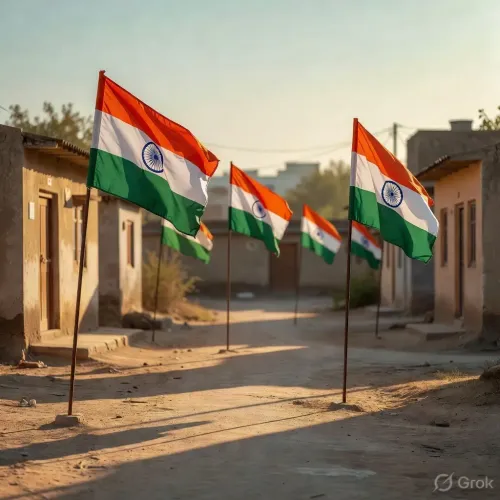
The Har Ghar Tiranga campaign was launched in July 2022 by the Ministry of Culture as the centrepiece public-mobilisation drive under Azadi Ka Amrit Mahotsav — the government-led series of events marking 75 years of India's independence. The idea was straightforward and deliberately low-barrier: every home, every balcony, every rooftop becomes a flag-bearer. No ceremony required, no official venue — just the tricolour, and the intent behind it.
Since its launch, the campaign has become an annual fixture in the Independence Day calendar, with Union ministers, chief ministers, and public figures routinely amplifying the call in the days leading up to 15 August. Goyal's post fits squarely in that pattern — but the framing matters: the emphasis is on tribute first, celebration second. Freedom fighters before festivities.
The phrase 'Aan-Baan-Shaan' and what it signals
The minister's choice of the phrase 'आन-बान-शान' — roughly, 'with dignity, honour, and pride' — is deliberate. It is a phrase deeply embedded in the Hindi lexicon of patriotic expression, often used in the context of the armed forces and national symbols. Invoking it alongside the tricolour frames the act of flag-hoisting not as a government directive, but as a personal declaration of pride.
That framing has been central to how the Har Ghar Tiranga campaign has always positioned itself: participation as an act of individual conviction, not institutional compliance. Whether that distinction translates into genuine grassroots uptake — measured by hashtag reach and official participation figures typically released by the Ministry of Culture in the run-up to Independence Day — will be the real indicator of the campaign's resonance this year.
Point of View
High-visibility tool that keeps the Azadi Ka Amrit Mahotsav spirit alive without requiring fresh policy architecture each year. Goyal's post is routine in form but consistent with the BJP's broader strategy of linking visible patriotic participation to governance identity. The 'tribute to freedom fighters first' framing also quietly sidesteps any perception of the campaign as self-promotional. The real test, as always, is whether hashtag momentum translates into documented street-level participation — the numbers the Ministry of Culture will be watching closely.
NationPress
11 Aug 2026
Frequently Asked Questions
What is the Har Ghar Tiranga campaign?
The Har Ghar Tiranga campaign is a government initiative launched in July 2022 by the Ministry of Culture that encourages every Indian household to hoist the national flag on Independence Day . It was introduced as part of Azadi Ka Amrit Mahotsav , marking 75 years of India's independence.
What did Piyush Goyal say about Independence Day 2026?
Union Minister Piyush Goyal called on all Indians to hoist the national flag at their homes on 15 August 2026 under the #HarGharTiranga campaign, urging citizens to honour freedom fighters and celebrate independence with dignity and pride.
When was the Har Ghar Tiranga campaign launched?
The Har Ghar Tiranga campaign was launched in July 2022 by India's Ministry of Culture as part of the Azadi Ka Amrit Mahotsav celebrations marking the 75th anniversary of Indian independence.
How can I participate in Har Ghar Tiranga on 15 August?
Citizens can participate by hoisting or displaying the Indian national flag at their homes, balconies, or rooftops on 15 August . The campaign encourages every household to take part as a personal act of tribute to freedom fighters.
What is Azadi Ka Amrit Mahotsav?
Azadi Ka Amrit Mahotsav is a government-led series of events that began in 2021 to mark and celebrate 75 years of India's independence . The Har Ghar Tiranga campaign is one of its most prominent public-participation initiatives.