Odisha CMO Backs Transgender Rights via Sweekruti, SMILE

Synopsis
The Chief Minister's Office of Odisha reaffirmed on 11 August 2026 that the state is prioritising transgender rights through Sweekruti and SMILE schemes, targeting identity, education, health, housing, and government employment to build an inclusive Odisha.
Key Takeaways
The CMO Odisha publicly reaffirmed on 11 August 2026 that transgender rights, protection, dignity, and empowerment are the state's highest priority.
Sweekruti , Odisha's state scheme, addresses identity documents, education, health, and housing for transgender persons.
SMILE , a central government scheme, provides livelihood and enterprise support to transgender and other marginalised groups.
The state's approach builds on the Transgender Persons (Protection of Rights) Act, 2019 and the 2014 NALSA Supreme Court judgment .
Equal opportunity in government employment is explicitly cited as a goal, signalling a push beyond welfare transfers toward structural inclusion.
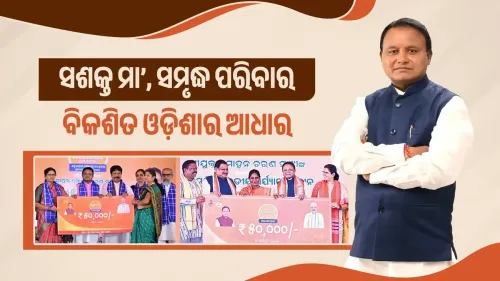
Odisha is making a pointed, policy-backed commitment to its transgender citizens — not just in words, but through two named schemes designed to close the gap between legal recognition and lived reality. The Chief Minister's Office of Odisha posted on X on Tuesday, 11 August 2026, reaffirming that the state government is taking firm steps to prioritise rights, protection, dignity, and empowerment for transgender persons.
The post, in Odia, states: 'ତୃତୀୟଲିଙ୍ଗୀଙ୍କ ଅଧିକାର, ସୁରକ୍ଷା, ସମ୍ମାନ ଓ ସଶକ୍ତିକରଣକୁ ସର୍ବୋଚ୍ଚ ପ୍ରାଥମିକତା' — 'Rights, protection, dignity, and empowerment of transgender persons are the highest priority.' Through schemes like 'Sweekruti' and 'SMILE', the government says it is working continuously toward building an inclusive Odisha, ensuring equal opportunity in economic empowerment, identity, education, health, housing, and government employment.
What Sweekruti and SMILE actually deliver
Sweekruti is Odisha's own state scheme targeting the foundational barriers transgender persons face: identity documents, access to education, health services, and housing support. Without a valid identity document, every other right collapses — Sweekruti is designed to fix that first link in the chain.
SMILE — a central government scheme — extends livelihood and enterprise support to marginalised groups including transgender persons, adding an economic layer on top of the state's identity and welfare framework. Together, the two schemes are meant to function as a continuum: from recognition to livelihood.
The legal scaffolding behind the push
This state-level action sits on a decade of legal groundwork. The Supreme Court's 2014 NALSA judgment first established transgender persons as a third gender with full constitutional rights. The Transgender Persons (Protection of Rights) Act, 2019 followed, mandating legal recognition, prohibiting discrimination, and requiring welfare measures from both central and state governments. Odisha's twin-scheme approach reflects the model that has emerged across several states — pairing central legislation with state-specific delivery mechanisms to reach people on the ground.
The gap between law and life
Legal recognition alone has rarely been enough. Across India, transgender communities have historically faced exclusion from formal employment, healthcare systems, and educational institutions — often because identity documentation was the first hurdle they could not clear. Schemes like Sweekruti directly target that bottleneck. The CMO's emphasis on government employment as a specific inclusion goal signals that Odisha is pushing beyond welfare transfers toward structural participation.
The real test will be in coverage numbers and budget allocations — metrics that will emerge in upcoming fiscal announcements and scheme progress reports. For now, the state's public reaffirmation puts its transgender welfare agenda firmly on the record.
Point of View
The CMO is creating a measurable policy record that civil society and opposition can hold the government to. The inclusion of government employment as an explicit goal is the sharpest edge of the announcement: it moves the conversation from charity to structural equity. Whether Odisha's budget allocations and beneficiary numbers bear out the ambition will be the real political story to watch.
NationPress
11 Aug 2026
Frequently Asked Questions
What is the Sweekruti scheme in Odisha?
Sweekruti is an Odisha state government scheme for transgender welfare that covers identity documentation, access to education, health services, and housing support, addressing foundational barriers to inclusion.
What is the SMILE scheme for transgender persons?
SMILE is a central government scheme that provides livelihood and enterprise support to marginalised groups including transgender persons, complementing state-level welfare programmes like Odisha's Sweekruti.
What legal protections do transgender persons have in India?
Transgender persons in India are protected by the Supreme Court's 2014 NALSA judgment, which recognised them as a third gender, and the Transgender Persons (Protection of Rights) Act 2019, which mandates legal recognition and prohibits discrimination.
What benefits does Odisha provide to transgender persons?
Odisha's government, through Sweekruti and SMILE, aims to provide economic empowerment, identity documents, education, healthcare, housing, and equal opportunity in government employment to transgender persons.
What did the Odisha CMO announce about transgender rights in 2026?
On 11 August 2026, the Chief Minister's Office of Odisha reaffirmed that the state is taking firm steps to prioritise transgender rights, protection, dignity, and empowerment through Sweekruti and SMILE schemes toward building an inclusive Odisha.