Piyush Goyal joins Guru Ravidas 650th Jayanti event in North Mumbai
Synopsis
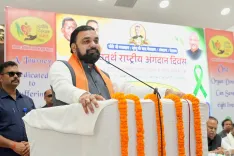
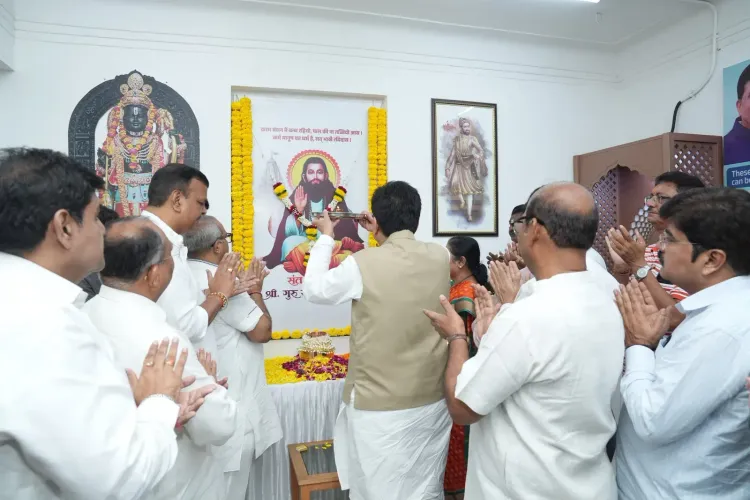
Union Minister Piyush Goyal attended the Samarasta Sankalp Abhiyan in North Mumbai on 9 August 2026, marking Guru Ravidas's 650th Jayanti. He quoted the saint's verse on a hunger-free kingdom, connecting it to PM Modi's Sabka Saath, Sabka Vikas philosophy, and joined the Kalash Vandan Abhiyan pledge for social harmony.
Key Takeaways
Union Minister Piyush Goyal attended the Samarasta Sankalp Abhiyan programme in North Mumbai on 9 August 2026 .
The event marked the 650th Jayanti of Sant Shiromani Guru Ravidas Maharaj .
Goyal quoted Guru Ravidas's verse 'Aisa chahun raj mein, jahan mile saban ko ann' — a call for a kingdom where no one goes hungry.
He linked the verse to PM Narendra Modi 's Sabka Saath, Sabka Vikas and Antyodaya governance principles.
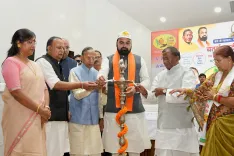
Participants joined the Kalash Vandan Abhiyan , pledging to spread Guru Ravidas's message of social harmony to every household.
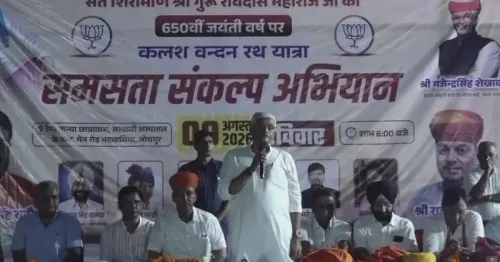
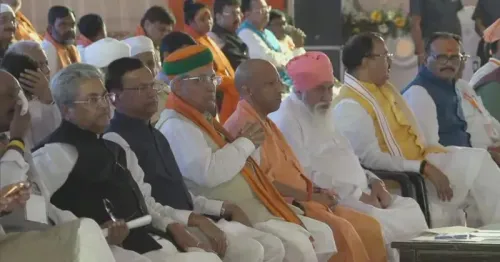
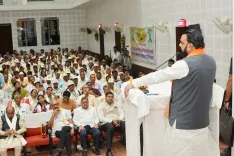
Six centuries after a Bhakti saint from Varanasi's tannery lanes composed verses that shook the caste order, his words rang out again on Sunday — this time at a public gathering in North Mumbai, where Union Commerce and Industry Minister Piyush Goyal attended the Samarasta Sankalp Abhiyan programme marking the 650th Jayanti of Sant Shiromani Guru Ravidas Maharaj on 9 August 2026.
Goyal quoted directly from Guru Ravidas's teachings: 'Aisa chahun raj mein, jahan mile saban ko ann' — 'I desire such a kingdom where everyone receives food' — framing the verse as a living compass for Prime Minister Narendra Modi's governance philosophy of Sabka Saath, Sabka Vikas (Together with all, development for all) and Antyodaya, the principle of uplifting the last person in the queue.
The Kalash Vandan pledge and what it asked of the crowd
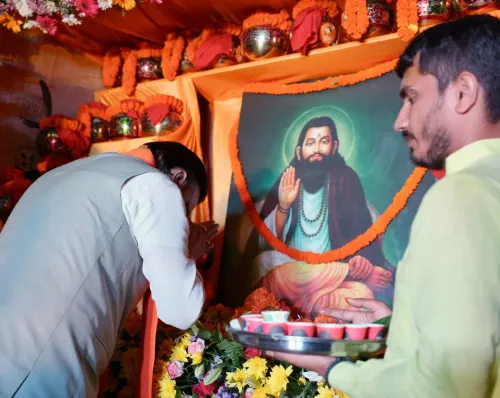
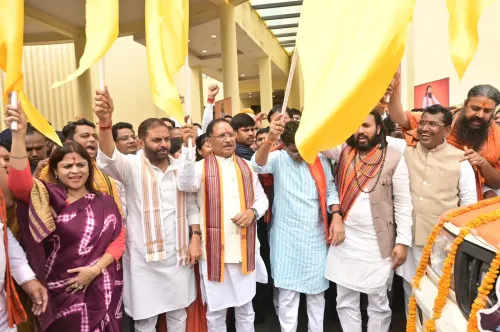
The gathering also observed the Kalash Vandan Abhiyan, a ritual veneration of sacred pots that has been woven into this year's Jayanti observances as a symbolic act of collective resolve. Participants pledged to carry Guru Ravidas's message of samarasta (social harmony) and humanity to every household — a public commitment framed not as religious ceremony alone but as a statement of social intent.
A 15th-century voice in a 21st-century political frame
Guru Ravidas, the 15th-16th century poet-saint of the Bhakti movement, composed devotional poetry that challenged caste hierarchy and asserted the dignity of labour — teachings that remain especially resonant among Dalit communities across India. Senior BJP leaders have consistently invoked Bhakti-era saints at commemorative events, connecting their egalitarian verses to the party's welfare and inclusion agenda. Goyal's attendance in North Mumbai fits that pattern, linking a centuries-old spiritual tradition to the present government's stated commitment to inclusive growth.
The message from North Mumbai's Jayanti stage was straightforward: an ancient demand for a kingdom without hunger still has political and moral currency — and the minister made sure the connection was explicit.
Point of View
And Goyal's North Mumbai appearance follows that template precisely. By anchoring Guru Ravidas's egalitarian verse to the Modi government's Sabka Saath, Sabka Vikas slogan, the party attempts to present its welfare agenda as the contemporary fulfilment of a centuries-old spiritual demand. The Kalash Vandan Abhiyan adds a participatory, grassroots dimension — turning a commemorative event into a public pledge-taking exercise. For the BJP, such events serve a dual purpose: cultural outreach to Dalit communities and a reaffirmation that the party's policy philosophy has deep historical and moral roots.
NationPress
9 Aug 2026
Frequently Asked Questions
Who is Guru Ravidas and why is his Jayanti celebrated?
Guru Ravidas was a 15th-16th century Bhakti poet-saint revered for teachings on equality, devotion, and the dignity of labour. His Jayanti is celebrated widely, especially among Dalit communities, to honour his challenge to caste hierarchy and his vision of a just, hunger-free society.
What is the Samarasta Sankalp Abhiyan?
The Samarasta Sankalp Abhiyan is a campaign focused on social harmony, organised around Guru Ravidas Jayanti . It brings together community members and political leaders to reaffirm commitments to equality and inclusive coexistence.
What is the Kalash Vandan Abhiyan?
The Kalash Vandan Abhiyan is an initiative involving the ritual veneration of sacred pots. In the context of the 2026 Jayanti observances, participants used it to collectively pledge to spread Guru Ravidas's message of social harmony and humanity.
What verse of Guru Ravidas did Piyush Goyal quote?
Goyal quoted the verse 'Aisa chahun raj mein, jahan mile saban ko ann' , which translates as 'I desire such a kingdom where everyone receives food' — a call for a society free from hunger and deprivation.
How does the BJP connect Guru Ravidas to its governance agenda?
The BJP links Guru Ravidas's egalitarian teachings to PM Narendra Modi 's Sabka Saath, Sabka Vikas and Antyodaya philosophy, arguing that the government's welfare and inclusion programmes are the modern expression of the saint's vision of a just society.