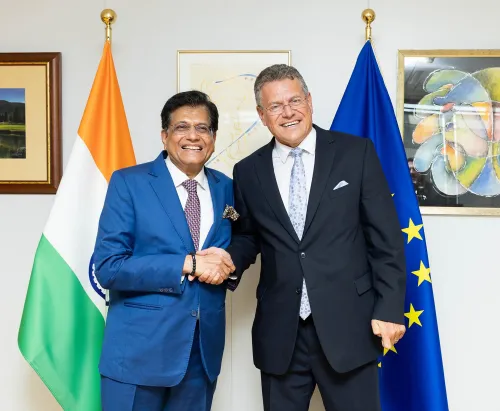
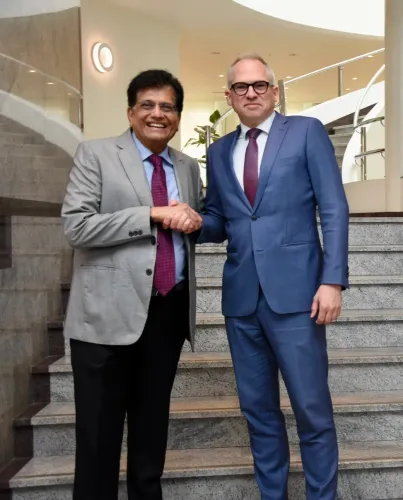
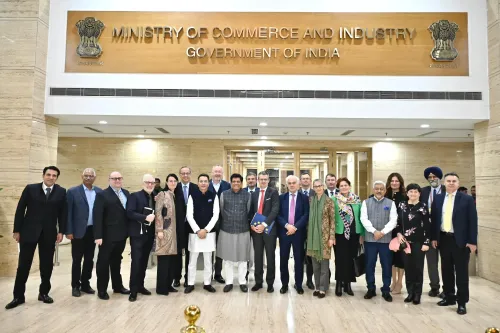
Piyush Goyal meets Belgium Deputy PM on trade, EU FTA
Synopsis
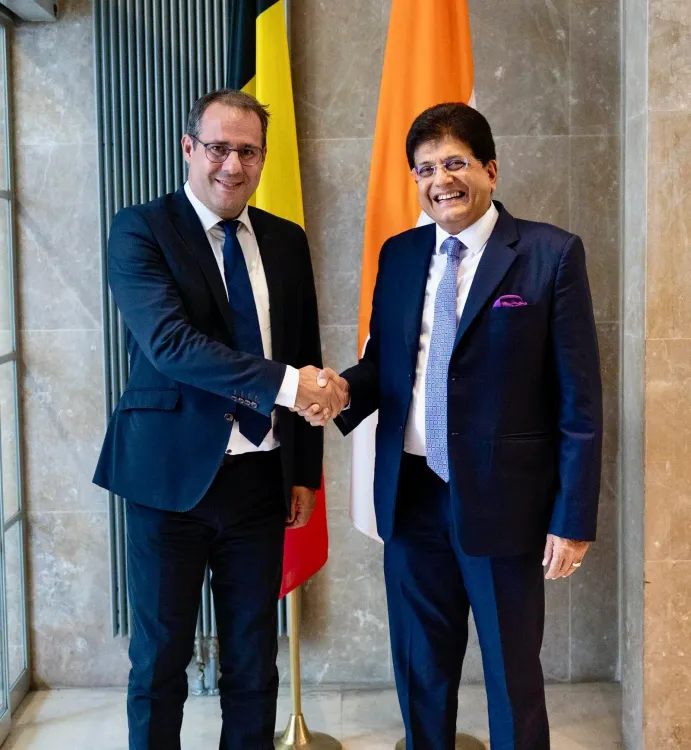
Union Commerce Minister Piyush Goyal met Belgian Deputy PM David Clarinval on 14 July 2026, discussing trade, investment, logistics, workforce mobility and the India-EU Free Trade Agreement, reaffirming both countries' commitment to stronger economic ties.
Key Takeaways
Union Commerce and Industry Minister Piyush Goyal met Belgian Deputy PM David Clarinval on 14 July 2026 .
Talks covered trade, investment, technology, logistics and workforce mobility between India and Belgium.
Both sides discussed the 'transformative potential' of the India-EU Free Trade Agreement (BTIA) , negotiations for which resumed in 2022 after a suspension since 2013 .
India and Belgium have maintained structured bilateral economic dialogue through the India-Belgium-Luxembourg Economic Union Joint Commission since 1997 .
Belgium's Port of Antwerp-Bruges is a key European logistics gateway for Indian merchandise exports.
The meeting is part of India's broader strategy of parallel bilateral engagement with EU member states alongside the overarching FTA process.
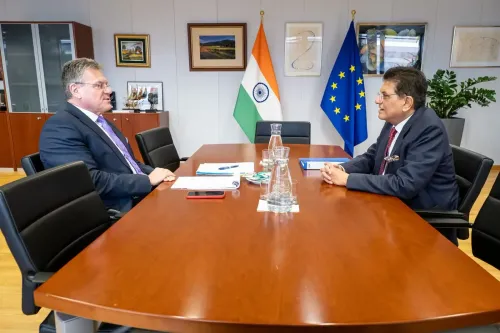
Union Commerce and Industry Minister Piyush Goyal met David Clarinval, Deputy Prime Minister and Minister of Employment, Economy, and Agriculture of Belgium, on Tuesday, 14 July 2026, for wide-ranging discussions on deepening bilateral economic engagement between India and Belgium.
The two ministers covered trade, investment, technology, logistics and workforce mobility, and also exchanged views on the India-EU Free Trade Agreement, reaffirming a shared commitment to stronger economic ties for the benefit of businesses and people on both sides.
Context
Goyal described the meeting as 'excellent' and said both sides discussed 'the transformative potential of the India-EU Free Trade Agreement.' The engagement signals continued momentum in India's bilateral outreach to European Union member states even as the broader India-EU trade pact remains under active negotiation.
Belgium and India have maintained formal diplomatic ties since 1948. The two countries have conducted structured bilateral economic dialogue through the India-Belgium-Luxembourg Economic Union Joint Commission since 1997, covering trade, investment and sectoral cooperation.
Policy Backdrop
The India-EU Broad-based Trade and Investment Agreement (BTIA) was first launched in 2007, suspended in 2013 after years of deadlock, and formally resumed following the 2022 India-EU Summit. The pact, if concluded, would be one of the largest free trade agreements involving India, covering goods, services, investment and intellectual property.
India has pursued a twin-track approach — pressing forward with the overarching India-EU FTA while simultaneously deepening bilateral ties with individual member states such as Belgium, Germany and France. This strategy is designed to build political momentum and lock in sectoral wins ahead of a comprehensive deal.
Stakeholders and Impact
Belgium occupies a strategic position in European logistics, hosting the Port of Antwerp-Bruges, one of Europe's largest cargo gateways and a critical node for Indian merchandise exports entering the continent. Belgian investors have historically been active in Indian diamond processing, ports and technology sectors.
For India, the workforce mobility agenda is particularly significant: Indian IT and services professionals represent a growing segment of skilled migration to Europe, and bilateral frameworks with individual EU states can ease visa and recognition hurdles ahead of any broader EU-level agreement. Indian exporters in textiles, pharmaceuticals and engineering goods also stand to benefit from reduced tariff barriers under a future FTA.
What's Next
The next formal round of India-EU FTA negotiations will be closely watched for signs that bilateral momentum with member states such as Belgium is translating into movement at the multilateral table. Follow-up bilateral investment or mobility agreements between India and Belgium could emerge as near-term deliverables from this engagement.
As India accelerates its economic diplomacy with Europe, meetings of this kind are expected to multiply, with commerce ministry officials likely to track specific commitments on logistics corridors, technology transfer and skilled-worker mobility in the weeks ahead.
Point of View
Now in its resumed phase since 2022. Belgium is not a random choice: its control of a major European port and its historically close commercial ties with India in diamonds and logistics give it outsized influence relative to its size. By foregrounding workforce mobility alongside trade and investment, India is also signalling that any eventual deal must address the services and people-movement chapters that caused the original 2013 breakdown. The meeting is unlikely to produce immediate deliverables but adds to a pattern of pre-negotiation groundwork that commerce ministry officials are systematically building across European capitals.
NationPress
14 Jul 2026
Frequently Asked Questions
What did Piyush Goyal and Belgian Deputy PM David Clarinval discuss?
They discussed expanding India-Belgium cooperation in trade, investment, technology, logistics and workforce mobility, and also exchanged views on the India-EU Free Trade Agreement.
What is the India-EU Free Trade Agreement and where do negotiations stand?
The India-EU Broad-based Trade and Investment Agreement (BTIA) was launched in 2007, suspended in 2013 and formally resumed in 2022. A final deal has not yet been concluded.
Why is Belgium important for India's trade with Europe?
Belgium hosts the Port of Antwerp-Bruges, one of Europe's largest cargo gateways, making it a critical logistics hub for Indian goods entering the European market. Belgian investors are also active in India's diamond, ports and technology sectors.
What is the India-Belgium-Luxembourg Economic Union Joint Commission?
It is a bilateral mechanism established in 1997 for structured economic dialogue between India and the Belgium-Luxembourg Economic Union, covering trade, investment and sectoral cooperation.
How does India's bilateral engagement with Belgium fit into its broader EU strategy?
India pursues a twin-track approach — negotiating the overarching India-EU FTA while deepening bilateral ties with individual member states like Belgium to build political momentum and secure sectoral outcomes ahead of a comprehensive agreement.