PK Mishra urges Global South to link research, data and climate policy
Synopsis
India's Principal Secretary to the PM, PK Mishra, flagged that 310 of 651 agricultural districts are highly climate-vulnerable, while calling on Global South nations to move beyond data generation toward actionable, district-level evidence that directly shapes policy — a sharper framing of the research-to-governance gap than is typically heard at multilateral research forums.
Key Takeaways
Mishra addressed the 20th EfD Network Annual Meeting at IIM Kozhikode on 11 November 2026 .
ICAR's NICRA programme identified 310 out of 651 agricultural districts as highly or very highly climate-vulnerable.
Mishra stressed that food security requires affordable, diverse and nutritious diets — not just adequate production volumes.
He called for integrating satellite imagery, geospatial data and household surveys with common standards at the district level.
India is pursuing Net Zero by 2070 and developed-nation status by 2047 , backed by an updated NDC for 2031–2035 .
The 2023 International Year of Millets , secured through PM Modi's initiative, was cited as a model for climate-resilient crop diversification.
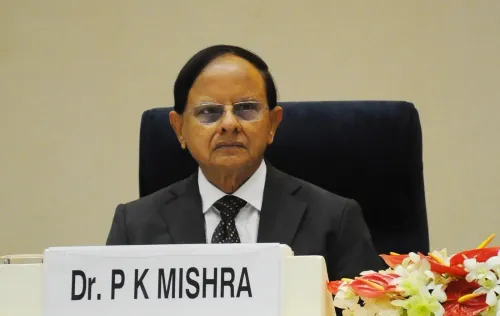
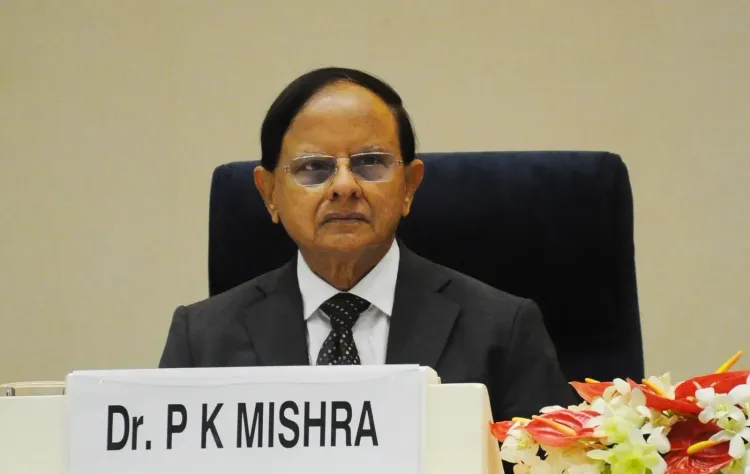
Principal Secretary to the Prime Minister, Dr P.K. Mishra, on Wednesday, 11 November 2026, called for a deeper integration of scientific research, granular data and evidence-based policymaking to tackle the interconnected crises of climate change, agricultural resilience, food security and nutrition across the Global South. He was addressing the inaugural session of the 20th Annual Meeting of the Environment for Development (EfD) Network at IIM Kozhikode, Kerala, via video conference.
Climate Change as a Cross-Cutting Crisis
Dr. Mishra argued that climate change must no longer be treated solely as an environmental issue, stressing that its consequences reach deep into agricultural productivity, water availability, food prices, public health and livelihoods. He said the policy framing must reflect this complexity rather than compartmentalising the challenge into separate ministerial silos.
He also pushed back against conventional metrics of food security, noting that adequate production volumes alone were insufficient. Ensuring access to affordable, diverse and nutritious diets — including pulses, fruits, vegetables and milk — was equally critical, particularly because climate-related disruptions could simultaneously suppress the availability and affordability of nutrient-rich foods.
Crop Diversification and the Millets Push
Highlighting the case for crop diversification, Dr. Mishra pointed to Prime Minister Narendra Modi's initiative in securing the United Nations declaration of 2023 as the International Year of Millets. He said the move helped elevate global awareness of millets' nutritional value and environmental sustainability, promoting their adoption within diversified, climate-resilient food systems.
Separately, he cited assessments under the Indian Council of Agricultural Research (ICAR)'s National Innovations in Climate Resilient Agriculture (NICRA) programme, which identified 310 out of 651 agricultural districts in India as highly or very highly vulnerable to climate stress. This, he said, underlined the case for region-specific interventions calibrated to local agro-climatic conditions rather than one-size-fits-all policy templates.
Data Quality Over Data Quantity
On the role of evidence in governance, Dr. Mishra stressed that the priority should not be generating more data, but ensuring that existing information is timely, reliable, comparable and actionable. He called for greater use of disaggregated, district-level datasets covering rainfall patterns, water availability, soil conditions, crop performance and nutritional outcomes.
He advocated integrating administrative records, household surveys, satellite imagery and geospatial information within a framework of common standards and appropriate privacy safeguards. Critically, he said, analytical capacity at state and district levels must be strengthened so that research findings can inform programme implementation, monitoring and resource allocation — not merely produce academic outputs.
India's Climate Commitments and Global Cooperation
Reiterating India's dual objectives of becoming a developed nation by 2047 and achieving Net Zero emissions by 2070, Dr. Mishra said these goals had to be pursued without compromising economic growth, poverty reduction or living standards. He noted that India's updated Nationally Determined Contribution (NDC) for 2031–2035 further sharpened the country's climate ambition.
Looking beyond national borders, he said countries across the Global South shared common vulnerabilities — climate variability, natural resource pressures, shifting agricultural patterns and nutritional insecurity. He argued that platforms such as the EfD Network were well-positioned to bridge academic research and practical policy, facilitate cross-country knowledge exchange and build institutional capacities where they were most needed.
Point of View
But its invocation at an international forum signals a push to internationalise what has largely been a domestic data-governance problem. The real test will be whether state and district institutions receive the analytical investment Mishra described, or whether this remains a framework speech. The Global South framing also carries strategic weight: India is quietly positioning itself as a knowledge-exporter on climate-agriculture policy, a role that could carry diplomatic currency ahead of the next NDC cycle.
NationPress
11 Nov 2026
Frequently Asked Questions
What did PK Mishra say at the EfD Network meeting in Kozhikode?
Dr P.K. Mishra called for stronger integration of scientific research, granular data and evidence-based policymaking to address climate change, food security and agricultural resilience across the Global South. He spoke at the 20th Annual Meeting of the EfD Network at IIM Kozhikode on 11 November 2026 via video conference.
How many Indian districts are climate-vulnerable according to ICAR?
ICAR's National Innovations in Climate Resilient Agriculture (NICRA) programme identified 310 out of 651 agricultural districts in India as highly or very highly vulnerable to climate stress. Mishra used this figure to argue for region-specific interventions rather than uniform national policy.
What is India's Net Zero target and when does it aim to become a developed nation?
India has committed to achieving Net Zero emissions by 2070 and to becoming a developed nation by 2047, often referred to as 'Viksit Bharat'. Mishra noted that India's updated Nationally Determined Contribution for 2031–2035 further strengthens its climate ambition within these twin objectives.
Why did Mishra highlight the International Year of Millets?
Mishra cited the UN's declaration of 2023 as the International Year of Millets — secured through PM Modi's initiative — as a model for promoting climate-resilient, nutritious and diversified food systems. He argued it demonstrated how targeted advocacy can shift global consumption patterns toward more sustainable crops.
What role does the EfD Network play in climate policy?
The Environment for Development (EfD) Network is an international research platform that connects academic institutions with practical policy challenges on environment and development issues. Mishra said such networks are well-placed to facilitate knowledge-sharing across the Global South and strengthen institutional analytical capacity at the state and district levels.