BlueKraft CEO Explores the Importance of PM Modi's 25-Year Leadership Journey
Synopsis
As PM Modi surpasses 24 years in leadership, Akhilesh Mishra of BlueKraft Digital Foundation analyses the implications of this unprecedented political longevity in India, highlighting key governance achievements and public trust.
Key Takeaways
Modi's Leadership Duration: Over 24 years as head of government.
Public Trust: His tenure reflects sustained public endorsement.
Gujarat's Growth: 16-fold increase in GDP during Modi’s governance.
Performance Narrative: Shift from anti-incumbency to pro-incumbency.
National Developments: Significant achievements in digital infrastructure and defense exports.
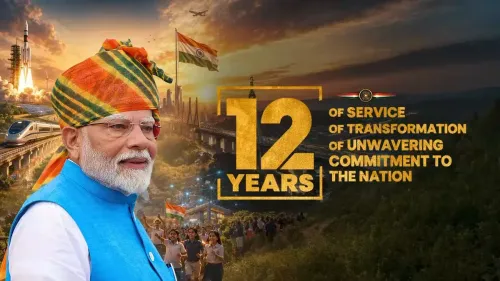
New Delhi, March 22 (NationPress) With Prime Minister Narendra Modi marking over 24 years of leadership in an elected capacity, Akhilesh Mishra, CEO of BlueKraft Digital Foundation—an influential think tank—remarked that this milestone signifies a unique democratic affirmation sustained through various elections.
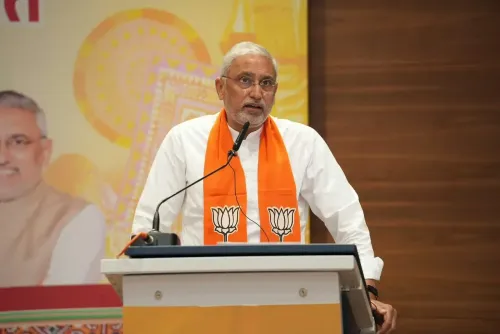
In a post shared on X, Mishra emphasized that in a highly competitive democracy like India, maintaining a long tenure in power is not something that is simply given; it must be repeatedly earned through public trust.
“In a fiercely competitive democracy like India, longevity in power is not gifted. It is earned, election after election, verdict after verdict,” Mishra stated.
He underscored the importance of this milestone by noting that Narendra Modi has served as the head of an elected government for over 8,900 days—first as the Chief Minister of Gujarat and then as the Prime Minister—thus exceeding the tenure of former Sikkim Chief Minister Pawan Chamling.
Mishra pointed out that such enduring leadership is rare in democracies worldwide, where even the most popular leaders often experience fluctuations in power. He remarked that India’s historically dominant leaders did not achieve this level of long-term political presence.
Moreover, Mishra asserted that Modi’s tenure is notable not only for its length but also for the significant mandate that has been reaffirmed through consecutive elections.
Reflecting on Modi’s governance in Gujarat, he mentioned that the period beginning in 2001, following the Bhuj earthquake, transformed into a comprehensive governance model that prioritized infrastructure, manufacturing, agriculture, and industrial development.
He highlighted that Gujarat’s Gross State Domestic Product grew 16 times from 2002 to 2023, with manufacturing constituting nearly 44 percent of the state’s economy. Additionally, agriculture in Gujarat achieved an annual growth rate of approximately 8 percent, far exceeding the national average.
Mishra further contended that one of Modi’s significant political achievements has been the transition from a traditional anti-incumbency narrative to what he termed “performance-based pro-incumbency.”
He also referenced key national developments during Modi’s administration, including the enhancement of digital public infrastructure such as UPI, the expansion of electronics manufacturing, and a remarkable increase in defense exports.
Calling the milestone significant, Mishra concluded that Modi’s leadership journey embodies not just political longevity but also a broader evolution in governance and public aspirations in India.
Point of View
This analysis highlights the extraordinary nature of Modi's political journey. His capacity to maintain public trust over decades is a testament to his governance approach, reflecting broader changes in India's political landscape.
NationPress
21 Sept 2026
Frequently Asked Questions
What does Akhilesh Mishra say about Modi's leadership?
Mishra emphasizes that Modi's over 24 years of leadership showcases a unique democratic endorsement that is sustained through public trust across multiple elections.
How has Modi's governance impacted Gujarat?
Under Modi's leadership, Gujarat saw significant economic growth, with its Gross State Domestic Product increasing 16 times and manufacturing contributing nearly 44% to the state's economy.
What is 'performance-based pro-incumbency'?
Mishra describes this concept as a shift in the political narrative, moving away from traditional anti-incumbency sentiments to a focus on the performance and achievements of current leaders.
What key developments occurred during Modi's tenure?
Key developments include the expansion of digital public infrastructure like UPI, growth in electronics manufacturing, and a significant rise in defense exports.
Why is Modi's political longevity significant?
Such a long tenure is rare in democracies worldwide, marking a shift in governance and reflecting changes in public aspirations in India.