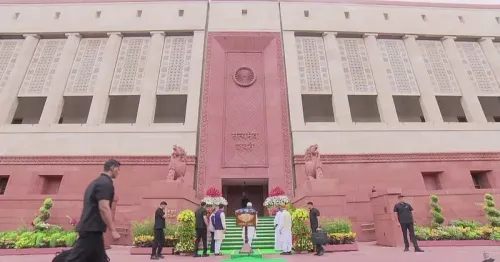
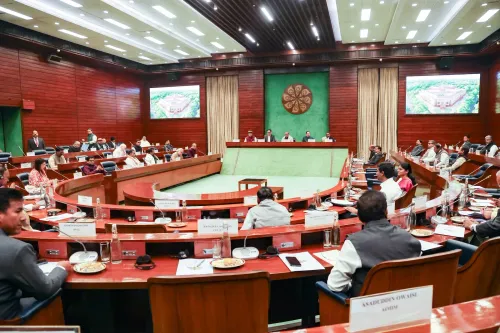
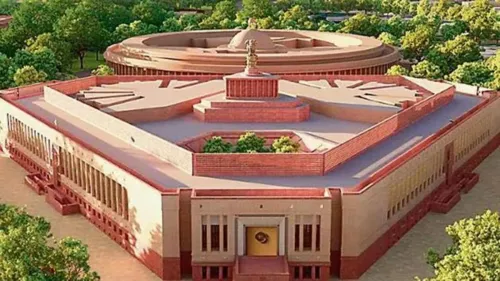
PM Modi Addresses Parliament at Monsoon Session 2026 Opening
Synopsis
Prime Minister Narendra Modi opened the Monsoon Session of Parliament on 20 July 2026, calling for productive legislative discussions that advance India's development goals. The session is one of three annual sittings of the bicameral legislature and is expected to take up key government bills.
Key Takeaways
PM Modi addressed Parliament on 20 July 2026 at the start of the Monsoon Session .
He called for 'productive discussions that strengthen India's development journey.' The Monsoon Session typically runs from July to September and covers both legislative and accountability business.
Since 2014 , the government has consistently framed session openings around national development priorities, including the Viksit Bharat 2047 vision.
Both the Lok Sabha and Rajya Sabha will sit during the session, with MPs and citizens identified as primary stakeholders.
Key bills to be introduced or passed and session productivity metrics will be closely watched by Parliament observers.
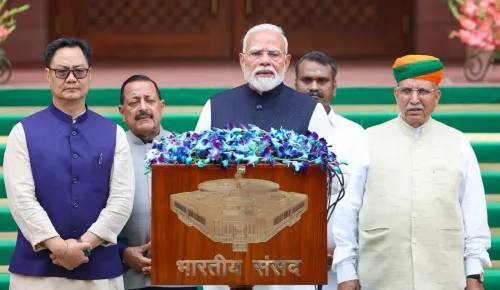
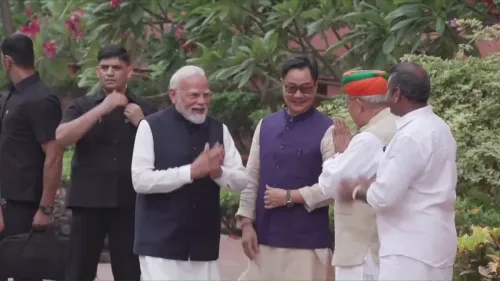
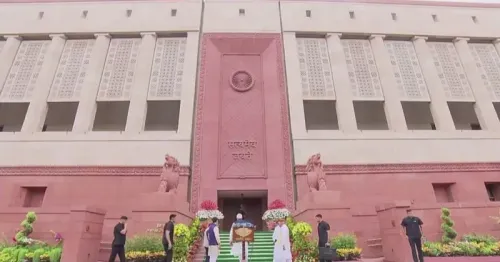
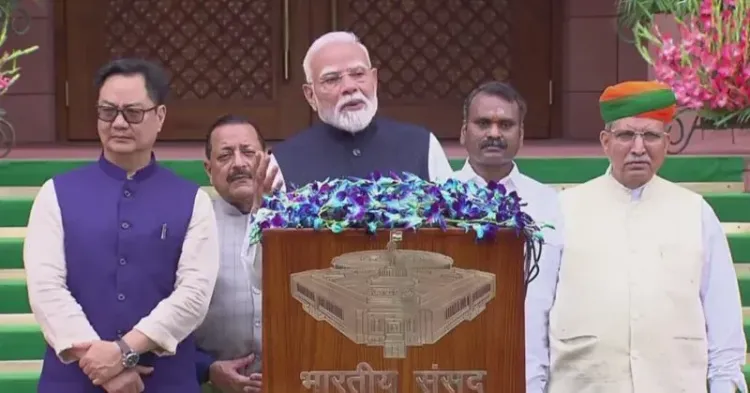
Prime Minister Narendra Modi addressed Parliament on Monday, 20 July 2026, at the commencement of the Monsoon Session, expressing hope that the session would witness productive discussions furthering India's development journey.
Context
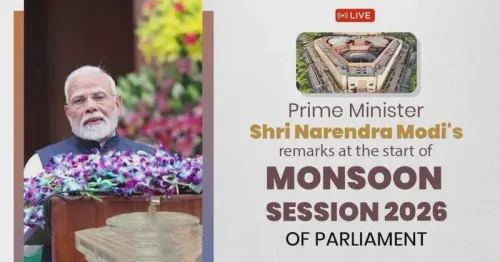
Speaking at the session's opening, PM Modi said, 'May this session witness productive discussions that strengthen India's development journey.' The statement, shared on his official X (formerly Twitter) account alongside a broadcast link, set a collaborative tone for the weeks-long sitting of Parliament.
The Monsoon Session is one of three annual sittings of Parliament of India, typically convened between July and September to transact government business, introduce legislation, and allow opposition scrutiny of the executive.
Policy Backdrop
Since 2014, the Modi government has consistently used Monsoon Session openings to frame legislative productivity as inseparable from national development goals. Addresses at session openings have linked parliamentary work to flagship programmes spanning infrastructure, economic reform, and social welfare.
A landmark precedent was the 2015 Monsoon Session, during which the Constitution (122nd Amendment) Bill enabling the Goods and Services Tax (GST) was introduced — a move presented as a foundational step in economic integration. The current government's framing continues to align parliamentary sessions with its long-term Viksit Bharat 2047 vision, which targets India becoming a developed nation by the centenary of its independence.
Stakeholders and Impact
The session directly involves Members of Parliament from both the Lok Sabha and Rajya Sabha, who will deliberate on legislation, budgetary matters, and policy questions over the coming weeks. Citizens across India stand as the ultimate stakeholders, with outcomes in areas such as infrastructure investment, social schemes, and regulatory reform shaping daily life.
Opposition parties typically use the Monsoon Session to raise pressing national concerns, demand accountability, and negotiate the legislative calendar. The PM's call for 'productive discussions' signals a government preference for cross-party consensus over disruption, though the actual tenor of proceedings will depend on the bills tabled and the political climate at the time.
What's Next
Attention will now shift to the specific bills listed for introduction or passage during the session, as well as productivity metrics — including sitting hours and the volume of legislation cleared — that Parliament watchers use to assess each session's effectiveness.
Should the session maintain the government's stated focus on development-linked legislation, it could add momentum to ongoing reform drives. Any significant disruptions or adjournments, conversely, would draw scrutiny over Parliament's functioning as a deliberative institution.
Point of View
' the Prime Minister sets a benchmark against which any opposition-led disruptions can be contrasted. This framing serves a dual purpose: it signals goodwill to coalition partners and fence-sitters while pre-emptively attributing any stalemate to adversarial politics. The statement also reinforces the government's overarching Viksit Bharat 2047 narrative, keeping long-term developmental ambition at the centre of even routine parliamentary communication.
NationPress
21 Jul 2026
Frequently Asked Questions
When did the Monsoon Session of Parliament 2026 begin?
The Monsoon Session of Parliament 2026 commenced on Monday, 20 July 2026 , with PM Modi addressing the opening proceedings.
What did PM Modi say at the Monsoon Session opening?
PM Modi expressed hope that the session would 'witness productive discussions that strengthen India's development journey,' setting a collaborative tone for the sitting.
What is the Monsoon Session of Parliament?
The Monsoon Session is one of three annual sittings of India's Parliament , typically held between July and September , during which the government introduces legislation and the opposition scrutinises executive action.
What is Viksit Bharat 2047?
Viksit Bharat 2047 is the Modi government's long-term vision to make India a fully developed nation by 2047 , the centenary of its independence, encompassing goals in infrastructure, economy, and social welfare.
What bills are expected in the Monsoon Session 2026?
Specific bills for the 2026 Monsoon Session have not been officially confirmed at the time of writing. Observers are watching the government's legislative calendar for announcements on key reform and development legislation.