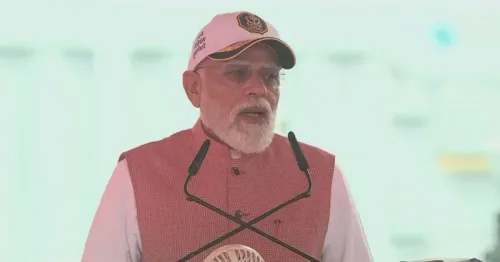
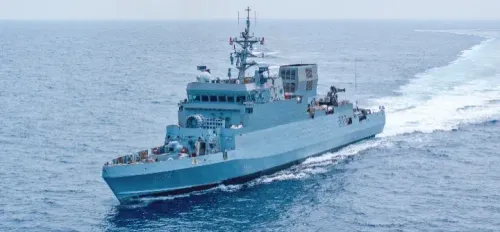
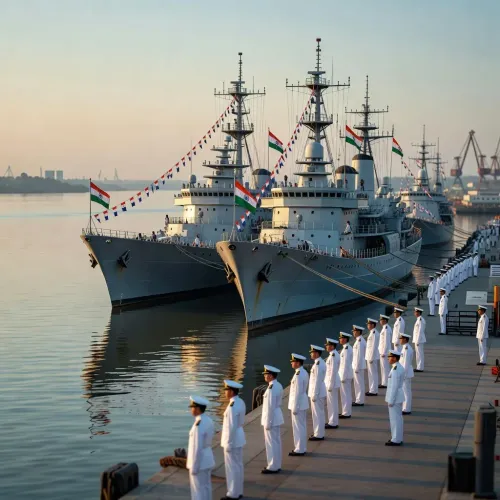
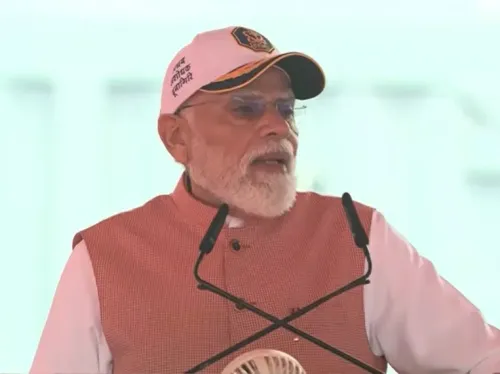
PM Modi at Tri-Commissioning of INS Dunagiri, Sanshodhak & Agray

Synopsis
Prime Minister Narendra Modi presided over the simultaneous commissioning of INS Dunagiri, INS Sanshodhak and INS Agray on 21 June 2026, marking a significant step in the Indian Navy's indigenisation drive under the Atmanirbhar Bharat framework.
Key Takeaways
Three vessels commissioned simultaneously: INS Dunagiri, INS Sanshodhak, and INS Agray were inducted into the Indian Navy in a single tri-commissioning ceremony.
PM Modi presided over the ceremony, continuing a pattern of high-visibility naval induction events underscoring defence self-reliance.
INS Dunagiri is a stealth frigate under Project 17A, the Navy's programme for seven indigenously built Nilgiri-class frigates.
Policy alignment: The inductions advance the goals of the Atmanirbhar Bharat Abhiyan (2020) and the Make in India initiative (2014).
Domestic shipyards — Mazagon Dock Shipbuilders and Garden Reach Shipbuilders and Engineers — are the primary builders of the Project 17A fleet.
The ceremony follows the landmark commissioning of INS Vikrant in September 2022, India's first indigenously built aircraft carrier.
Union Culture and Tourism Minister Gajendra Singh Shekhawat shared a live broadcast on Sunday, 21 June 2026, of Prime Minister Narendra Modi participating in a tri-commissioning ceremony inducting three new vessels — INS Dunagiri, INS Sanshodhak, and INS Agray — into the Indian Navy.
Context
The simultaneous commissioning of three naval platforms in a single ceremony is a significant operational milestone for the Indian Navy, signalling an accelerating pace of fleet induction. Prime Minister Modi has presided over multiple such ceremonies in recent years, using them to underscore India's commitment to defence self-reliance. Minister Shekhawat amplified the live event from his official X account, drawing public attention to the occasion.
INS Dunagiri is a stealth frigate built under Project 17A, the Indian Navy's programme for seven Nilgiri-class frigates constructed at Mazagon Dock Shipbuilders in Mumbai and Garden Reach Shipbuilders and Engineers in Kolkata. The vessel is named after a peak in the Kumaon Himalayas, continuing the Navy's tradition of naming frigates after Indian mountains.
Policy Backdrop
The tri-commissioning sits squarely within the framework of the Atmanirbhar Bharat Abhiyan, announced in 2020, which set explicit targets for indigenous defence production and a reduction in import dependence. The Make in India initiative, launched in 2014, had earlier mandated higher domestic content across defence platforms, including naval vessels. These policy pillars have collectively driven a steady pipeline of indigenously built combatants and auxiliary ships.
The commissioning of INS Vikrant in September 2022 — India's first indigenously built aircraft carrier — marked a watershed moment in this trajectory. The current ceremony continues that arc, with public-sector shipyards delivering surface combatants and specialised vessels under the 2015–2030 Maritime Capability Perspective Plan. Each induction reduces the Navy's dependence on foreign-built hulls and strengthens India's strategic posture in the Indian Ocean Region.
Stakeholders and Impact
The primary beneficiary is the Indian Navy, which gains additional surface assets to patrol and project power across the Indian Ocean Region. Domestic shipyards — particularly Mazagon Dock Shipbuilders and Garden Reach Shipbuilders and Engineers — stand to benefit from continued government orders as the production pipeline for Project 17A frigates and auxiliary vessels remains active. The inductions also support thousands of skilled jobs in the maritime manufacturing ecosystem.
INS Sanshodhak and INS Agray, whose specific roles encompass survey and patrol functions respectively, expand the Navy's ability to conduct hydrographic surveys and coastal operations. These capabilities have direct implications for maritime safety, charting of sea lanes, and the security of India's exclusive economic zone.
What's Next
Attention will now turn to the delivery and commissioning schedules for the remaining Project 17A frigates, with several hulls still under construction at both designated shipyards. The Navy's broader modernisation roadmap also includes next-generation destroyers and additional survey vessels. Each successive commissioning is expected to be accompanied by fresh policy announcements on indigenous content targets and export potential for Indian-built naval platforms.
As India's naval footprint expands, commissioning ceremonies led by the Prime Minister are likely to remain high-visibility events that reinforce the government's 'Aatmanirbhar' defence narrative ahead of key diplomatic and strategic engagements in the region.
Point of View
With the Prime Minister's personal presence lending it strategic weight. By inducting a stealth frigate alongside survey and patrol vessels in a single ceremony, the government demonstrates breadth as well as depth in its shipbuilding programme. The event fits a deliberate pattern: high-visibility commissioning ceremonies function as policy proof-points for the Atmanirbhar Bharat narrative, particularly as India seeks to position itself as a net security provider in the Indian Ocean Region. The remaining Project 17A deliveries will be the real test of whether the production ramp-up can sustain its current momentum.
NationPress
21 Jun 2026
Frequently Asked Questions
What is INS Dunagiri and why is it significant?
INS Dunagiri is a stealth frigate built under Project 17A, the Indian Navy's programme for seven indigenously constructed Nilgiri-class frigates. It is significant because it represents a major advance in India's domestic warship-building capability under the Atmanirbhar Bharat framework.
What happened at the Indian Navy tri-commissioning ceremony on 21 June 2026?
Prime Minister Narendra Modi presided over the simultaneous induction of three naval vessels — INS Dunagiri, INS Sanshodhak, and INS Agray — into the Indian Navy in a single tri-commissioning ceremony on 21 June 2026.
What is Project 17A of the Indian Navy?
Project 17A is the Indian Navy's programme to build seven stealth frigates of the Nilgiri class at two domestic shipyards — Mazagon Dock Shipbuilders in Mumbai and Garden Reach Shipbuilders and Engineers in Kolkata.
How does this commissioning relate to Make in India and Atmanirbhar Bharat?
The induction of indigenously built naval vessels directly advances the Make in India initiative (2014) and the Atmanirbhar Bharat Abhiyan (2020), both of which set targets for higher domestic content in defence production and reduced reliance on foreign-built platforms.
What was India's previous major indigenous naval commissioning before this?
India's most prominent recent milestone was the commissioning of INS Vikrant in September 2022, the country's first indigenously built aircraft carrier, which set the benchmark for domestic naval construction.