PM Modi: Cabinet clears 3rd & 4th rail lines on Ballari-Guntakal section
Synopsis
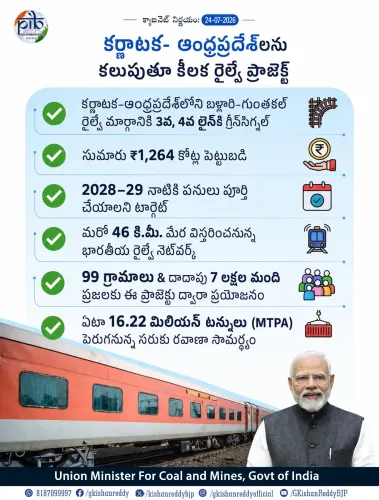
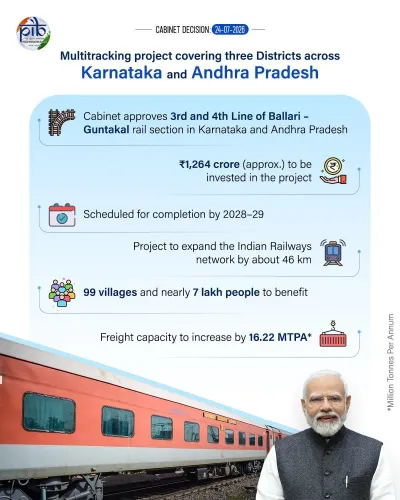
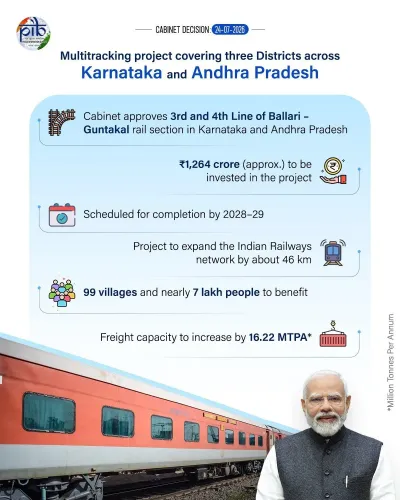
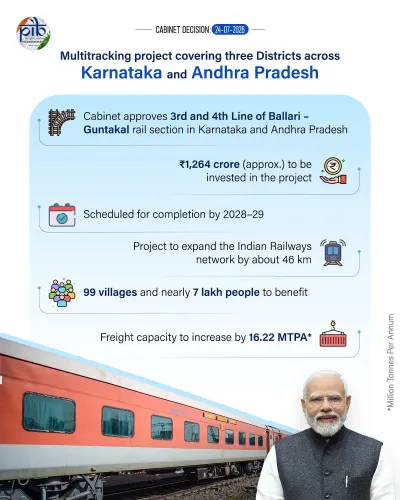
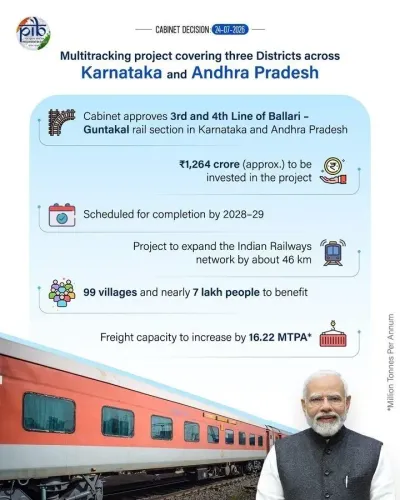
The Union Cabinet has approved construction of 3rd and 4th railway lines on the Ballari-Guntakal division, PM Modi announced on 24 July 2026. The project will boost passenger movement and freight transport — especially minerals — between Karnataka and Andhra Pradesh, advancing India's broader rail capacity augmentation drive.
Key Takeaways
The Union Cabinet approved construction of 3rd and 4th railway lines on the Ballari-Guntakal division .
The project spans two southern states — Karnataka and Andhra Pradesh — and will strengthen inter-state rail connectivity.
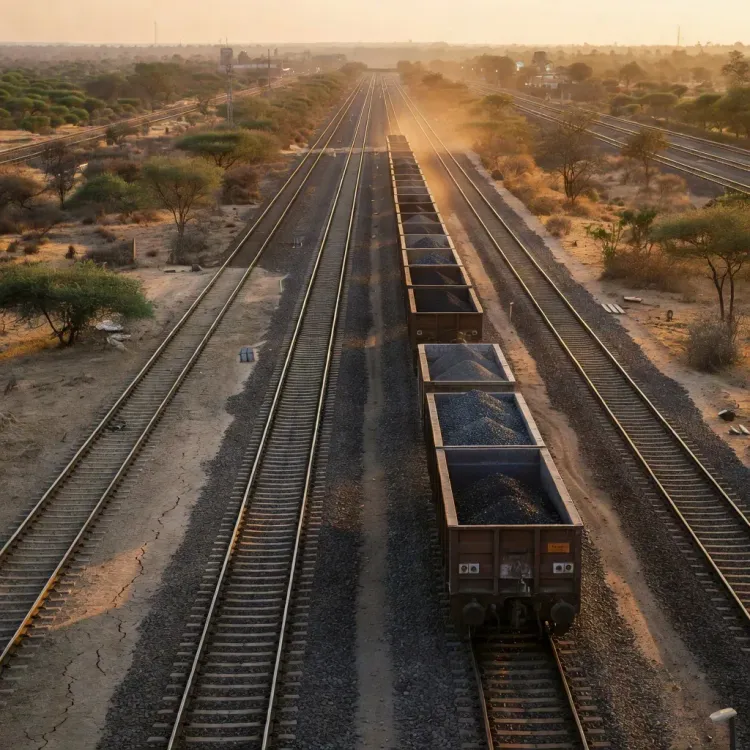
The corridor is critical for mineral freight , particularly iron ore and steel from the Ballari mining belt.
Passenger movement and transport of key commodities will both benefit from the expanded line capacity.
The approval aligns with the PM Gati Shakti National Master Plan (launched 2021 ) for multimodal infrastructure coordination.
Next steps include land acquisition, detailed project reports, and funding allocation in railway budgets.
Prime Minister Narendra Modi on Friday, 24 July 2026, announced that the Union Cabinet has approved the construction of the 3rd and 4th railway lines on the Ballari-Guntakal division, a move he said will strengthen connectivity and freight capacity across Karnataka and Andhra Pradesh.
Context
Posting in Kannada on X, the Prime Minister stated that the Cabinet's approval would 'ಸಂಪರ್ಕ ಹಾಗೂ ಸಾಗಾಣಿಕೆ ಸಾಮರ್ಥ್ಯವನ್ನು ಬಲಪಡಿಸಲಿದೆ' — 'strengthen connectivity and freight capacity' in the two states. He added that the project would 'enhance smooth passenger movement and support efficient transport of key commodities.'
The Ballari-Guntakal corridor is a strategically important railway section linking mineral-rich Ballari in Karnataka with Guntakal in Andhra Pradesh, serving as a critical artery for both inter-state passenger services and bulk freight, particularly iron ore and steel from the Ballari mining belt.
Policy Backdrop
The approval fits squarely within the central government's sustained push to double, triple, and quadruple high-density rail corridors across the country to ease congestion and boost throughput. The PM Gati Shakti National Master Plan, launched in 2021, coordinates such multimodal infrastructure investments, integrating railway capacity expansion with road, port, and logistics planning.
Adding 3rd and 4th lines to an existing corridor is a proven approach that avoids the complexity of greenfield alignments while delivering significant gains in both passenger frequency and freight volumes. Southern India's rail network has seen several such augmentation projects in recent years as industrial and logistics demand from the region grows.
Stakeholders and Impact
The immediate beneficiaries include railway passengers travelling between Karnataka and Andhra Pradesh, who can expect reduced congestion, improved punctuality, and greater train frequency once the lines are operational. Freight operators in the mining and steel sectors — particularly those moving iron ore out of the Ballari region — stand to gain from higher line capacity and faster turnaround times.
Agricultural produce, industrial goods, and consumer commodities moving between the two states will also benefit from the expanded capacity. The project is expected to reduce logistical bottlenecks that have historically constrained output from one of India's most mineral-intensive regions.
What's Next
Attention will now turn to the formal project sanction order, land acquisition timelines, and funding allocations in upcoming railway budgets or revised estimates. Progress on such corridor expansions typically moves through detailed project report finalisation, environmental clearances, and tendering before construction begins.
The Cabinet nod marks the political and administrative commitment; execution speed will depend on coordination between the Ministry of Railways, state governments of Karnataka and Andhra Pradesh, and local stakeholders on land and right-of-way issues.
Point of View
PM Modi also signals a deliberate regional outreach to Karnataka voters and stakeholders, framing a logistics decision in terms of local benefit. The project's real test will be execution speed: land acquisition and inter-departmental coordination on southern corridors have historically caused delays that erode the political dividend of such announcements. Placed within the Gati Shakti framework, the move reinforces the government's infrastructure-as-growth narrative ahead of what is likely to be a politically active period in both Karnataka and Andhra Pradesh.
NationPress
24 Jul 2026
Frequently Asked Questions
What did the Union Cabinet approve for the Ballari-Guntakal railway section?
The Union Cabinet approved the construction of 3rd and 4th railway lines on the Ballari-Guntakal division, as announced by PM Modi on 24 July 2026. The project aims to boost both passenger and freight capacity between Karnataka and Andhra Pradesh.
Which states will benefit from the Ballari-Guntakal rail expansion?
Karnataka and Andhra Pradesh will directly benefit from the project. The Ballari-Guntakal corridor connects the two southern states and is vital for passenger traffic as well as mineral freight from the Ballari mining region.
What is the significance of the Ballari-Guntakal railway corridor?
The Ballari-Guntakal division is a key inter-state rail link in southern India, handling large volumes of iron ore, steel, and other commodities from Karnataka's mineral-rich Ballari region, as well as passenger services between the two states.
How does this project relate to PM Gati Shakti?
The expansion aligns with the PM Gati Shakti National Master Plan, launched in 2021, which coordinates multimodal infrastructure investments including railway capacity augmentation to improve logistics efficiency across India.
What are the next steps after Cabinet approval for the Ballari-Guntakal rail lines?
Following Cabinet approval, the project will move to formal sanction orders, land acquisition, environmental clearances, and tendering. Funding will be tracked through railway budgets and revised estimates in coming years.