PM Modi: Cabinet Clears 3rd & 4th Railway Lines on Ballari-Guntakal Route
Synopsis
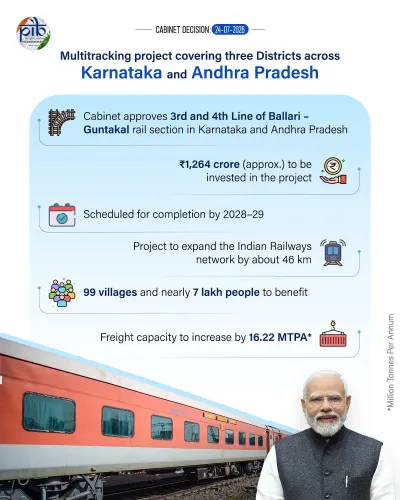
The Union Cabinet has approved construction of third and fourth railway lines on the Ballari-Guntakal section, PM Modi announced on July 24, 2026. The project aims to strengthen inter-state rail connectivity and freight capacity between Karnataka and Andhra Pradesh, benefiting passengers and the mineral transport sector.
Key Takeaways
The Union Cabinet approved construction of 3rd and 4th railway lines on the Ballari-Guntakal section .
The project strengthens rail connectivity between Karnataka and Andhra Pradesh .
Ballari is a major iron ore mining hub; Guntakal is a key South Central Railway junction in Andhra Pradesh.
The approval is expected to ease congestion for both passenger and freight services on this high-traffic corridor.
The project aligns with India's National Infrastructure Pipeline and a broader pattern of multi-tracking approvals since 2015.
Next steps include Detailed Project Report finalisation and budget allocation by Indian Railways .
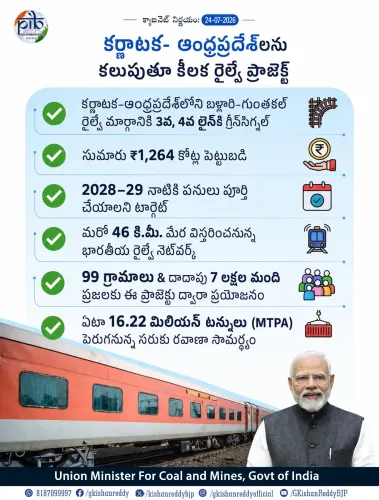
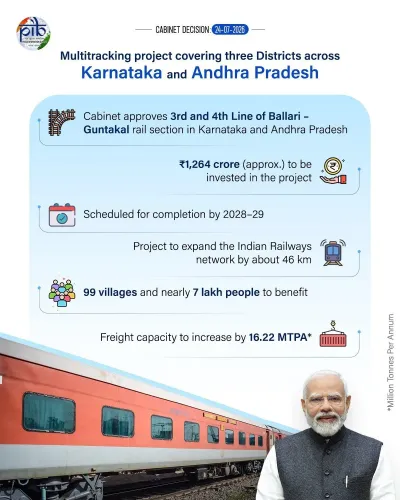
Prime Minister Narendra Modi on Friday, July 24, 2026, announced that the Union Cabinet has approved the construction of third and fourth railway lines on the Ballari-Guntakal section, a move set to significantly strengthen inter-state rail connectivity and freight capacity between Karnataka and Andhra Pradesh.
Context
In his post in Telugu, PM Modi stated that the Cabinet approval would bolster connectivity and freight transport capacity between the two southern states. He noted that the project would make passenger movement more convenient while also facilitating the movement of essential goods — a reference to the mineral-rich corridor linking Ballari's iron ore belt with the key junction at Guntakal.
Ballari, located in northern Karnataka, is one of India's most significant iron ore mining hubs. Guntakal, in Anantapur district of Andhra Pradesh, is a critical junction on the South Central Railway network, serving as a nodal point for freight and passenger trains across the southern peninsula.
Policy Backdrop
The approval fits within India's long-running programme of railway capacity augmentation on high-density corridors. The National Infrastructure Pipeline, announced in 2019, earmarked substantial funds for multi-tracking projects across southern India to ease congestion and improve freight throughput.
Between 2015 and 2022, the Union Cabinet cleared third and fourth line works in phases on several congested South Central Railway sections. The Ballari-Guntakal corridor, which carries heavy mineral freight alongside passenger traffic, has long been identified as a bottleneck requiring capacity expansion. Adding dedicated lines reduces conflicts between slower freight trains and faster passenger services, improving punctuality on both.
Stakeholders and Impact
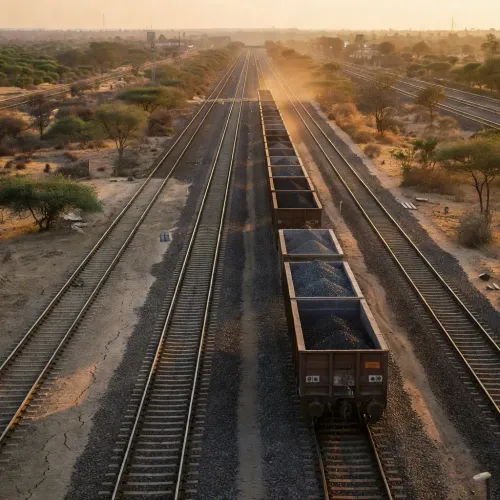
The most immediate beneficiaries are rail passengers travelling between Karnataka and Andhra Pradesh, who can expect reduced delays as additional tracks ease congestion. Freight operators — particularly those transporting iron ore, steel inputs and other bulk commodities from the Ballari mining region — stand to gain from higher throughput and faster turnaround times.
The broader mining and industrial sector in northern Karnataka, which depends heavily on rail for cost-effective evacuation of ore to ports and steel plants, will also benefit. State governments of both Karnataka and Andhra Pradesh have a direct stake, as improved logistics infrastructure supports industrial investment and regional economic integration.
What's Next
Following Cabinet sanction, the next milestones will include finalisation of the Detailed Project Report by Indian Railways and allocation of funds in the Railway Budget. Execution timelines and tendering processes will determine how quickly the additional lines become operational.
Observers will also watch for linked approvals on adjacent rail sections that could further integrate the southern freight corridor. The project's progress will be a key indicator of the pace of railway modernisation in the region under the current infrastructure push.
Point of View
Multi-year strategy to de-bottleneck India's southern freight corridors, where mineral traffic and passenger demand have long competed for the same tracks. By communicating this approval in Telugu, PM Modi is also making a calculated outreach to voters in both Karnataka and Andhra Pradesh, two states where infrastructure delivery carries significant political weight. The move fits a broader BJP governance narrative of tangible infrastructure milestones, particularly in rail — a sector where project announcements translate readily into visible, ground-level impact. Whether the project advances quickly will depend on execution discipline, an area where multi-tracking works have historically faced delays in land acquisition and fund release.
NationPress
24 Jul 2026
Frequently Asked Questions
What did the Union Cabinet approve for the Ballari-Guntakal railway section?
The Union Cabinet approved the construction of third and fourth railway lines on the Ballari-Guntakal section to enhance connectivity and freight capacity between Karnataka and Andhra Pradesh.
Why is the Ballari-Guntakal rail corridor important?
The corridor links Ballari, a major iron ore mining hub in Karnataka, with Guntakal, a critical railway junction in Andhra Pradesh, making it vital for both mineral freight movement and inter-state passenger travel.
How will the new railway lines benefit passengers and freight operators?
Additional tracks will reduce congestion, improve punctuality for passenger trains, and increase throughput for freight operators transporting bulk commodities like iron ore and steel inputs.
Is this part of a larger Indian Railways expansion plan?
Yes, this approval is part of India's National Infrastructure Pipeline and a phased programme of multi-tracking on congested South Central Railway sections that has been ongoing since 2015.
What are the next steps after Cabinet approval of the Ballari-Guntakal project?
Indian Railways will need to finalise the Detailed Project Report and secure budget allocation, after which tendering and construction can begin.