PM Modi: Cabinet clears 3rd and 4th railway lines on Ballari-Guntakal route
Synopsis
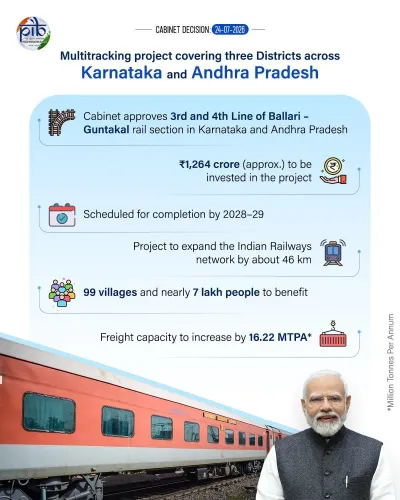
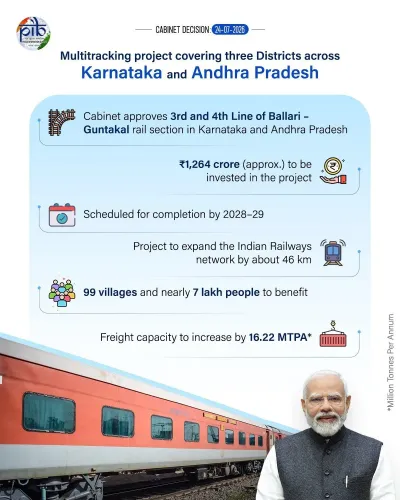
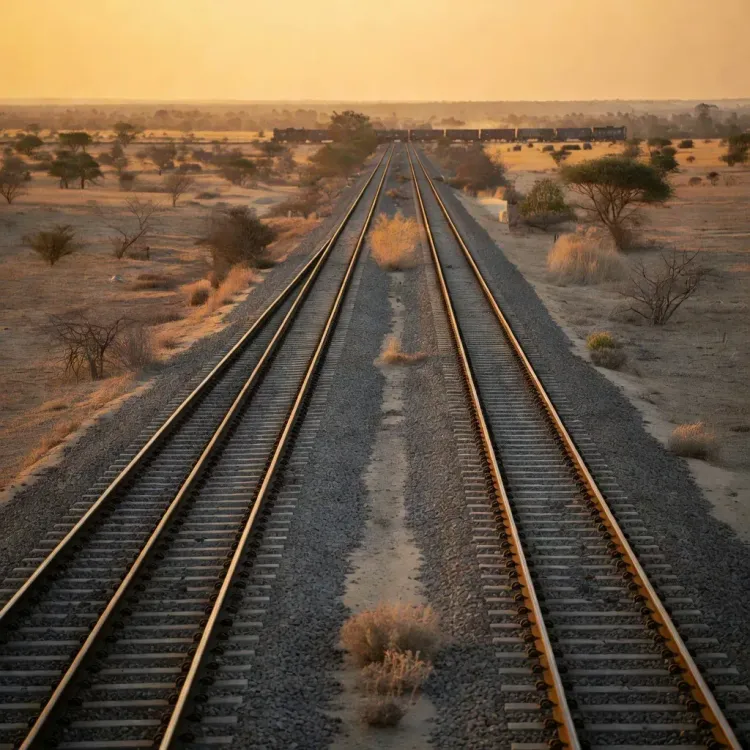
The Union Cabinet has approved third and fourth railway lines on the Ballari-Guntakal section, PM Modi announced on 25 July 2026. The project aims to ease capacity constraints on a key freight and passenger corridor linking Karnataka and Andhra Pradesh, supporting mineral logistics and passenger mobility under the National Rail Plan 2030 framework.
Key Takeaways
The Union Cabinet has approved the addition of third and fourth railway lines on the Ballari-Guntakal section in southern India.
The corridor links Ballari district, Karnataka — a major iron ore and steel hub — with Guntakal, Andhra Pradesh , a key rail junction.
The project is intended to improve passenger mobility and the movement of key commodities including iron ore and coal.
The approval aligns with the National Rail Plan 2030 and the PM Gati Shakti integrated infrastructure framework.
Indian Railways operates over 68,000 km of track and has been expanding multi-tracking on high-density corridors across the country.
Next steps include tendering, land acquisition, and a revised completion schedule to be issued by the Ministry of Railways .
Prime Minister Narendra Modi on Friday, 25 July 2026 announced that the Union Cabinet has approved the addition of third and fourth railway lines on the Ballari-Guntakal section, a high-density corridor linking Karnataka and Andhra Pradesh, in a move aimed at easing capacity constraints on one of southern India's busiest freight and passenger routes.
Context
The Ballari-Guntakal section is a critical rail link connecting Ballari district in Karnataka — a hub for iron ore and steel — with Guntakal in Andhra Pradesh, a major junction on the southern rail network. The route carries heavy volumes of mineral freight alongside regular passenger services, making it one of the more congested corridors in the region. Prime Minister Modi stated the approval 'will enhance passenger mobility and support the efficient movement of key commodities.'
The Cabinet's decision adds a third and fourth line to a section that has historically operated under significant capacity pressure, with freight and passenger demand regularly outpacing available track throughput.
Policy Backdrop
The approval aligns with the National Rail Plan 2030, released in 2021, which prioritises multi-tracking on saturated corridors to raise average train speeds and increase the freight modal share of Indian Railways. Indian Railways operates over 68,000 km of track and has been systematically expanding third and fourth lines on high-density sections across the country.
Multi-tracking investments in Karnataka and Andhra Pradesh also fit within the broader PM Gati Shakti national master plan framework, which seeks to integrate infrastructure development across transport modes to reduce logistics costs. The Ballari-Guntakal route forms part of a larger connectivity grid linking the east coast with the Chennai-Mumbai corridor.
Cabinet approvals for line doubling and tripling on southern Indian routes have been issued periodically since the 12th Five Year Plan period (2012-2017), reflecting a long-standing policy recognition of capacity bottlenecks on mineral and passenger corridors in the two states.
Stakeholders and Impact
The project is expected to benefit a broad set of stakeholders. Passenger commuters on the Ballari-Guntakal corridor stand to gain from reduced delays caused by freight congestion, while freight operators — particularly those moving iron ore, coal, and steel from Karnataka's mining belt — could see faster transit times to ports and consumption centres.
The mining and steel industries centred around Ballari, as well as industrial corridors and port logistics in Andhra Pradesh, are among the primary beneficiaries. Improved rail capacity is also expected to reduce pressure on road freight, with potential downstream benefits for highway maintenance and road safety in the region.
What's Next
Following Cabinet approval, the project will move to the tendering and land acquisition stages, with subsequent updates expected through Railway Board notifications or future Union Budget documents. The timeline for completion and the detailed project cost are subject to the standard procurement and clearance process under the Ministry of Railways.
Observers will watch for the pace of land acquisition — historically a key variable in the delivery timeline of multi-tracking projects — and for any alignment of the corridor's upgrades with planned industrial and port expansions in Andhra Pradesh.
Point of View
A strategy that has gained momentum under the PM Gati Shakti and National Rail Plan 2030 frameworks. The route's significance to Karnataka's mineral economy and Andhra Pradesh's port logistics makes it a politically and economically visible project for both states. By anchoring the announcement to passenger mobility alongside freight efficiency, the government is signalling a dual-purpose rationale that broadens the project's appeal beyond industrial stakeholders. The real test will be the speed of land acquisition and tendering, which have historically determined whether such approvals translate into on-ground progress within the anticipated window.
NationPress
24 Jul 2026
Frequently Asked Questions
What is the Ballari-Guntakal railway section?
The Ballari-Guntakal section is a busy rail corridor linking Ballari district in Karnataka — known for iron ore and steel — with Guntakal in Andhra Pradesh, a major southern railway junction. It carries heavy freight traffic alongside regular passenger services.
Why has the Cabinet approved third and fourth railway lines on this route?
The existing track on the Ballari-Guntakal section faces significant capacity pressure from both freight and passenger demand. Adding third and fourth lines will increase throughput, reduce delays, and support faster movement of commodities such as iron ore and coal.
How does this project fit into PM Gati Shakti?
PM Gati Shakti is a national master plan for integrated infrastructure development aimed at reducing logistics costs. Multi-tracking projects like the Ballari-Guntakal expansion align with its goal of improving rail connectivity across industrial and port corridors.
Who benefits from the Ballari-Guntakal railway expansion?
Key beneficiaries include rail passengers on the corridor, freight operators moving minerals and steel, the mining and steel industries around Ballari, and port and industrial logistics networks in Andhra Pradesh.
What happens after the Cabinet approves a railway line expansion?
After Cabinet approval, the project moves to tendering and land acquisition stages under the Ministry of Railways. Timelines and detailed costs are then published through Railway Board notifications or Union Budget documents.