PM Modi calls for rules-based maritime order at Sagarmanthan 2026
Synopsis
At the third Sagarmanthan: The Great Oceans Dialogue, PM Modi laid out India's maritime ambitions with striking candour — doubled port capacity, second-largest seafarer workforce globally, and a rules-based order framework that doubles as a quiet counter to unilateral moves in contested sea lanes. India is no longer just a participant in global ocean governance; it is auditioning to lead it.
Key Takeaways
PM Modi called for a 'free, open, secure, and rules-based maritime order' at Sagarmanthan 2026 on 7 October 2026 in New Delhi .
India's major ports have nearly doubled capacity with significantly reduced vessel turnaround times.
Indian seafarers now form the second-largest maritime workforce in the world .
India has enacted new-generation maritime laws to modernise the sector's regulatory framework.
The conference is co-organised by the Ministry of Ports, Shipping and Waterways (MoPSW) and the Observer Research Foundation (ORF) .
Modi framed India's maritime doctrine around four pillars: cooperation, trust, mutual respect, and mutual benefit .
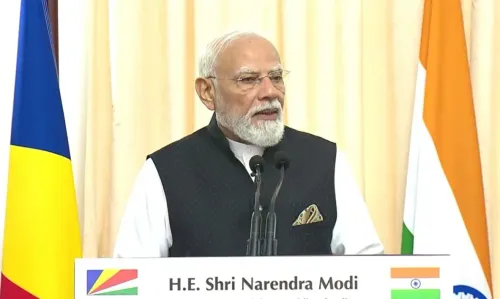
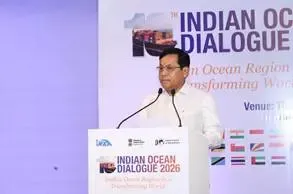
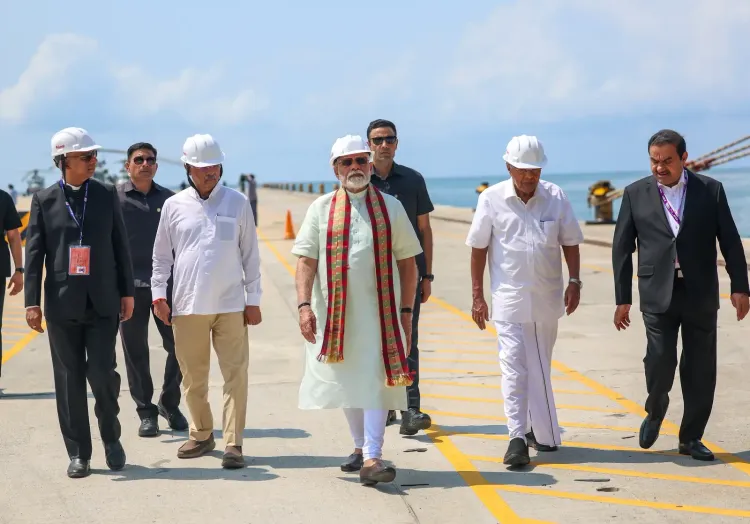
Prime Minister Narendra Modi on 7 October 2026 called for a 'free, open, secure, and rules-based maritime order' that delivers peace and prosperity to all nations, delivering a written message to the third edition of Sagarmanthan: The Great Oceans Dialogue in New Delhi. The annual conference, co-organised by the Ministry of Ports, Shipping and Waterways (MoPSW) and the Observer Research Foundation (ORF), brings together policymakers, maritime leaders, and global experts to shape the future of ocean governance.
Modi's Core Message on Ocean Governance
In his address, Prime Minister Modi underscored India's expansive maritime vision, framing the oceans as a domain of shared responsibility rather than contested geography. 'We believe the oceans must become a source of shared prosperity, where every country has a voice and an opportunity to grow,' he said.
Drawing on the conference's name, Modi noted that Sagarmanthan — meaning 'churning of the ocean' in Sanskrit — carries deep resonance in Indian tradition, where such churning symbolises the emergence of new possibilities. He argued that events in any corner of the world now ripple across oceans, making structured global dialogue more critical than ever.
India's Maritime Progress: Key Milestones
Modi cited a series of domestic achievements to reinforce India's claim to maritime leadership. India's major ports have nearly doubled their capacity, while vessel turnaround times have dropped significantly, he noted. The government has also enacted new-generation maritime laws to modernise the sector's regulatory framework.
On the human capital front, Modi said Indian seafarers now constitute the second-largest maritime workforce in the world, with young Indians earning recognition across global shipping lanes. He added that investment in ocean science and exploration is deepening India's understanding of its seas and enabling responsible use of marine resources.
Environment and Coastal Ecosystems
Alongside economic ambitions, Modi stressed that India's maritime growth is being pursued in tandem with ocean health. 'As we build a stronger maritime economy, we are protecting the health of our oceans and coastal ecosystems,' he said, signalling that environmental stewardship is embedded in the country's maritime strategy.
This comes amid rising international concern over plastic pollution, overfishing, and climate-driven sea-level changes that disproportionately affect coastal and island nations. India's dual emphasis on growth and conservation places it in a position to bridge developed and developing-world perspectives at multilateral forums.
India's Maritime Vision: Cooperation and Mutual Benefit
Modi articulated India's maritime doctrine as resting on four pillars — cooperation, trust, mutual respect, and mutual benefit. He said India's maritime vision extends across regions and oceans and is not defined by zero-sum competition. He expressed confidence that Sagarmanthan would strengthen this vision and generate 'fresh ideas, deeper partnerships and opportunities for generations to come.'
Notably, the dialogue arrives at a moment of heightened tension in key global sea lanes, including the South China Sea and the Red Sea, lending Modi's call for a rules-based order additional geopolitical weight. As host of successive editions of Sagarmanthan, India is positioning itself as a convenor of maritime multilateralism, consistent with its broader 'SAGAR' (Security and Growth for All in the Region) doctrine.
Point of View
However, will be tested less by rhetoric and more by whether its ports, laws, and workforce can sustain the ambition. The doubling of port capacity is real progress, but translating the world's second-largest seafarer pool into strategic leverage requires institutional depth that India is still building. Sagarmanthan's value lies in whether it produces binding frameworks or remains a prestige dialogue; three editions in, that question is yet to be answered.
NationPress
7 Oct 2026
Frequently Asked Questions
What is Sagarmanthan: The Great Oceans Dialogue?
Sagarmanthan is an annual maritime conference co-organised by India's Ministry of Ports, Shipping and Waterways and the Observer Research Foundation. The third edition was held in New Delhi on 7 October 2026, bringing together global policymakers, maritime leaders, and experts to deliberate on ocean governance.
What did PM Modi say at Sagarmanthan 2026?
PM Modi called for a 'free, open, secure, and rules-based maritime order' and outlined India's maritime achievements, including doubled port capacity, a second-largest global seafarer workforce, and new maritime laws. He said India's vision is built on cooperation, trust, mutual respect, and mutual benefit.
Why is India's maritime stance significant right now?
The call for a rules-based order comes amid heightened tensions in the South China Sea and the Red Sea, making India's position geopolitically relevant. It aligns with India's broader SAGAR doctrine and its ambition to lead multilateral ocean governance frameworks.
How large is India's maritime workforce?
According to Prime Minister Modi's message at Sagarmanthan 2026, Indian seafarers now constitute the second-largest maritime workforce in the world, with young Indians earning recognition across global shipping routes.
What infrastructure progress did Modi highlight?
Modi noted that India's major ports have nearly doubled their capacity and that vessel turnaround times have dropped significantly. He also pointed to investments in ocean science and the enactment of new-generation maritime laws as part of a broader modernisation drive.