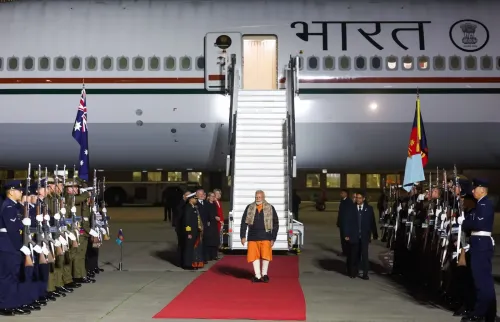
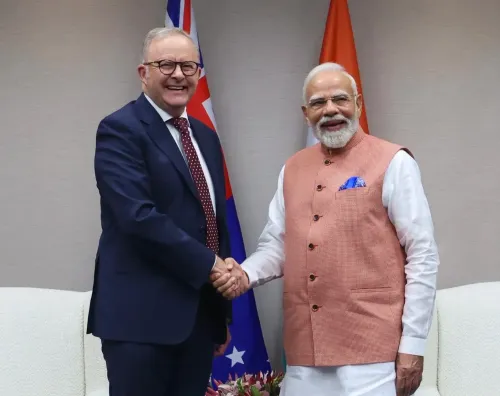
PM Modi Concludes Australia Visit, Hails Strengthened Partnership
Synopsis
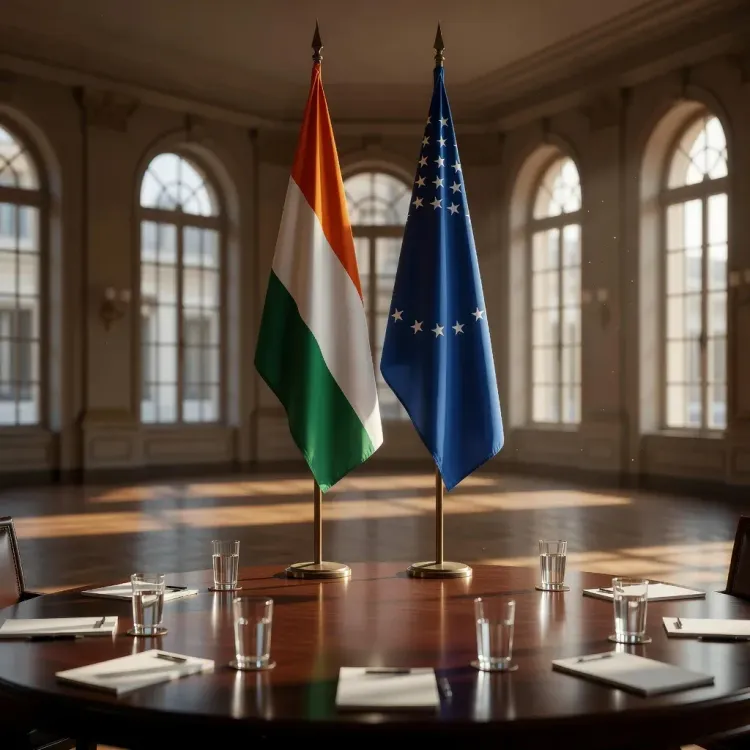
Prime Minister Narendra Modi wrapped up his Australia visit on 10 July 2026, thanking PM Anthony Albanese and the Australian people for their warmth. The trip, he said, strengthened the bilateral partnership and opened new avenues for cooperation, building on a decade of deepening India-Australia ties.
Key Takeaways
PM Modi concluded his official visit to Australia on 10 July 2026 .
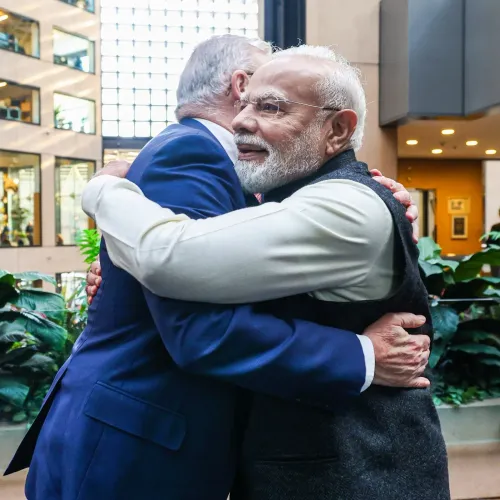
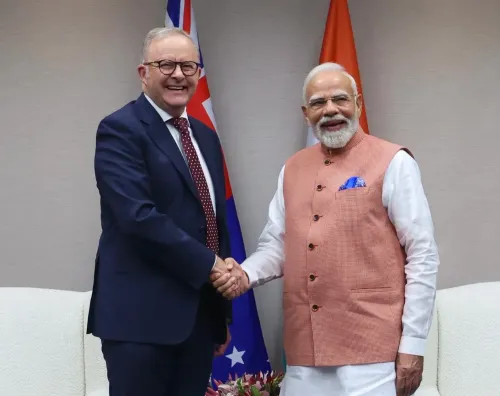
He thanked PM Anthony Albanese and the Australian government and people for their hospitality.
The visit was described as having 'further strengthened' the India-Australia partnership and opened 'new avenues for cooperation.' India and Australia have a Comprehensive Strategic Partnership since 2020 and a bilateral trade agreement since April 2022 .
Both nations are Quad members, and the visit aligns with India's Act East and Indo-Pacific strategies.
Follow-up on defence-technology, critical-minerals, and the next Quad leaders' summit will be closely watched.
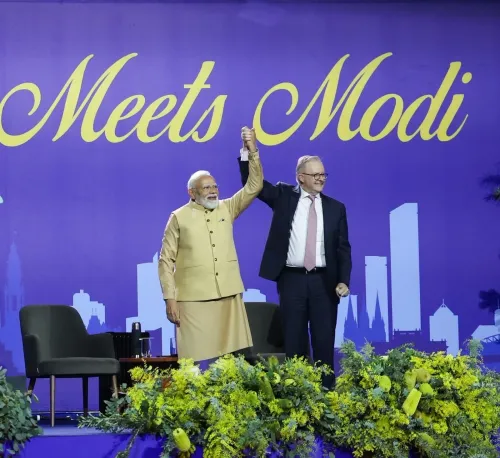
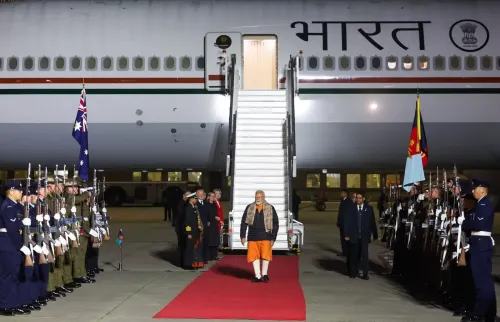
Prime Minister Narendra Modi on Friday, 10 July 2026, concluded his official visit to Australia, expressing gratitude to the Australian government, its people, and Prime Minister Anthony Albanese for their hospitality and the outcomes achieved during the trip.
Posting on X, PM Modi wrote: 'As my Australia visit concludes, I express my heartfelt gratitude to the Government and people of Australia as well as to PM Albanese for their warmth. The outcomes of this visit have further strengthened our partnership and opened new avenues for cooperation across diverse' domains.
Context
The visit marks the latest high-level engagement between India and Australia, two democracies whose ties have deepened considerably over the past decade. PM Modi had previously addressed the Australian Parliament in 2014, becoming the first Indian Prime Minister to do so in 28 years. That moment set the tone for an accelerating bilateral relationship.
The two countries elevated their ties to a Comprehensive Strategic Partnership during a 2020 virtual summit, institutionalising cooperation across strategic, defence, economic, and people-to-people domains. The India-Australia 2+2 Foreign and Defence Ministers dialogue, launched in 2021, further cemented security coordination.
Policy Backdrop
Trade relations received a structural boost when the India-Australia Economic Cooperation and Trade Agreement (ECTA) was signed in April 2022, reducing tariffs and expanding market access for goods and services on both sides. The pact has since served as a foundation for deeper commercial engagement.
Both nations are also members of the Quadrilateral Security Dialogue (Quad), alongside the United States and Japan, which focuses on Indo-Pacific security and upholding a rules-based maritime order. Modi's Australia visit fits squarely within India's broader Act East and Indo-Pacific strategies, which seek to diversify partnerships and build supply-chain resilience with like-minded democracies.
Stakeholders and Impact
The visit carries implications for multiple constituencies. Indian defence forces stand to benefit from deeper security and technology cooperation, while exporters on both sides look to the trade agreement framework for expanded market opportunities. Indian students — a large and growing community in Australia — and the broader Indian diaspora are also direct stakeholders in the strengthening of people-to-people ties.
Critical-minerals cooperation is an area of growing strategic interest, given Australia's significant reserves and India's demand for raw materials to support its clean-energy and manufacturing ambitions. Education and research linkages have also expanded markedly over the past decade.
What's Next
Attention will now turn to the specific deliverables from the visit — including any new defence-technology agreements, critical-minerals initiatives, or trade facilitation measures — as details are formally announced by both governments. The next scheduled Quad leaders' meeting will also be a key moment to watch for follow-through on Indo-Pacific commitments made during this bilateral engagement.
The steady institutionalisation of India-Australia ties through summits, ministerial dialogues, and trade pacts suggests that outcomes from this visit are likely to feed into a broader, durable framework rather than remaining one-off announcements.
Point of View
Multi-year effort to institutionalise India's Indo-Pacific partnerships beyond rhetoric. The warm public tone from both sides reflects a relationship that has moved from aspirational to transactional — anchored in the ECTA, the 2+2 dialogue, and Quad membership. For New Delhi, deepening ties with Canberra serves a dual purpose: diversifying strategic partnerships and securing supply chains, particularly in critical minerals. The visit reinforces that India's foreign policy under Modi treats middle-power democracies as indispensable pillars of its global positioning.
NationPress
10 Jul 2026
Frequently Asked Questions
Why did PM Modi visit Australia in July 2026?
PM Modi visited Australia to hold bilateral talks with Prime Minister Anthony Albanese, aimed at strengthening the India-Australia Comprehensive Strategic Partnership and exploring new areas of cooperation including trade, defence, and people-to-people ties.
What is the India-Australia Comprehensive Strategic Partnership?
The Comprehensive Strategic Partnership is a framework established in 2020 that elevated India-Australia bilateral relations, covering strategic, defence, economic, and people-to-people cooperation.
What is the India-Australia trade agreement?
The India-Australia Economic Cooperation and Trade Agreement (ECTA), signed in April 2022, reduced tariffs and expanded market access for goods and services between the two countries.
What is the Quad and how does Australia fit in?
The Quadrilateral Security Dialogue, or Quad, is a grouping of India, Australia, the United States, and Japan that focuses on Indo-Pacific security and a rules-based maritime order. Australia is a founding member alongside India.
What outcomes are expected from Modi's Australia visit?
While specific deliverables are yet to be formally announced, areas of focus include defence-technology cooperation, critical-minerals agreements, trade facilitation, and education and diaspora ties. Follow-up at the next Quad leaders' meeting is also expected.