PM Modi Elevates India-New Zealand Ties to Strategic Partnership
Synopsis
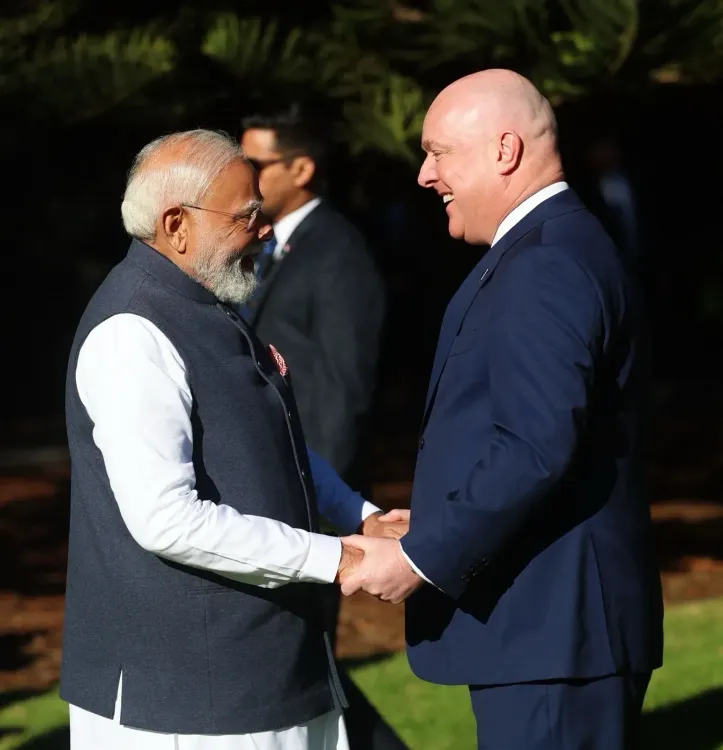
Prime Minister Narendra Modi met New Zealand PM Chris Luxon in Auckland on 11 July 2026 — the first Indian PM visit in four decades — and announced the elevation of bilateral ties to a Strategic Partnership, committing both nations to concrete outcomes across trade, defence, and education.
Key Takeaways
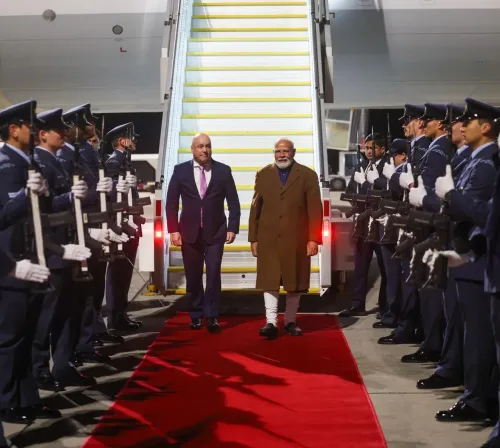
Prime Minister Narendra Modi visited Auckland, New Zealand on 11 July 2026 — the first visit by an Indian Prime Minister to New Zealand in four decades .
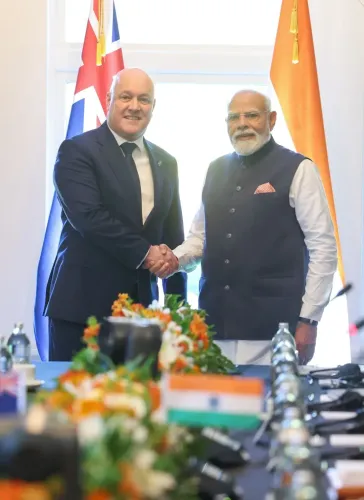
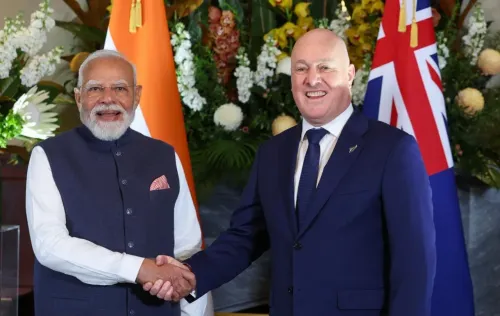
Modi and New Zealand PM Chris Luxon held 'extensive and fruitful' talks and agreed to elevate bilateral ties to a Strategic Partnership .
The upgrade follows Luxon's visit to India last year , which Modi credited with energising the partnership.
Both leaders committed to moving forward 'across every sector with clear goals and concrete outcomes.' The Strategic Partnership is expected to accelerate dialogue on trade, defence, and education , and may revive stalled free trade agreement negotiations.
The Indian diaspora in New Zealand and trade and defence establishments on both sides are among the primary stakeholders.
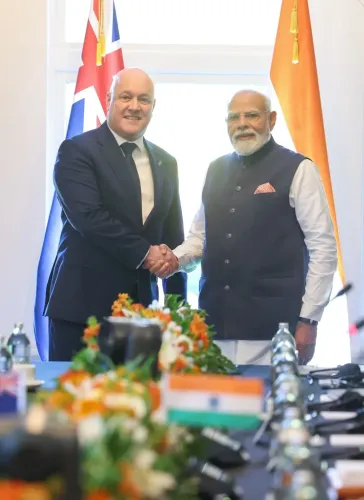
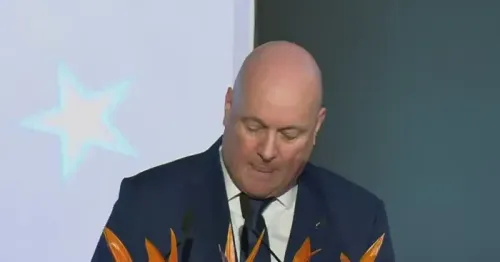
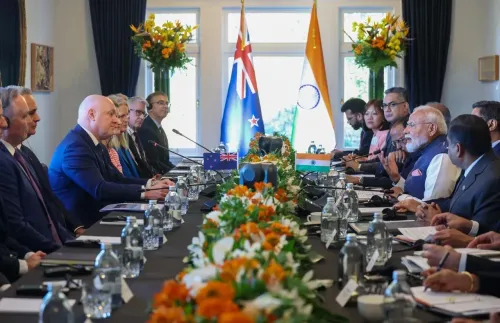
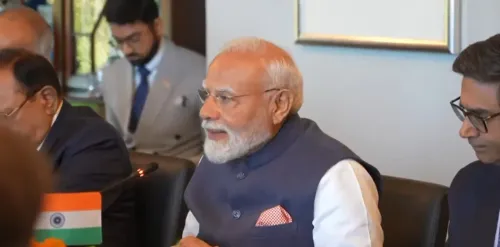
Prime Minister Narendra Modi held talks with New Zealand Prime Minister Chris Luxon in Auckland on Saturday, 11 July 2026, marking the first visit by an Indian Prime Minister to New Zealand in four decades. The two leaders announced the elevation of bilateral ties to a Strategic Partnership, pledging concrete outcomes across every sector of cooperation.
Context
Modi described the talks as 'extensive and fruitful,' noting that Luxon's visit to India last year had already 'energised' the bilateral partnership. The Indian Prime Minister stated that his own visit 'has added further momentum to the India-New Zealand friendship,' underscoring the reciprocal nature of the diplomatic engagement. The visit is historically significant: no Indian Prime Minister had travelled to New Zealand in roughly 40 years before this trip.
Chris Luxon, who became Prime Minister of New Zealand in late 2023, has prioritised trade and regional engagement since taking office. His earlier trip to India laid the groundwork for the upgraded framework announced in Auckland.
Policy Backdrop
India and New Zealand established diplomatic relations shortly after Indian independence and have maintained periodic high-level contacts since. Talks on a bilateral free trade agreement were pursued during the 2010s but were subsequently paused, leaving a significant gap in the formal economic architecture between the two countries.
The announcement of a Strategic Partnership fits a broader pattern in Indian foreign policy: upgrading ties with mid-sized Indo-Pacific partners to diversify economic and strategic options. Such frameworks typically cover trade, defence, education, and people-to-people exchanges, and often precede renewed efforts on trade pacts.
Stakeholders and Impact
The Indian diaspora in New Zealand — one of the country's fastest-growing communities — stands to benefit from enhanced people-to-people provisions that commonly accompany Strategic Partnership declarations. Trade negotiators on both sides are expected to resume structured dialogue, with the possibility of reviving stalled free trade agreement talks gaining fresh impetus.
Defence establishments of both nations are also stakeholders, as Strategic Partnerships in the Indo-Pacific context frequently include provisions for maritime cooperation and information sharing. The upgrade signals that both governments see each other as consequential partners in a shifting regional order.
What's Next
Both sides are expected to constitute joint working groups on trade, defence, and education to translate the Strategic Partnership into actionable programmes with 'clear goals and concrete outcomes,' as Modi stated in his post. Progress on any revived FTA negotiations will be a key metric watched by business communities in both countries.
The two Prime Ministers are likely to meet again on the sidelines of multilateral forums, and follow-up ministerial visits are anticipated in the months ahead to operationalise the elevated framework. The visit resets the tempo of a relationship that had lacked sustained high-level attention for decades, and signals New Zealand's growing salience in India's Indo-Pacific strategy.
Point of View
Defence, and diaspora goals that had drifted without sustained high-level attention. For Luxon, the upgrade offers economic diversification away from over-reliance on a single regional partner, aligning with New Zealand's cautious but real pivot toward broader Indo-Pacific engagement. The real test will be whether working groups translate the declaration into a revived free trade agreement and tangible defence cooperation within a credible timeline.
NationPress
11 Jul 2026
Frequently Asked Questions
What was announced during PM Modi's visit to New Zealand in 2026?
Prime Minister Modi and New Zealand PM Chris Luxon announced the elevation of India-New Zealand bilateral ties to a Strategic Partnership during talks in Auckland on 11 July 2026, committing both sides to concrete outcomes across trade, defence, education, and other sectors.
When was the last time an Indian Prime Minister visited New Zealand before Modi?
According to Prime Minister Modi's post, his July 2026 visit to New Zealand is the first by an Indian Prime Minister in four decades , meaning no Indian PM had made an official visit to New Zealand for roughly 40 years before this trip.
What is a Strategic Partnership between India and New Zealand?
A Strategic Partnership is an elevated diplomatic framework that goes beyond routine bilateral ties, typically covering structured cooperation on trade, defence, education, and people-to-people exchanges, often with joint working groups and defined goals.
Has India and New Zealand discussed a free trade agreement?
Yes. Negotiations for an India-New Zealand free trade agreement were pursued during the 2010s but were subsequently paused. The new Strategic Partnership framework is expected to create fresh momentum for reviving those talks.
Who is Chris Luxon and what is his role in India-New Zealand relations?
Chris Luxon has been Prime Minister of New Zealand since late 2023. He visited India before the July 2026 Auckland meeting, a trip Modi credited with energising the bilateral partnership and setting the stage for the Strategic Partnership announcement.