PM Modi Highlights Democracy and Diversity as Pillars of India-Indonesia Ties
Synopsis
Prime Minister Narendra Modi on 7 July 2026 invoked shared democratic values and civilisational diversity as the core bonds between India and Indonesia, reaffirming a Comprehensive Strategic Partnership rooted in pluralism, maritime cooperation, and Indo-Pacific engagement.
Key Takeaways
Prime Minister Narendra Modi posted on 7 July 2026 highlighting democracy and diversity as the ties binding India and Indonesia .
India and Indonesia elevated their relationship to a Comprehensive Strategic Partnership in 2018 , building on a strategic partnership established in 2005 .
Indonesia is the world's third-largest democracy and the largest Muslim-majority nation, making it a key partner in India's democratic outreach.
Both nations cooperate across the G20 , East Asia Summit , and IORA , coordinating on maritime security and multilateral trade.
The post reinforces India's Act East Policy and its broader Indo-Pacific strategy , with ASEAN at its centre.
Defence establishments and trade communities in both countries are primary stakeholders in the deepening bilateral relationship.
Prime Minister Narendra Modi on Tuesday, 7 July 2026, invoked shared democratic values and civilisational diversity as the defining bonds between India and Indonesia, posting a brief but pointed message on X that underscored the two nations' deepening bilateral relationship.
Context
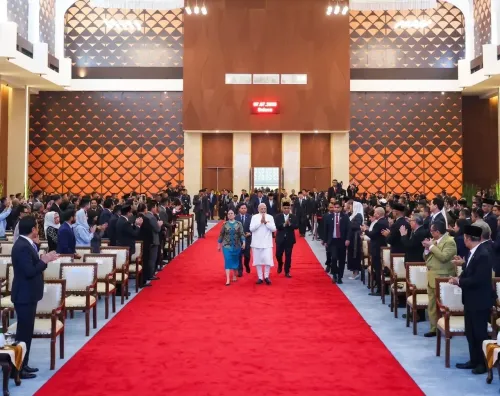
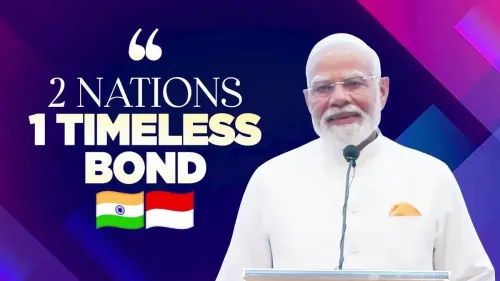
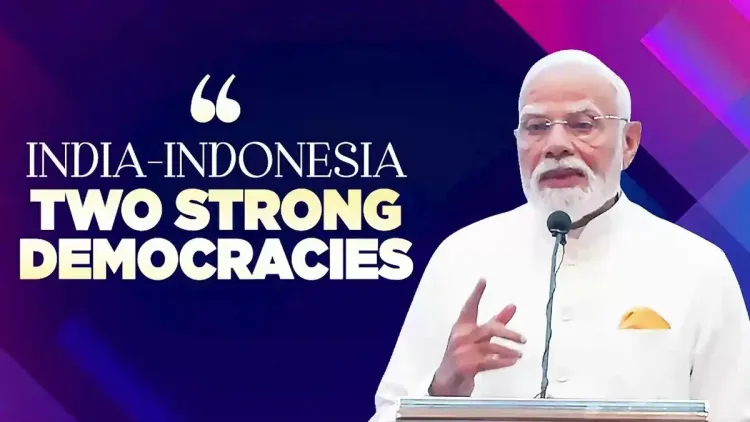
In his post, Prime Minister Modi wrote: 'Our democracies and diversity bring India and Indonesia closer.' The statement, accompanied by a video, distils a long-standing diplomatic theme — that the two countries are natural partners not merely because of geography or commerce, but because of the plural, democratic character they share. Indonesia is the world's third-largest democracy and the largest Muslim-majority nation, making it a uniquely significant interlocutor for India as it projects its own democratic identity on the global stage.
Policy Backdrop
India and Indonesia formalised a strategic partnership in 2005, which was elevated to a Comprehensive Strategic Partnership in 2018. That same year, Prime Minister Modi addressed the Indonesian Parliament in Jakarta, emphasising democracy, pluralism and maritime cooperation as the three pillars of the relationship. The current post echoes that address, suggesting continuity in New Delhi's diplomatic messaging toward Jakarta.
The bilateral relationship sits at the heart of India's Act East Policy and its broader Indo-Pacific strategy. Both nations are members of the G20, the East Asia Summit, and the Indian Ocean Rim Association (IORA), where they coordinate on maritime security, multilateral trade, and regional stability. Indonesia also holds a central role within ASEAN, a grouping that New Delhi regards as a cornerstone of its eastern outreach.
Stakeholders and Impact
The message resonates across several constituencies. Defence establishments in both countries have been expanding cooperation on maritime domain awareness and joint exercises in the Indian Ocean and Strait of Malacca corridors. Trade and business communities stand to benefit as the two governments explore deeper economic connectivity, with bilateral trade running into tens of billions of dollars annually.
People-to-people ties, anchored by a significant Indian diaspora in Indonesia and centuries-old cultural exchanges rooted in Hindu-Buddhist heritage, give the relationship a civilisational depth that official diplomacy frequently invokes. Prime Minister Modi's framing of 'diversity' as a shared value deliberately highlights this historical texture.
What's Next
Analysts will watch for follow-up action at upcoming ASEAN-India and G20 ministerial meetings, where the two sides are expected to discuss trade pact progress, defence cooperation frameworks, and digital connectivity initiatives. Prime Minister Modi's post, brief as it is, signals that the India-Indonesia relationship remains a diplomatic priority for New Delhi as it seeks to consolidate influence across the Indo-Pacific. The emphasis on democratic solidarity also carries a wider strategic subtext at a time when multilateral institutions face pressure from authoritarian alternatives.
Point of View
Not a casual remark. It places the India-Indonesia relationship within a values-based architecture that New Delhi has been constructing across the Indo-Pacific — one that implicitly contrasts democratic pluralism with authoritarian models of regional influence. The post sustains a consistent messaging arc that dates back to Modi's 2018 Jakarta address, suggesting the government views Indonesia as a strategic anchor in Southeast Asia rather than merely a bilateral partner. At a moment when multilateral institutions are under strain, invoking shared democratic identity also serves India's interest in positioning itself as a leading voice for the Global South's democratic majority.
NationPress
7 Jul 2026
Frequently Asked Questions
What did PM Modi say about India and Indonesia?
Prime Minister Narendra Modi said 'Our democracies and diversity bring India and Indonesia closer,' highlighting shared democratic values and civilisational plurality as the foundation of the bilateral relationship.
What is the current status of India-Indonesia relations?
India and Indonesia share a Comprehensive Strategic Partnership, established in 2018 , covering defence, trade, maritime cooperation, and people-to-people ties. Both nations cooperate in the G20 , East Asia Summit , and IORA .
Why is Indonesia important to India's foreign policy?
Indonesia is the world's third-largest democracy and the largest Muslim-majority nation, and it holds a central role in ASEAN . It is a key partner in India's Act East Policy and Indo-Pacific strategy .
What is India's Act East Policy?
India's Act East Policy is a diplomatic framework that deepens engagement with Southeast and East Asian nations, with ASEAN at its core, focusing on trade, connectivity, defence cooperation, and cultural ties.
When did India and Indonesia first establish a strategic partnership?
India and Indonesia established a strategic partnership in 2005 , which was later elevated to a Comprehensive Strategic Partnership in 2018 during Prime Minister Modi's visit to Jakarta .