PM Modi highlights Nalanda, Sanskrit Universities blending tradition and modernity

Synopsis
Prime Minister Narendra Modi used his Mann Ki Baat platform on June 28, 2026, to spotlight Nalanda University in Bihar and Central Sanskrit University, showcasing how both institutions are merging India's classical knowledge heritage with modern academic frameworks.
Key Takeaways
PM Modi shared a video on June 28, 2026 as part of Mann Ki Baat highlighting Nalanda University and Central Sanskrit University .
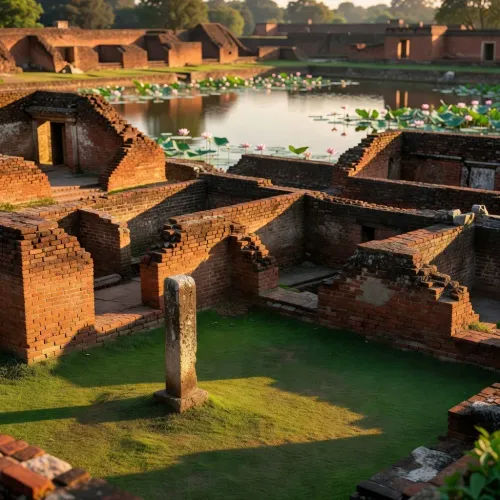
Nalanda University in Rajgir, Bihar is a revival of the ancient seat of learning that flourished from the 5th to 12th century CE ; its modern campus was inaugurated in June 2024 .
Central Sanskrit University is a central government university under the Ministry of Education with campuses across India.
Both institutions reflect the National Education Policy 2020 mandate to integrate Indian knowledge systems into mainstream higher education.
The spotlight on Nalanda University also carries diplomatic weight, given its historic role as a pan-Asian centre of learning.
Bihar stands to gain increased academic and cultural investment as these institutions gain national visibility.
Prime Minister Narendra Modi on Sunday, June 28, 2026, spotlighted how Nalanda University in Bihar and Central Sanskrit University are bridging ancient Indian knowledge systems with contemporary education, sharing the feature as part of his monthly radio programme Mann Ki Baat.
Context
The post, shared on the morning of June 28, accompanied a video illustrating the dual mandate of the two institutions — preserving India's classical intellectual heritage while equipping students with modern academic tools. Mann Ki Baat, the Prime Minister's monthly address to citizens broadcast on All India Radio, frequently surfaces grassroots stories and institutional achievements that reinforce the government's cultural and educational priorities.
Nalanda University, located in Rajgir, Bihar, is a revival of the ancient Nalanda seat of learning that flourished between the 5th and 12th centuries CE and attracted scholars from across Asia. The modern institution was re-established under an act of Parliament and formally inaugurated by Prime Minister Modi in June 2024, with a new campus designed to reflect its historic legacy.
Policy Backdrop
The emphasis on institutions like Nalanda University and Central Sanskrit University aligns with the National Education Policy (NEP) 2020, which explicitly calls for the integration of classical languages, Indian knowledge systems, and traditional disciplines into mainstream higher education. Central Sanskrit University, a central university under the Ministry of Education, operates campuses across multiple states and offers programmes ranging from Vedic studies to performing arts alongside modern disciplines.
The government has consistently framed these institutions as proof that India's ancient academic traditions are not merely archival but living and evolving. Investments in their infrastructure, faculty, and international partnerships have been cited as part of a broader effort to position India as a global knowledge hub.
Stakeholders and Impact
Students enrolled at both universities stand to benefit from curricula that combine classical texts and languages with modern research methodologies, potentially opening pathways in fields such as Indology, heritage management, linguistics, and philosophy. The revival of Nalanda University in particular carries diplomatic significance, given its historical role as a pan-Asian centre of Buddhist and secular learning — a dimension the government has used to strengthen cultural ties with Southeast Asia and East Asia.
For Bihar, the continued visibility of Nalanda University at the national level reinforces the state's identity as a cradle of ancient civilisation and could support tourism and academic investment in the Rajgir-Bodh Gaya corridor.
What's Next
As Mann Ki Baat reaches a vast radio and digital audience each month, the Prime Minister's focus on these two universities is likely to prompt renewed public and policy attention toward classical-knowledge institutions across India. Observers will watch whether this spotlight translates into additional funding, new academic collaborations, or expanded enrolment drives at Nalanda University and Central Sanskrit University in the months ahead. The broader question is whether India's experiment in merging 'tradition with modernity' at these institutions produces a replicable model for other classical-knowledge universities in the country.
Point of View
The messaging signals that the 'tradition-meets-modernity' thesis is being institutionalised, not merely celebrated. This fits a broader pattern under NEP 2020 of elevating Indian-language and classical-knowledge institutions to parity with conventional universities. The political dividend in Bihar, a key electoral state, is an added dimension that analysts will note.
NationPress
28 Jun 2026
Frequently Asked Questions
What is Nalanda University and where is it located?
Nalanda University is a modern revival of the ancient Nalanda centre of learning, located in Rajgir, Bihar . It was re-established by an act of Parliament and its new campus was inaugurated by PM Modi in June 2024 .
What is Central Sanskrit University?
Central Sanskrit University is a central government university under India's Ministry of Education that offers programmes in Vedic studies, classical languages, performing arts, and modern disciplines across multiple campuses in India.
What is Mann Ki Baat?
Mann Ki Baat is a monthly radio programme hosted by Prime Minister Narendra Modi , broadcast on All India Radio, in which he addresses citizens on national issues, achievements, and grassroots stories.
How does Nalanda University merge tradition with modernity?
Nalanda University combines curricula rooted in India's classical intellectual heritage — including Buddhist studies and ancient sciences — with contemporary research methodologies and international academic partnerships, in line with the National Education Policy 2020 .
Why is Nalanda University significant for India's foreign policy?
The ancient Nalanda was a pan-Asian centre of learning that attracted scholars from across Southeast Asia and East Asia . India has used the revival of Nalanda University to strengthen cultural and diplomatic ties with these regions.