PM Modi: India Helps Without Checking Passport Colour
Synopsis
Prime Minister Narendra Modi on 9 July 2026 declared that India never checks passport colour when extending help, pointing to a consistent record of non-discriminatory humanitarian assistance — from Operation Rahat to Vaccine Maitri — as the reason global trust in India keeps rising.
Key Takeaways
PM Modi stated on 9 July 2026 that India does not check passport colour when offering humanitarian assistance.
During Operation Rahat (2015) , India rescued more than 4,000 foreign nationals from 41 countries from war-torn Yemen .
The Vaccine Maitri initiative supplied COVID-19 vaccines to over 90 countries without nationality-based conditions.
Operation Dost (2023) provided earthquake relief to Turkey and Syria irrespective of their diplomatic alignment with India.
India's HADR doctrine is a cornerstone of its soft-power and multi-alignment foreign policy strategy.
Future multilateral forums including the UN General Assembly and BRICS summits may see new humanitarian commitments from New Delhi .
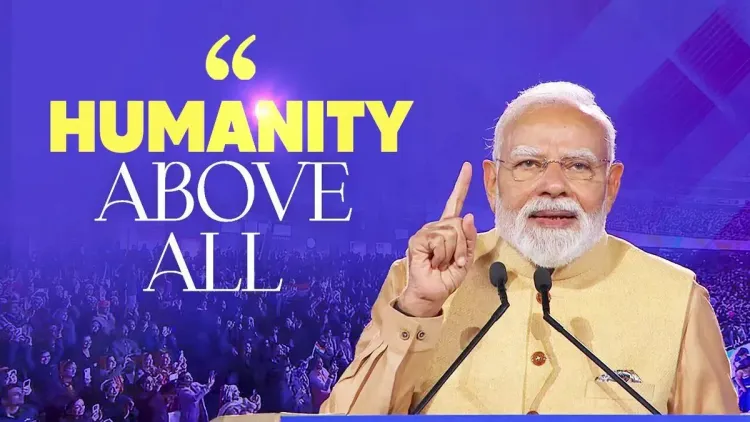
Prime Minister Narendra Modi on Thursday, 9 July 2026 reaffirmed India's non-discriminatory humanitarian philosophy in a post on X, stating that when India extends a helping hand, it does not look at the colour of the passport — and that this is why the world's trust in India continues to grow.
Context
In Hindi, PM Modi wrote: 'भारत जब मदद का हाथ बढ़ाता है तो पासपोर्ट का रंग नहीं देखता।' ('When India extends a helping hand, it does not look at the colour of the passport.') He added that this is precisely why the world's trust in India keeps rising. The post was accompanied by a video, underscoring what the government frames as a record of unconditional assistance.
The statement encapsulates a foreign-policy posture New Delhi has cultivated over more than a decade — one that positions India as a first responder and partner of choice, particularly across the Global South, regardless of the nationality or political alignment of those receiving aid.
Policy Backdrop
India's humanitarian record offers concrete anchors for the Prime Minister's claim. During Operation Rahat in 2015, India evacuated more than 4,000 foreign nationals from 41 countries out of conflict-torn Yemen, alongside its own citizens — a rare logistical feat that drew wide international attention.
The Vaccine Maitri initiative of 2020–2021 saw India supply COVID-19 vaccines to over 90 countries, making no distinction based on the recipient nation's passport or political relationship with New Delhi. More recently, Operation Dost in 2023 dispatched search-and-rescue teams and relief material to earthquake-hit Turkey and Syria — two countries with differing diplomatic profiles vis-à-vis India — again without conditions attached.
Together, these operations form what officials describe as India's Humanitarian Assistance and Disaster Relief (HADR) doctrine: rapid, non-discriminatory, and calibrated to build long-term goodwill rather than short-term leverage.
Stakeholders and Impact
The beneficiaries of this posture span a wide arc — from Global South nations seeking reliable partners to foreign nationals caught in crisis zones who have been airlifted or aided by Indian teams. For recipient governments, unconditional assistance carries a diplomatic signal: that India does not weaponise aid or attach political conditionalities, a contrast often drawn with more transactional assistance models.
At home, the messaging reinforces the ruling BJP's narrative of India as Vishwaguru — a world teacher and moral leader — ahead of major multilateral engagements. For ordinary Indians, it frames foreign-policy spending as an expression of national character rather than mere statecraft.
What's Next
India is expected to participate in upcoming multilateral forums, including sessions of the UN General Assembly and future BRICS summits, where new humanitarian commitments or HADR frameworks could be announced. Statements of this nature from the Prime Minister's office typically precede or follow visible operations that demonstrate the principle in action, and observers will watch for any specific aid initiative that may have prompted the 9 July 2026 post. As India deepens its multi-alignment strategy, its reputation as a non-discriminatory responder is likely to remain a central pillar of its soft-power projection globally.
Point of View
Not transaction. By invoking 'passport colour,' the Prime Minister implicitly contrasts India's approach with more conditional aid architectures, a message calibrated for both domestic audiences and Global South partners. The timing, accompanied by a video, suggests this is not an isolated remark but part of a deliberate communications push, possibly tied to a recent or imminent operation. The broader arc points to India using its HADR record as diplomatic currency ahead of key multilateral engagements.
NationPress
9 Jul 2026
Frequently Asked Questions
What did PM Modi say about India's humanitarian help on 9 July 2026?
PM Modi said that when India extends a helping hand, it does not look at the colour of the passport, and that this is why the world's trust in India continues to grow.
What is India's passport colour policy in humanitarian missions?
India has no passport-based distinction in its humanitarian missions — operations like Operation Rahat and Operation Dost rescued and assisted people of multiple nationalities without conditions.
What is Operation Rahat and how does it relate to Modi's statement?
Operation Rahat was India's 2015 evacuation mission in Yemen that rescued over 4,000 foreign nationals from 41 countries alongside Indian citizens, a key example of non-discriminatory Indian humanitarian action.
What is Vaccine Maitri?
Vaccine Maitri was India's 2020–2021 initiative to supply COVID-19 vaccines to over 90 countries regardless of the recipient nation's political relationship or nationality considerations.
Why does India help other countries during disasters?
India's Humanitarian Assistance and Disaster Relief (HADR) doctrine prioritises rapid, unconditional assistance to build long-term goodwill and reinforce its role as a reliable partner in the Global South.