PM Modi Links Youth Dedication to Viksit Bharat Vision
Synopsis
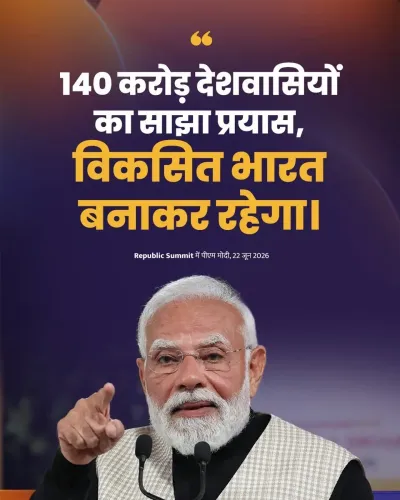
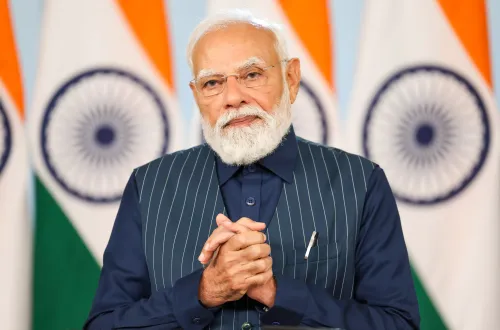
Prime Minister Narendra Modi on 9 July 2026 posted a Hindi and Sanskrit motivational message on X, calling on Indian youth to channel firm conviction, persistent effort, and positive thinking toward building a developed India by 2047 under the Viksit Bharat vision.
Key Takeaways
PM Modi posted on 9 July 2026 linking personal virtues to the Viksit Bharat national development mission.
The post was written in Hindi and included a classical Sanskrit couplet emphasising the power of unwavering resolve.
The Viksit Bharat vision targets developed-country status for India by 2047 , the centenary of independence.
Indian youth are identified as the primary agents of this national transformation.
The post included an attached video , suggesting curated audio-visual reinforcement of the message.
The messaging continues a pattern established since 2014 of connecting individual character to long-term policy goals.
Prime Minister Narendra Modi on Thursday, 9 July 2026, shared a motivational message on X connecting personal virtues — firm conviction, persistent effort, and positive thinking — to the national mission of building a developed India, invoking a Sanskrit verse to reinforce the call to youth.
What the Post Says
Writing in Hindi, PM Modi declared: 'Dridh vishwas, satat prayas aur sakaratmak soch safalta ki asli kunji hai' ('Firm conviction, persistent effort, and positive thinking are the true keys to success'). He added that India's young people, armed with these qualities, are dedicating themselves wholeheartedly to the construction of a Viksit Bharat — a developed India.
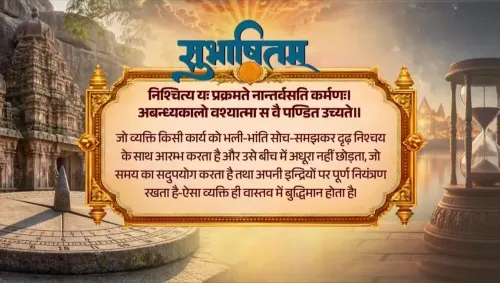
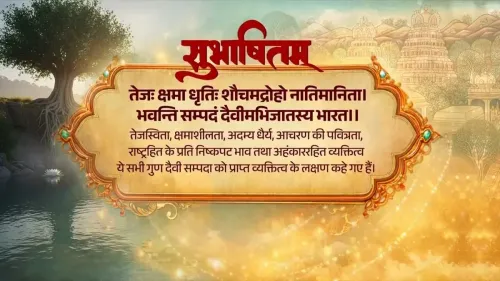
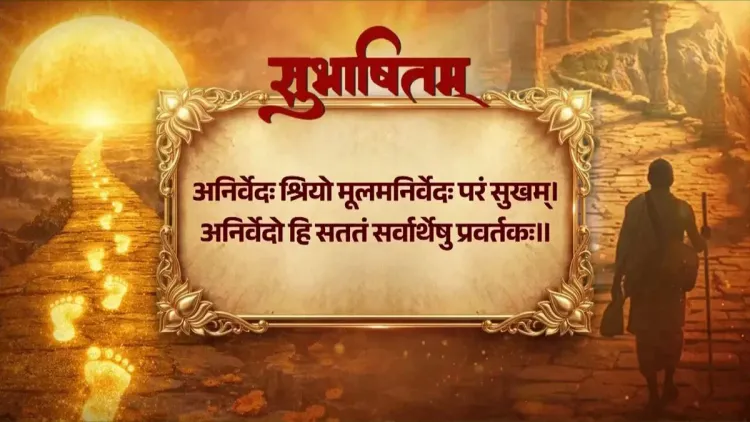
The post closed with a Sanskrit couplet: 'Anirvedah shriyomoolamanirvedah param sukham. Anirvedohi satatam sarvartheshu pravartakah' — roughly translated as 'Freedom from despondency is the root of prosperity; freedom from despondency is the highest happiness; it is freedom from despondency that always propels one toward all goals.' The verse, drawn from classical Indian literature, underscores the theme of unwavering resolve.
Context
PM Modi has consistently used social media platforms to sustain public engagement with long-term national development goals. Motivational messaging that links individual character — perseverance, optimism, dedication — to collective nation-building has been a recurring feature of his communication since 2014. Sanskrit verses are periodically woven into these appeals to anchor contemporary policy language in India's classical cultural tradition.
The post carries an attached video, suggesting a curated audio-visual element reinforcing the message, though the specific content of the video was not detailed in the post metadata.
Policy Backdrop
The Viksit Bharat vision — India achieving developed-country status by 2047, the centenary of independence — was first articulated prominently in PM Modi's Independence Day addresses beginning in 2022. Youth participation has been framed as central to realising this ambition, with skilling, entrepreneurship, and education positioned as the primary levers.
Programmes such as Skill India and related youth entrepreneurship initiatives sit within this broader policy architecture. The government has repeatedly cast India's demographic dividend — a population where a significant share is under 35 — as a strategic asset for achieving the 2047 target.
Stakeholders and Impact
The message is directed squarely at Indian youth, a demographic that forms both the largest voter bloc and the primary labour force driving economic growth projections. By invoking classical Sanskrit wisdom alongside the Viksit Bharat framework, the communication simultaneously appeals to cultural pride and policy aspiration.
Civil society organisations, educators, and youth-focused government bodies are likely to amplify the message through their own channels, as has been the pattern with similar motivational posts from the Prime Minister's office.
What's Next
Observers will watch for follow-through in the form of new youth-centric programme announcements, budget allocations for skilling and education, or parliamentary discussions on expanding the Skill India mission. Posts of this nature from PM Modi have historically preceded or accompanied policy rollouts targeting the youth demographic, making the timing and framing of this message worth tracking in the weeks ahead.
Point of View
Emotionally direct communication. The use of a Sanskrit verse is not incidental: it signals an effort to legitimise contemporary development ambitions through the authority of classical Indian thought, broadening the appeal beyond policy audiences to cultural conservatives and the educated middle class alike. At a time when youth unemployment and skilling gaps remain live political questions, framing young Indians as active, dedicated builders rather than passive beneficiaries is a deliberate rhetorical choice. Whether this messaging translates into specific programme announcements will determine how substantive the signal ultimately proves to be.
NationPress
9 Jul 2026
Frequently Asked Questions
What did PM Modi post on X on 9 July 2026?
PM Modi posted a Hindi message stating that firm conviction, persistent effort, and positive thinking are the keys to success, and that India's youth are dedicating themselves to building a Viksit Bharat . He also included a Sanskrit verse on the power of unwavering resolve.
What is the Viksit Bharat vision?
Viksit Bharat is the government's national vision to achieve developed-country status for India by 2047 , the centenary of independence. It was first articulated prominently in PM Modi 's Independence Day addresses from 2022 onward.
What does the Sanskrit verse in Modi's post mean?
The verse — 'Anirvedah shriyomoolam...' — translates as 'Freedom from despondency is the root of prosperity; it is freedom from despondency that always propels one toward all goals.' It emphasises that a positive, undefeated mindset is the foundation of all achievement.
Why does PM Modi use Sanskrit verses in his social media posts?
PM Modi periodically invokes Sanskrit verses to root contemporary policy appeals in India's classical cultural tradition, broadening their resonance beyond policy circles to audiences who value cultural heritage. This has been a consistent feature of his communication since 2014 .
What government schemes target Indian youth under the Viksit Bharat mission?
Key programmes include Skill India and related youth entrepreneurship initiatives, which aim to harness India's demographic dividend — a large under-35 population — as a strategic asset for achieving the 2047 development target.