PM Modi marks Global Tiger Day, cites India's 70% share of world tigers
Synopsis
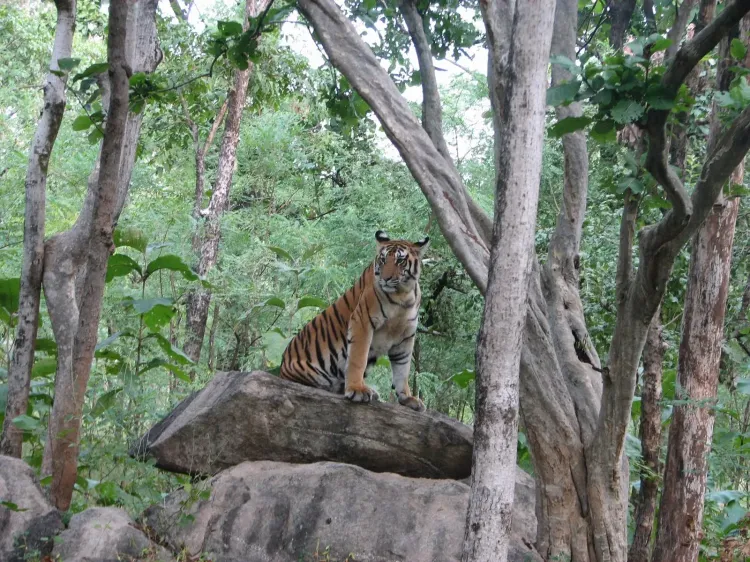
On Global Tiger Day 2026, PM Narendra Modi highlighted that India hosts nearly 70% of the world's wild tigers, linking the achievement to Project Tiger — launched in 1973 — and to India's deep cultural tradition of coexistence with nature.
Key Takeaways
PM Modi posted Global Tiger Day greetings on 29 July 2026 , citing India's near- 70% share of the world's wild tiger population.
Project Tiger , launched in 1973 , is the flagship conservation scheme credited with reversing near-extirpation of tigers in India.
The All India Tiger Estimation has been conducted every four years since 2006 , providing scientific population tracking.
Modi framed India's conservation success as rooted in a 'centuries-old culture of living in harmony with nature,' not solely in state policy.
Global Tiger Day is observed annually on 29 July to raise international awareness about wild tiger conservation.
The next tiger estimation report will be the key data point to watch for verifying current population claims.
Seven decades of deliberate conservation have made India the undisputed stronghold of the world's wild tiger population — and on Global Tiger Day, 29 July 2026, Prime Minister Narendra Modi reminded the nation of exactly how far that journey has come.
In a post on X, the Prime Minister extended greetings to wildlife enthusiasts and underscored a striking statistic: India is now home to 'almost 70% of the global tiger population.' He tied that achievement not merely to policy, but to a 'centuries-old culture of living in harmony with nature' — framing conservation as an inheritance, not just a programme.
From near-extinction to global stronghold
The numbers tell a story of dramatic reversal. By the early 1970s, unchecked poaching and rapid habitat loss had driven India's tiger population to critically low levels. The government's response was Project Tiger, launched in 1973 — a centrally sponsored scheme that established dedicated tiger reserves, tightened anti-poaching enforcement, and brought scientific rigour to habitat management. It remains one of the longest-running and most closely watched wildlife conservation programmes in the world. Since 2006, the All India Tiger Estimation — conducted every four years — has provided systematic, science-backed population counts that have documented a sustained recovery. Each successive report has reinforced India's position as the country with the largest share of wild tigers on the planet.Culture as conservation — the argument Modi is making
The Prime Minister's framing is deliberate. By anchoring India's conservation record in cultural tradition rather than purely in state intervention, he is advancing an argument India has increasingly made on global environmental forums: that indigenous and community-rooted relationships with nature are themselves a form of ecological protection. Forest communities living alongside tiger reserves have long been central to both the tensions and the successes of this model. Global Tiger Day, observed every 29 July, was established to rally international commitment to doubling wild tiger numbers — a goal set at the 2010 St. Petersburg Tiger Summit. India's trajectory since then has made it the benchmark case in those discussions. The next All India Tiger Estimation report, when released, will be the definitive test of whether India's population gains are holding — and whether the 70% figure can be defended with fresh data.Point of View
The government is building a narrative that positions India's conservation model as a replicable, values-driven alternative to purely technocratic approaches. The framing also pre-empts criticism of development-versus-environment trade-offs by suggesting the two are historically reconciled in India's tradition. The release of the next All India Tiger Estimation will either cement or complicate that story.
NationPress
29 Jul 2026
Frequently Asked Questions
Why does India have so many tigers compared to other countries?
India's large tiger population is the result of decades of protected-area management under Project Tiger (launched 1973), strict anti-poaching enforcement, and periodic scientific monitoring through the All India Tiger Estimation. Cultural traditions of coexistence with wildlife have also historically limited human-animal conflict in many forest regions.
What is Global Tiger Day and when is it observed?
Global Tiger Day is observed every year on 29 July . It was established following the 2010 St. Petersburg Tiger Summit to raise awareness about the threats facing wild tigers and to rally international commitment to doubling their numbers.
What is Project Tiger in India?
Project Tiger is a centrally sponsored wildlife conservation scheme launched by the Government of India in 1973 . It created dedicated tiger reserves, strengthened anti-poaching measures, and introduced scientific habitat management to protect tigers and reverse population decline.
How does India count its tiger population?
India conducts the All India Tiger Estimation every four years since 2006 . The exercise uses camera traps, pug-mark analysis, and habitat surveys across tiger reserves to produce a scientific, nationwide population estimate.
What percentage of the world's tigers are in India?
According to claims made in successive national tiger estimations and reiterated by PM Modi on Global Tiger Day 2026, India is home to 'almost 70%' of the world's wild tiger population, making it the single largest habitat country for the species.