Anurag Thakur Hails PM Modi's Direct Talk With Skyroot Scientists
Synopsis
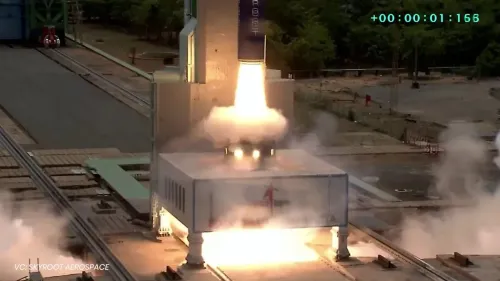
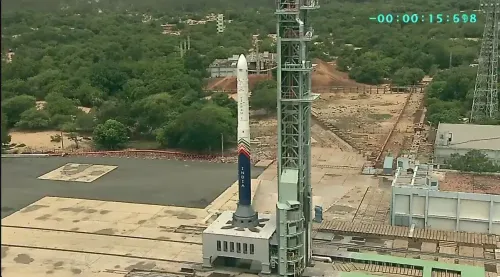
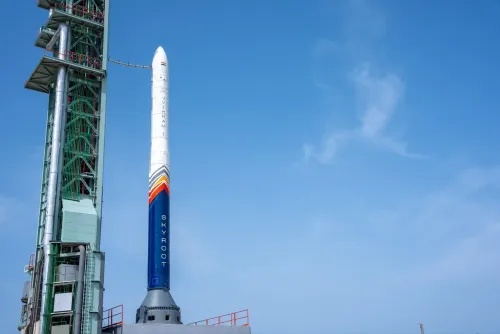
BJP MP Anurag Thakur marked the reported success of Skyroot Aerospace's Vikram-1 — India's first private orbital launch mission — sharing a video of PM Modi in direct conversation with the startup's scientists, a milestone for India's liberalised space sector.
Key Takeaways
BJP MP Anurag Thakur posted on 18 July 2026 celebrating the reported success of Vikram-1 , India's first private orbital launch mission.
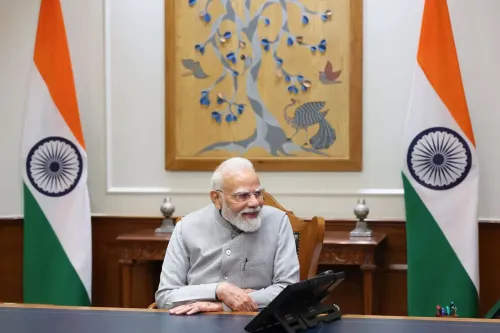
Prime Minister Narendra Modi held a direct interaction with scientists at Skyroot Aerospace , Hyderabad, following the mission.
Skyroot Aerospace is a private startup whose Vikram rocket series is named after space pioneer Vikram Sarabhai .
India's 2020 space sector reforms and the creation of IN-SPACe enabled private companies to conduct end-to-end orbital launch missions.
The mission is seen as a validation of the Atmanirbhar Bharat push in the strategic space sector.
Attention now turns to the passage of the long-pending Space Activities Bill and future commercial flights by Indian private launch firms.
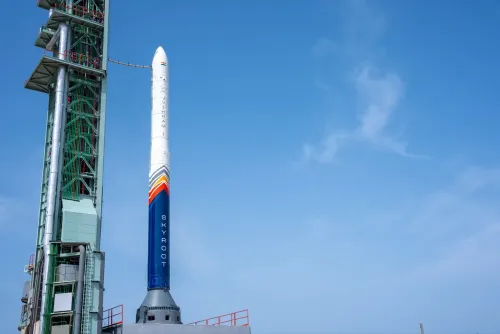
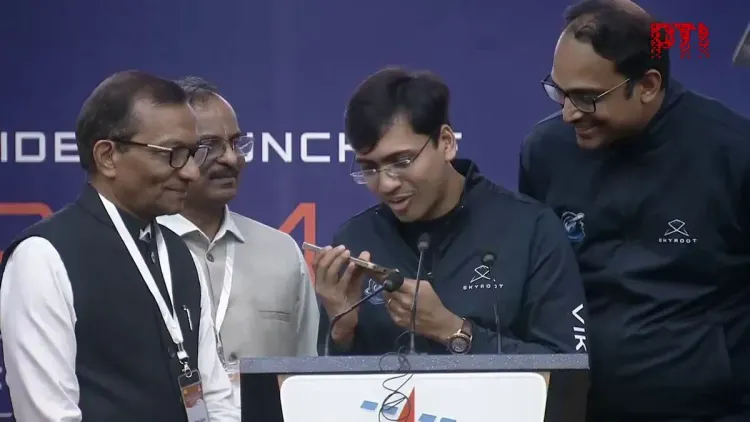
BJP MP Anurag Thakur on Saturday, 18 July 2026, celebrated what he described as a landmark moment for India's private space sector, sharing a video of Prime Minister Narendra Modi engaging directly with scientists at Skyroot Aerospace following the reported success of the country's first private orbital launch mission, Vikram-1.
Context
Thakur's post, in a mix of Hindi and English, declared 'Vande Mataram iz in the orbit' — a celebratory play on the national song to mark India's first private rocket reaching orbit. He noted that Prime Minister Modi held a direct conversation (seedha samvad) with Skyroot Aerospace scientists in the wake of the Vikram-1 mission's success, calling it a proud moment for the nation.
The post accompanied a video capturing the interaction, underscoring the political significance the ruling dispensation attaches to private-sector milestones in space technology.
Policy Backdrop
The Vikram-1 mission is the culmination of years of policy groundwork. In 2020, the Government of India established IN-SPACe — the Indian National Space Promotion and Authorisation Centre — as the nodal agency to regulate and enable non-government space activities. Alongside this, reforms opened ISRO facilities to private players and permitted startups to undertake end-to-end launch missions.
Skyroot Aerospace, headquartered in Hyderabad, is among the first cohort of private launch-vehicle developers to emerge from these reforms. Its Vikram series of rockets is named after space pioneer Vikram Sarabhai, the father of India's space programme. The company previously conducted a sub-orbital test flight of the Vikram-S rocket in November 2022, becoming the first private Indian firm to reach space.
The broader push aligns with the Atmanirbhar Bharat initiative, which seeks to reduce import dependence in strategic sectors including defence and space. Successive policy steps since 2019 have encouraged startups to develop their own launch vehicles while ISRO focuses on larger scientific and deep-space missions.
Stakeholders and Impact
The direct engagement between Prime Minister Modi and Skyroot scientists carries symbolic weight beyond the technical achievement. It signals top-level political endorsement for private space entrepreneurship at a time when India is competing with other spacefaring nations to capture a share of the global commercial launch market.
Private space startups, satellite manufacturers, and aerospace investors stand to benefit from the visibility such interactions generate. Peers such as Agnikul Cosmos — which has been developing its own semi-cryogenic Agnibaan rocket — are also watching closely, as a successful Vikram-1 orbital mission sets a precedent for regulatory approvals and investor confidence across the sector.
For IN-SPACe, the mission represents a validation of the liberalised framework it administers, and is likely to accelerate the pipeline of authorisation requests from other private launch-vehicle developers.
What's Next
The reported success of Vikram-1 is expected to intensify focus on the long-pending Space Activities Bill, which would provide a comprehensive legal framework governing liability, intellectual property, and spectrum rights for private space operators in India. Parliamentary passage of the bill has been anticipated for several years.
Subsequent test and commercial flights by Skyroot and its peers will determine whether India can translate policy ambition into a sustained, competitive private launch industry — one capable of attracting global satellite clients seeking alternatives in the small-lift launch market.
Point of View
Private space milestones dovetail neatly with the Atmanirbhar Bharat narrative ahead of any electoral cycle, demonstrating that liberalisation in strategic sectors yields tangible results. Anurag Thakur's amplification of the moment reflects the party's broader communications strategy of associating PM Modi personally with technology breakthroughs. The episode also adds pressure on Parliament to finally pass the Space Activities Bill, which the industry has long awaited for legal certainty.
NationPress
17 Oct 2026
Frequently Asked Questions
What is the Vikram-1 rocket mission?
Vikram-1 is a small-lift orbital launch vehicle developed by Hyderabad-based private startup Skyroot Aerospace, named after space pioneer Vikram Sarabhai. It is reported to be India's first privately developed rocket to attempt and achieve an orbital mission.
Who is Skyroot Aerospace?
Skyroot Aerospace is a Hyderabad-headquartered private space startup that develops small satellite launch vehicles. It became the first private Indian company to reach space with a sub-orbital test of Vikram-S in November 2022.
Why did PM Modi interact with Skyroot scientists?
PM Modi held a direct conversation with Skyroot Aerospace scientists following the reported success of the Vikram-1 orbital mission, signalling top-level government endorsement of India's private space sector.
What is IN-SPACe and what role does it play?
IN-SPACe, the Indian National Space Promotion and Authorisation Centre, was established in 2020 as the nodal agency to regulate and promote non-government participation in India's space sector, including authorising private launch missions.
What is the Space Activities Bill India?
The Space Activities Bill is a long-pending piece of legislation that would provide a comprehensive legal framework for private space operators in India, covering liability, spectrum rights, and intellectual property. Its passage has been anticipated for several years.