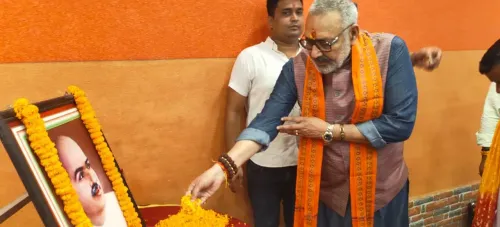
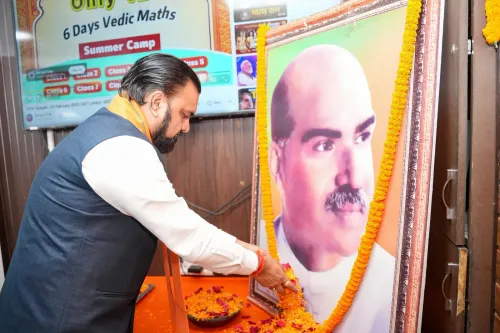
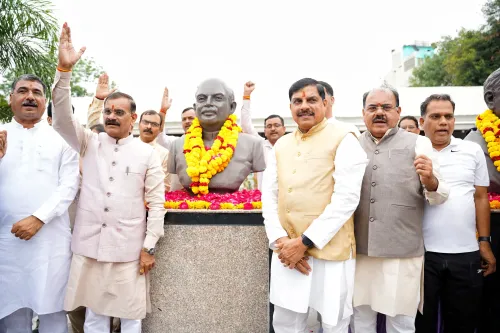
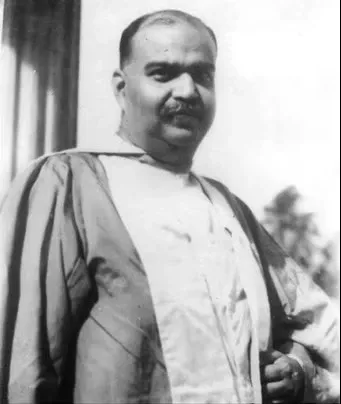
PM Modi Pens Op-Ed on Syama Prasad Mookerjee, Cites Article 370
Synopsis
Prime Minister Narendra Modi announced he has authored an op-ed on Dr. Syama Prasad Mookerjee, honouring the BJP's founding ideologue on his birth anniversary and connecting the 2019 revocation of Articles 370 and 35A to Mookerjee's decades-long demand for Jammu and Kashmir's full constitutional integration.
Key Takeaways
Prime Minister Narendra Modi authored an op-ed on Dr.
Syama Prasad Mookerjee , announced on July 6, 2026 , coinciding with Mookerjee's birth anniversary.
The op-ed highlights Mookerjee's roles as Vice Chancellor, Union Minister, and founder of the Bharatiya Jana Sangh .
Modi directly links the 2019 abrogation of Articles 370 and 35A to Mookerjee's lifelong campaign for Jammu and Kashmir's full constitutional integration.
Article 370 was revoked by Parliament in August 2019 , reorganising J&K into two Union Territories — Jammu and Kashmir and Ladakh .
Mookerjee died in detention in Srinagar in 1953 while protesting entry restrictions tied to J&K's special status.
The tribute continues the BJP government's pattern of framing the 2019 revocation as the completion of Mookerjee's unfinished ideological mission.
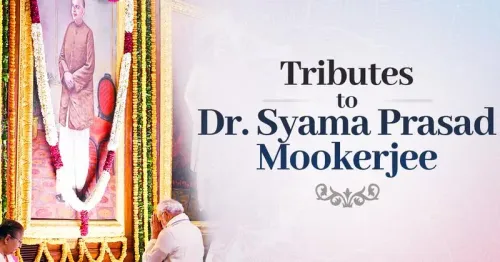
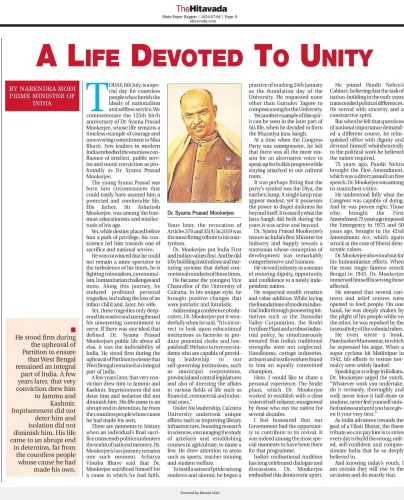
Prime Minister Narendra Modi on Monday, July 6, 2026, announced that he had authored an op-ed reflecting on the life and legacy of Dr. Syama Prasad Mookerjee, highlighting the founding Bharatiya Jana Sangh leader's contributions as an educationist, administrator, and political figure, and drawing a direct line between Mookerjee's lifelong campaign for Jammu and Kashmir's full constitutional integration and the 2019 abrogation of Articles 370 and 35A.
Context
Dr. Syama Prasad Mookerjee remains one of the most consequential figures in post-independence Indian politics. A former Vice Chancellor of Calcutta University, he served as India's first Minister of Industries and Supply in the Jawaharlal Nehru cabinet before resigning in 1950 over policy differences. He went on to found the Bharatiya Jana Sangh in 1951, the ideological predecessor of today's Bharatiya Janata Party (BJP).
Mookerjee's most prominent political campaign was against the special constitutional status accorded to Jammu and Kashmir, symbolised by his slogan 'Ek desh mein do Vidhan, do Pradhan aur do Nishan nahin chalenge' (One country cannot have two constitutions, two prime ministers, and two national emblems). He died in detention in Srinagar in June 1953 while protesting entry restrictions imposed under the state's special status.
Policy Backdrop
In August 2019, Parliament passed resolutions revoking Article 370, which had granted special autonomous status to Jammu and Kashmir, and simultaneously nullified Article 35A, a 1954 presidential order that had empowered the state legislature to define permanent residents and restrict property and employment rights for outsiders. The state was simultaneously reorganised into two Union Territories — Jammu and Kashmir and Ladakh.
The Modi government has consistently framed the revocation as the fulfilment of a decades-old ideological commitment, presenting it as the completion of what Mookerjee began. Prime Minister Modi's op-ed, as described in his post, reinforces that political narrative by placing Mookerjee's 'unparalleled efforts in boosting India's unity' at the centre of the account.
Stakeholders and Impact
The op-ed's publication carries significance for multiple constituencies. For BJP and its ideological ecosystem, Mookerjee represents a foundational martyr whose demands have now been institutionally realised. For residents of Jammu and Kashmir, the continued invocation of 2019 keeps questions of statehood restoration, economic integration, and land rights in public discourse.
Nationalist and cultural organisations that have long championed Mookerjee's memory are likely to amplify the Prime Minister's tribute. The op-ed also signals continued government interest in building commemorative and educational recognition around Mookerjee's legacy at the national level.
What's Next
Attention will turn to whether the op-ed or associated government communications are accompanied by concrete announcements — such as new commemorative infrastructure, educational programmes, or a formal timeline for restoring full statehood to Jammu and Kashmir, a matter that remains pending before the Supreme Court of India and the broader political calendar. July 6 is observed as Dr. Syama Prasad Mookerjee's birth anniversary, making the timing of the Prime Minister's tribute editorially deliberate and politically resonant.
Point of View
The government reinforces a long-running narrative that frames constitutional uniformity as both historical inevitability and moral obligation. The timing on Mookerjee's birth anniversary ensures maximum ideological resonance with the BJP's core base. It also subtly keeps the question of Jammu and Kashmir's statehood restoration in the political foreground, where the government's next move remains closely watched.
NationPress
6 Jul 2026
Frequently Asked Questions
Who was Dr. Syama Prasad Mookerjee?
Dr. Syama Prasad Mookerjee was an Indian politician, educationist, and the founder of the Bharatiya Jana Sangh in 1951, the predecessor of the BJP. He served as India's first Minister of Industries and Supply and campaigned against Jammu and Kashmir's special constitutional status until his death in detention in Srinagar in 1953.
Why did PM Modi write an op-ed on Syama Prasad Mookerjee?
Prime Minister Modi announced the op-ed on July 6, 2026, which is Mookerjee's birth anniversary. The piece highlights Mookerjee's diverse accomplishments and draws a connection between his campaign for J&K's integration and the 2019 abrogation of Articles 370 and 35A.
What were Articles 370 and 35A?
Article 370 was a constitutional provision granting special autonomous status to Jammu and Kashmir. Article 35A, introduced via a 1954 presidential order, allowed the J&K legislature to define permanent residents and restrict property and job rights for outsiders. Both were revoked by Parliament in August 2019.
What happened to Jammu and Kashmir after Article 370 was removed?
Following the revocation of Article 370 in August 2019, Jammu and Kashmir was reorganised into two Union Territories — Jammu and Kashmir, and Ladakh — bringing both directly under central administration.
Is Jammu and Kashmir a full state again?
As of the time of this report, Jammu and Kashmir remains a Union Territory. The restoration of statehood is a pending matter that has been subject to legal and political proceedings, with no confirmed timeline announced by the central government.