Amit Singh Rana: Amritsar's Manuscript Guardian Celebrated by PM Modi
Synopsis
Amit Singh Rana, a resident of Amritsar, received national recognition from PM Narendra Modi during his Mann Ki Baat address for his significant contributions to manuscript preservation. His journey highlights the importance of safeguarding India's cultural heritage, encouraging others to join the cause.
Key Takeaways
Amit Singh Rana received recognition from PM Narendra Modi for his manuscript preservation efforts.
He emphasizes the importance of safeguarding India's Vedic manuscripts.
Rana encourages public awareness regarding the value of personal manuscript collections.
The initiative aligns with PM Modi's 'Gyan Bharatam' project.
Manuscripts are a crucial part of India's cultural heritage.
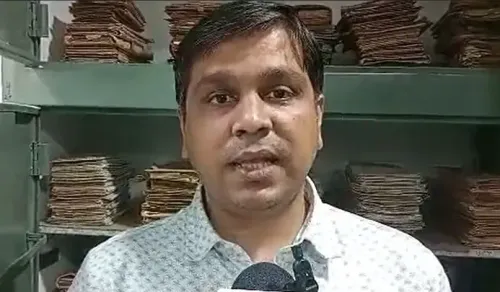
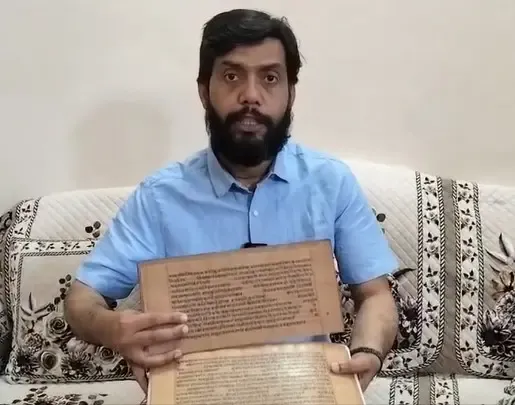
Amritsar, March 29 (NationPress) Amit Singh Rana, a resident of Amritsar, felt an immense sense of pride on Sunday after Prime Minister Narendra Modi acknowledged his efforts in the preservation and digitization of manuscripts during his Mann Ki Baat address to the nation.
Originally from Kanpur, Rana has resided in Amritsar since 2013 and described the mention of his name by the Prime Minister as a "great honor."
In an interview with IANS, he expressed his heartfelt gratitude towards the Prime Minister for recognizing his contributions.
Rana actively participates in the preservation and research of manuscripts tied to India's ancient Vedic knowledge, aligning with Prime Minister Modi's vision encapsulated in the 'Gyan Bharatam' initiative.
He stated, "Numerous manuscripts are located in private homes, monasteries, temples, universities, and libraries throughout India, forming a crucial aspect of our cultural and intellectual heritage."
Rana is dedicated to surveying and studying these manuscripts to ensure their preservation for future generations.
"I aim to bring all such manuscripts to the attention of the Government of India," he added.
Reflecting on his professional journey, he mentioned, "In 2006, I completed a course at the National Archives of India (NAI) in Archival Studies. This experience introduced me to the world of manuscripts."
"In 2010, I learned about the National Manuscript Mission. I worked briefly at the Indira Gandhi National Centre for the Arts, where I began training various manuscript conservation centers across the country under the National Manuscript Mission," he elaborated.
His association with the Government of India began during his tenure at the Indira Gandhi National Centre for the Arts, where he gained insights into these invaluable manuscripts.
Rana urged individuals who possess such manuscripts to inform the government, ensuring they receive due preservation and study.
"I want people who own manuscripts to recognize their value. Instead of viewing them as mere possessions, they should understand that these are significant components of our national heritage,"** he emphasized.
Frequently Asked Questions
Who is Amit Singh Rana?
Amit Singh Rana is a resident of Amritsar known for his work in the preservation and digitization of ancient manuscripts related to India's Vedic tradition.
What did PM Modi say about Amit Singh Rana?
During his Mann Ki Baat address, PM Modi praised Amit Singh Rana for his contributions to manuscript preservation and digitization.
What is the National Manuscript Mission?
The National Manuscript Mission is an initiative aimed at preserving and promoting the study of manuscripts in India.
How can individuals contribute to manuscript preservation?
Individuals who possess manuscripts are encouraged to inform the government to ensure proper preservation and study of these important cultural artifacts.
Why is manuscript preservation important?
Preserving manuscripts is crucial as they represent significant aspects of India's cultural and intellectual heritage, connecting us to our ancient knowledge.