PM Modi shares Bhagavata verse on faith and devotion
Synopsis
Prime Minister Narendra Modi shared a Srimad Bhagavatam verse on 27 November 2026 describing how saintly company turns sacred stories into nectar for the heart and ear, after which faith, attachment and devotion arise on the path to liberation. The post, issued with a video, continues his practice of placing classical Sanskrit lines in public view.
Key Takeaways
Prime Minister Narendra Modi posted a Sanskrit verse on 27 November 2026 at 7:30 am IST , with a video.
The lines are from the Srimad Bhagavatam (Bhagavata Purana), traditionally spoken by Kapila to Devahuti.
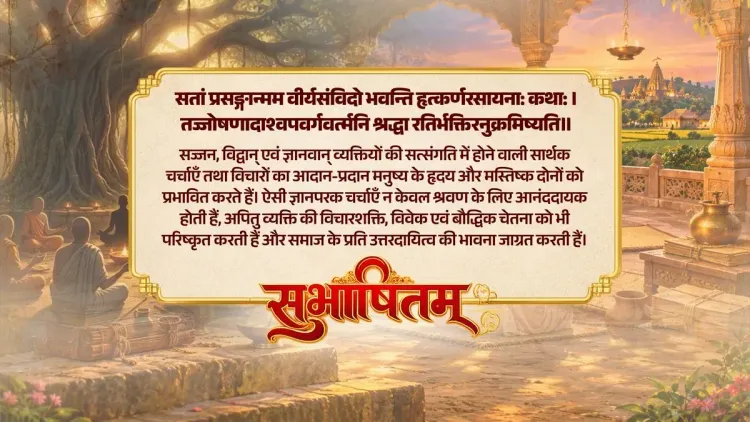
The verse says that in the company of the virtuous, sacred stories become nectar for heart and ear, after which faith, attachment and devotion follow toward liberation.
The Prime Minister has periodically shared Sanskrit verses from classical Hindu texts on social media.
The post did not name a specific event, scheme or audience.
At 7:30 am IST on Friday, 27 November 2026, Prime Minister Narendra Modi put a Sanskrit couplet from the Srimad Bhagavatam into India's public feed — a verse that treats saintly company as the start of a ladder, not its end. Stories become nectar for the heart and the ear; faith, attachment and devotion follow on a path the text calls swift. A video accompanied the post.
The lines, posted in Devanagari, turn on हृत्कर्णरसायना: कथा: (stories that are elixir for the heart and the ears). In English the couplet runs: in the association of the virtuous, accounts of the Lord's prowess become nectar for heart and ear; by relishing them, faith, attachment and devotion arise in sequence on the swift path to liberation.
Kapila's verse, placed in public view
The shloka is traditionally set in the dialogue of Kapila with his mother Devahuti in the third canto of the Bhagavata Purana. It names no festival, scheme or opponent. It names a method: saintly company, sacred narrative, and a graded inner change.
Over successive years in office, the Prime Minister has periodically posted Sanskrit verses from classical Hindu texts. The practice is cultural, not legislative — a civilisational vocabulary kept in circulation from the country's highest elected office.
No clarification of occasion or audience accompanied this post. What it puts on the record is the sequence the verse itself insists upon: association, story, faith, rati, bhakti — and a path described as swift.
Point of View
Not as a legislative instrument. The couplet's emphasis on satsang, katha and a graded rise of sraddha, rati and bhakti sits in a civilisational frame rather than a policy one. For an office that often folds culture into state communication, the post keeps that vocabulary visible without attaching it to a named programme. Watch for any later link to a festival, discourse or cultural event; none was stated here.
NationPress
27 Nov 2026
Frequently Asked Questions
What did PM Modi post on 27 November 2026?
Prime Minister Narendra Modi posted a Sanskrit verse from the Srimad Bhagavatam on saintly association, sacred stories and the rise of faith, attachment and devotion. A video accompanied the post, issued at 7:30 am IST.
What is the English meaning of the shloka PM Modi shared?
The verse says that in the association of the virtuous, talks of the Lord's prowess become nectar for the heart and ears. By relishing those talks, faith, attraction and devotion develop in succession on the path that quickly leads to liberation.
Which Hindu text is the verse from?
The verse is from the Srimad Bhagavatam, also called the Bhagavata Purana. It is traditionally placed in the dialogue of Kapila with his mother Devahuti in the third canto.
Did PM Modi's Sanskrit post refer to a particular event?
The post does not name an occasion, festival or intended audience. The Prime Minister has periodically shared Sanskrit verses from classical Hindu texts on social media.
When was PM Modi's Bhagavatam verse published?
It was published at 7:30 am IST on Friday, 27 November 2026. The post included one video and the Sanskrit text in Devanagari.