PM Modi Shares Sanskrit Verse on Respect and Self-Worth
Synopsis
Prime Minister Narendra Modi shared a Sanskrit couplet paired with a Hindi reflection on 17 June 2026, arguing that affectionate respect and acceptance build pride, self-confidence, and renewed energy — continuing his practice of blending classical Indian thought with motivational public messaging.
Key Takeaways
PM Modi posted on 17 June 2026 combining a Hindi philosophical observation with a Sanskrit verse on the power of respect and recognition.
The Hindi text states that affectionate respect gives a person pride, contentment, increased self-confidence, and new energy.
The Sanskrit couplet conveys that being honoured by a worthy person deepens one's own faith in one's virtues.
The post carries 1 video and is part of Modi's long-standing practice of sharing classical Indian philosophical content on social media.
No specific policy, scheme, or event is tied to this post; it is a standalone motivational and cultural reflection.
Similar themes have previously been elaborated upon in Mann ki Baat episodes and public addresses.
Prime Minister Narendra Modi on Wednesday, 17 June 2026, shared a reflective post on X combining a Hindi observation on dignity with a classical Sanskrit verse, underscoring the value of affectionate recognition in building personal confidence and renewed energy.
What the Post Says
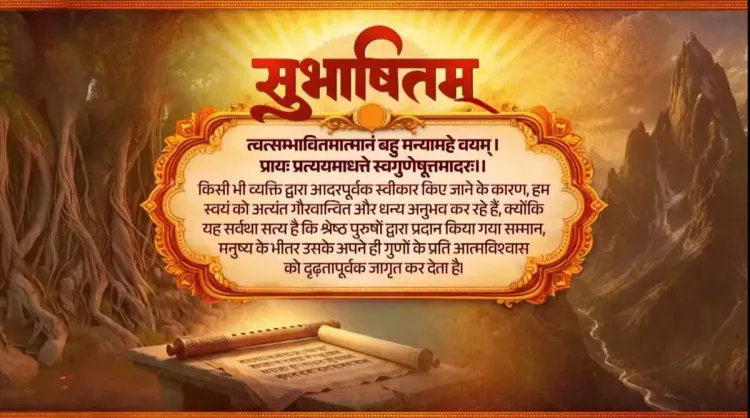
Writing in Hindi, PM Modi observed: 'Snehpurn samman aur sweekaryta vyakti ko garv aur santosh ka anubhav karati hai' ('Affectionate respect and acceptance give a person the experience of pride and contentment'). He added that such recognition not only builds self-confidence but also infuses a new energy and enthusiasm into one's life.
The post closes with a Sanskrit couplet: 'Tvat-sambhavitam-atmanam bahu manyamahe vayam / Prayah pratyayam adhatte svaguneshu uttamadara' — broadly translated as: 'We hold ourselves in high regard because you have honoured us; the esteem of the noble generally deepens one's faith in one's own virtues.'
Context
Modi has maintained a long-standing practice of sharing Sanskrit shlokas and philosophical reflections on social media, particularly on themes of self-worth, discipline, and cultural identity. These posts are distinct from policy announcements and form a recognisable strand of his public communication that blends classical Indian thought with motivational language accessible to a broad audience.
The verse cited belongs to the tradition of Sanskrit moral poetry that explores the relationship between social recognition and inner confidence — a theme with roots in texts spanning from the Mahabharata to later Niti literature.
Cultural Backdrop
India's classical literary tradition has long held that samman (honour) and sweekaryta (acceptance) are not merely social courtesies but forces that shape individual character. PM Modi has repeatedly drawn on this tradition in addresses, including episodes of his radio programme Mann ki Baat, to encourage citizens toward self-reliance and cultural rootedness.
Such messaging aligns with broader governmental efforts to promote Sanskrit literacy and classical Indian knowledge systems, including initiatives under the Ministry of Education and the Ministry of Culture that have expanded Sanskrit in school curricula and funded classical studies institutions across the country.
Stakeholders and Impact
The post is directed at the general public and carries no specific policy directive or programme announcement. Its primary impact lies in reinforcing a cultural and motivational narrative — one that positions classical Indian wisdom as a living, everyday resource rather than an archaic academic subject.
For Modi's large social-media following, such posts serve as touchpoints of cultural identity, drawing engagement from citizens interested in Sanskrit, philosophy, and self-improvement alike. The accompanying video, shared with the post, is expected to amplify its reach across platforms.
What's Next
Observers of PM Modi's communication pattern note that themes introduced in such social-media posts often resurface in subsequent public addresses or in upcoming episodes of Mann ki Baat, where he elaborates on similar ideas of respect, self-esteem, and India's civilisational heritage. Whether this verse signals a broader upcoming cultural initiative or remains a standalone reflection will become clearer in the days ahead.
Point of View
He bridges a mass audience and a Sanskrit-literate one simultaneously. This particular couplet, centred on how external honour strengthens internal virtue, subtly mirrors the government's broader push to restore pride in Indian knowledge systems. Whether or not a specific occasion prompted this post, its timing and framing keep cultural nationalism as a soft but consistent undercurrent in his public persona.
NationPress
16 Sept 2026
Frequently Asked Questions
What did PM Modi post on 17 June 2026?
PM Modi shared a post on X combining a Hindi reflection and a Sanskrit verse arguing that affectionate respect and acceptance build a person's pride, self-confidence, and renewed energy.
What is the Sanskrit verse PM Modi shared about?
The Sanskrit couplet translates broadly as: 'We hold ourselves in high regard because you have honoured us; the esteem of the noble deepens one's faith in one's own virtues,' highlighting the link between recognition and self-belief.
Does PM Modi regularly share Sanskrit shlokas on social media?
Yes, PM Modi has a well-established practice of sharing Sanskrit verses and philosophical reflections on social media, often on themes of self-worth, discipline, cultural identity, and societal harmony.
Is this post linked to a specific policy or government scheme?
No. This post carries no specific policy directive or scheme announcement; it is a standalone motivational and cultural reflection aimed at the general public.
Where does PM Modi expand on such cultural themes beyond social media?
PM Modi frequently elaborates on similar themes of respect, self-esteem, and India's classical heritage in episodes of his radio programme Mann ki Baat and in various public addresses.