PM Modi Shares Sanskrit Shloka on Character and Virtue
Synopsis
Prime Minister Narendra Modi on 27 July 2026 posted a Sanskrit shloka on X celebrating the person of noble character — sheelavaan — as honoured, virtuous, and worthy. The verse continues his practice of bringing classical Indian philosophy into mainstream public discourse.
Key Takeaways
Prime Minister Narendra Modi posted a Sanskrit shloka on X on 27 July 2026 centred on the concept of sheela (moral character or virtue).
The verse states that a person of noble character is honoured by the world, respected by the virtuous, worthy of all deeds, and pleasing to behold.
The post is part of a long-standing practice by PM Modi of sharing classical Sanskrit verses on social media to highlight traditional ethical values.
The cultural outreach aligns with broader government efforts to promote Sanskrit and classical Indian knowledge, including provisions under the National Education Policy 2020 .
No specific policy announcement or occasion was attached to the post; it forms part of the Prime Minister's ongoing engagement with India's classical heritage.
Prime Minister Narendra Modi on Monday, 27 July 2026, shared a Sanskrit shloka on X extolling the virtues of a person of noble character, continuing his long-standing practice of weaving classical Indian philosophy into public discourse.
The Verse and Its Meaning
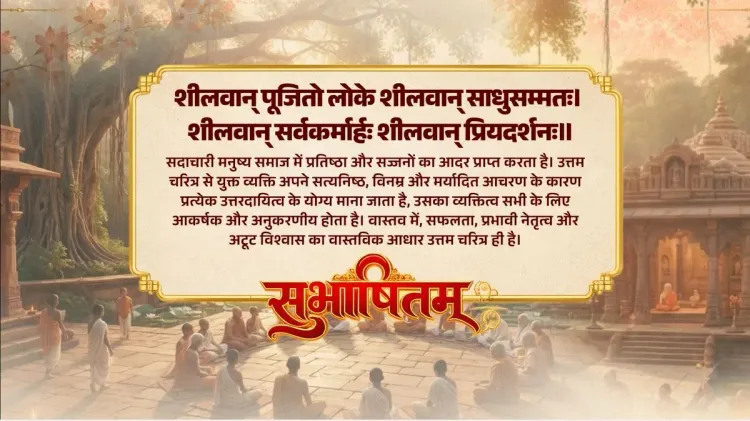
The shloka posted by Prime Minister Modi reads: 'शीलवान् पूजितो लोके, शीलवान् साधुसम्मतः। शीलवान् सर्वकर्मार्हः, शीलवान् प्रियदर्शनः।' Translated, it means: 'A person of noble character is honoured in the world; a person of noble character is respected by the virtuous. A person of noble character is worthy of all deeds; a person of noble character is pleasing to behold.'
The verse centres on the Sanskrit word sheelavaan — one who possesses sheela, meaning moral conduct, virtue, or character. The fourfold repetition is a classical rhetorical device used in Sanskrit poetry to underscore the centrality of a single value.
Context
Prime Minister Modi has maintained a consistent practice of sharing Sanskrit shlokas and philosophical excerpts on social media. These posts draw from classical Indian texts and typically highlight values such as character, conduct, and dharma — ethical duty — without direct policy linkage.
The practice is part of a broader effort by the Prime Minister to integrate India's classical cultural heritage into everyday public discourse, reaching a wide audience through digital platforms.
Policy Backdrop
The emphasis on sheela — moral character — resonates with themes the BJP-led government has repeatedly invoked in its cultural outreach, including the promotion of Sanskrit education and the integration of classical Indian knowledge systems into the National Education Policy (NEP) 2020.
Efforts to revive interest in Sanskrit and classical literature have included government-backed programmes under bodies such as the Rashtriya Sanskrit Sansthan and support for Sanskrit universities across India. The Prime Minister's social media posts serve as an informal but high-visibility extension of this cultural agenda.
Stakeholders and Impact
The post reaches Prime Minister Modi's vast social media following, which spans students, scholars, cultural organisations, and the general public. Sanskrit scholars and educational institutions have previously welcomed such posts as a means of bringing classical literature to a mainstream audience.
For Indian citizens, particularly younger audiences, the Prime Minister's regular engagement with Sanskrit verses serves as an accessible entry point into a literary tradition that formal education alone has struggled to sustain.
What's Next
Observers will watch for follow-up posts or public addresses in which Prime Minister Modi may expand on the theme of ethical conduct and its relevance to governance or civic life. Such verses have, in the past, preceded or accompanied larger speeches on national values and cultural identity.
The consistent cadence of these posts suggests that classical Indian philosophy will remain a visible thread in the Prime Minister's public communication in the months ahead.
Point of View
These posts form a coherent philosophical backdrop that complements the government's formal cultural and education policies.
NationPress
25 Oct 2026
Frequently Asked Questions
What does the Sanskrit shloka posted by PM Modi on 27 July 2026 mean?
The shloka means: 'A person of noble character is honoured in the world; respected by the virtuous; worthy of all deeds; and pleasing to behold.' It centres on the Sanskrit word sheelavaan , meaning one who possesses moral conduct or virtue.
Why does PM Modi post Sanskrit shlokas on X?
Prime Minister Modi has maintained a consistent practice of sharing Sanskrit verses to bring classical Indian philosophy into mainstream public discourse and to highlight values such as character, conduct, and dharma . It also forms part of the government's broader cultural outreach.
What is the meaning of 'sheelavaan' in Sanskrit?
'Sheelavaan' refers to a person who possesses sheela — moral character, virtuous conduct, or good behaviour. In classical Indian texts, sheela is considered one of the highest personal virtues.
Is this Sanskrit shloka from a specific ancient text?
The verse extolling the person of noble character reflects themes common across classical Sanskrit literature, including texts on ethics and conduct. The specific source of this verse was not identified in the post.
What is the government's policy on promoting Sanskrit?
The National Education Policy 2020 includes provisions for promoting Sanskrit and classical Indian languages at school and university levels. Bodies such as the Rashtriya Sanskrit Sansthan support Sanskrit education and research across India .