PM Modi Shares Highlights of Outcome-Driven Australia Visit

Synopsis
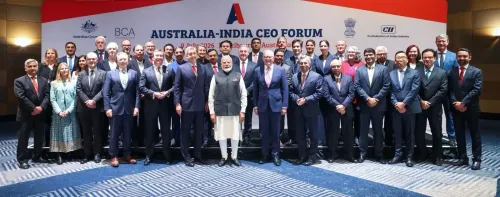
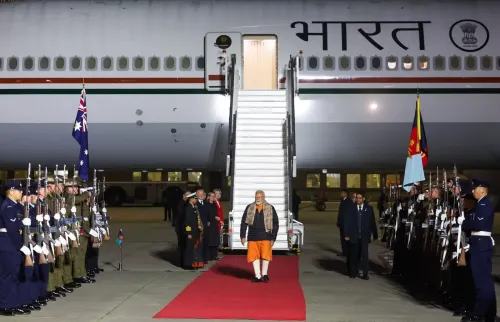
Prime Minister Narendra Modi on 10 July 2026 shared a video recapping his 'outcome-driven' visit to Australia, flagging substantive bilateral outcomes with PM Anthony Albanese across trade, defence, and Indo-Pacific cooperation.
Key Takeaways
PM Modi described his Australia visit as 'highly outcome-driven' in a post on 10 July 2026 , tagging Australian PM Anthony Albanese .
The visit builds on the Comprehensive Strategic Partnership established during Modi's first Australia visit in November 2014 .
The India-Australia ECTA , signed in April 2022 , already covers tariff reductions on over 90 per cent of Indian exports to Australia.
Both nations are Quad members and have deepened defence ties through the Malabar naval exercise since 2020 .
Critical minerals, student mobility, and defence co-production are among the key areas of bilateral focus.
Follow-up on specific agreements and the next Quad Leaders' Summit will be the immediate diplomatic watch points.
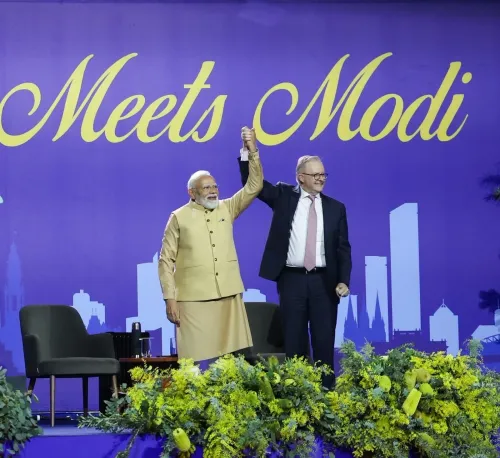
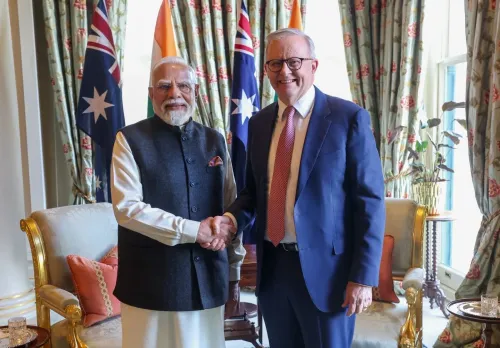
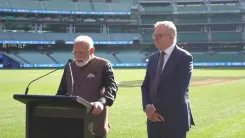
Prime Minister Narendra Modi on Friday, 10 July 2026, shared a video highlighting the key outcomes of his visit to Australia, describing it as a 'highly outcome-driven' engagement with his Australian counterpart, Prime Minister Anthony Albanese. The post, addressed directly to @AlboMP, signals the conclusion of a bilateral visit that built on the two nations' deepening Comprehensive Strategic Partnership.
Context
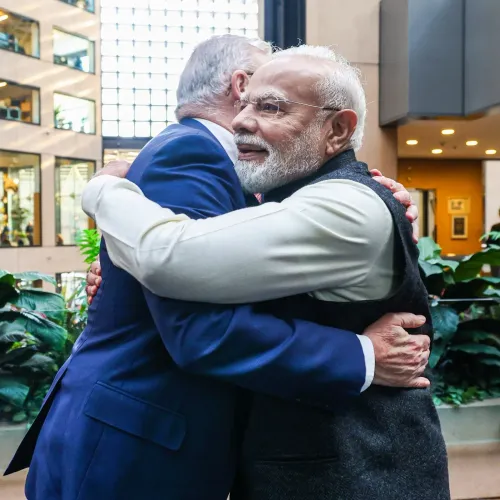
Modi's post, accompanied by a video, encapsulates what Indian diplomatic circles are framing as a substantive bilateral visit rather than a ceremonial one. The phrase 'outcome-driven' is a deliberate signal that tangible deliverables — in trade, defence, or critical minerals — were secured during the engagement. The direct mention of @AlboMP, the official handle of Prime Minister Anthony Albanese, underscores the personal rapport the two leaders have cultivated since Albanese took office in May 2022.
The visit is the latest chapter in a relationship that was elevated to a Comprehensive Strategic Partnership during Modi's landmark November 2014 visit to Australia — the first by an Indian prime minister in nearly three decades. Since then, the two countries have institutionalised ties across multiple tracks, including defence, trade, and education.
Policy Backdrop
The India-Australia Economic Cooperation and Trade Agreement (ECTA), signed in April 2022, reduced tariffs on more than 90 per cent of Indian exports to Australia and remains the bedrock of the commercial relationship. The current visit is expected to build on that foundation, with critical minerals — a sector in which Australia holds global leadership — emerging as a key area of convergence for India's manufacturing and clean-energy ambitions.
On the security side, the two countries have steadily deepened defence cooperation through the annual 2+2 Foreign and Defence Ministers' Dialogue, launched in 2019, and India's inclusion in the Malabar naval exercise alongside Australia from 2020 onward. Both nations are also anchor members of the Quad — the Quadrilateral Security Dialogue with the United States and Japan — which has been revived at summit level since 2021 as a central pillar of Indo-Pacific stability.
Stakeholders and Impact
The visit carries direct implications for several constituencies. Indian exporters stand to benefit from any further tariff rationalisation or market-access commitments. Indian students in Australia — one of the largest cohorts of international students in that country — are a key people-to-people constituency that both governments have pledged to support with clearer visa pathways and post-study work rights.
Defence forces on both sides are watching for announcements on joint exercises, technology transfer, or co-production arrangements that could flow from the visit. More broadly, India's Act East Policy and its Indo-Pacific strategy treat the Australia relationship as a load-bearing pillar, making the outcomes here consequential for the wider regional architecture.
What's Next
Attention will now shift to the formal readouts and joint statements from both governments detailing the specific agreements signed or commitments made during the visit. Any new defence or critical-minerals pacts will be closely tracked by industry and strategic-affairs analysts. The next scheduled Quad Leaders' Summit is also on the diplomatic calendar, and the Modi-Albanese engagement is likely to set the tone for India's broader Indo-Pacific positioning in the months ahead.
Point of View
Positioning it as distinct from high-profile but low-yield diplomatic engagements. It fits a broader pattern in which New Delhi has sought to convert strategic partnerships into bankable deliverables — trade agreements, defence co-production, and critical-minerals supply chains — rather than rely on optics alone. The direct, warm tag to Albanese also reinforces the personal-diplomacy dimension that has become a signature of Modi's foreign-policy style. For India's Indo-Pacific strategy, a substantive Australia visit doubles as a signal to the wider Quad architecture that bilateral relationships within the grouping are being continuously deepened.
NationPress
10 Jul 2026
Frequently Asked Questions
Why did PM Modi visit Australia in July 2026?
PM Modi visited Australia in July 2026 to advance the Comprehensive Strategic Partnership between India and Australia, with the visit described as 'outcome-driven', focusing on trade, defence, critical minerals, and Indo-Pacific cooperation.
What is the India-Australia ECTA?
The India-Australia Economic Cooperation and Trade Agreement (ECTA), signed in April 2022, reduced tariffs on over 90 per cent of Indian exports to Australia and forms the foundation of the two countries' commercial relationship.
What is the Quad and how does Australia fit in?
The Quad, or Quadrilateral Security Dialogue, is a grouping of India, Australia, the United States, and Japan focused on Indo-Pacific stability. It was revived at summit level in 2021 and Australia is a core member alongside India.
What are the key areas of India-Australia cooperation?
Key areas include defence exercises such as the Malabar naval exercise, critical minerals supply chains, trade under the ECTA, education and student mobility, and coordination within the Quad framework.
What happens after PM Modi's Australia visit?
After the visit, attention will focus on formal joint statements detailing agreements signed, follow-up on any new defence or critical-minerals pacts, and the next Quad Leaders' Summit where India-Australia ties will again be central.