PM Modi Thanks President for Wishes, Credits 140 Crore Indians
Synopsis
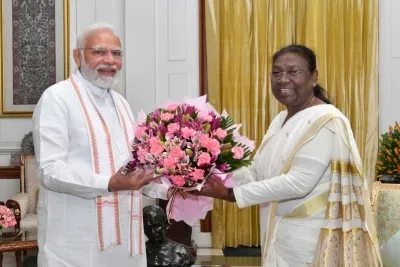
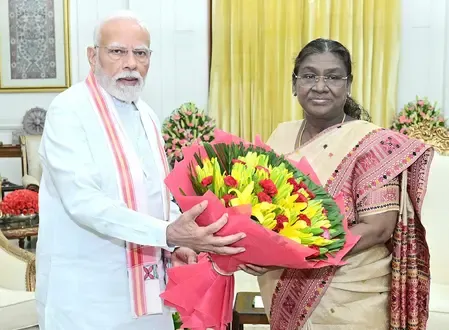
Prime Minister Narendra Modi on June 10, 2026, publicly thanked President Droupadi Murmu on X for her warm wishes, saying the affection and blessings of 140 crore Indians remain his greatest strength and that all achievements belong to the people of India.
Key Takeaways
Prime Minister Narendra Modi publicly responded on June 10, 2026 to wishes extended by the President of India .
PM Modi credited 'the collective efforts and aspirations of the people of India' for all governmental achievements.
He described the affection and blessings of 140 crore Indians as his 'greatest strength'.
The exchange continues a pattern established since 2014 of Modi publicly acknowledging presidential messages on social media.
The specific occasion prompting the President's wishes has not been officially confirmed.
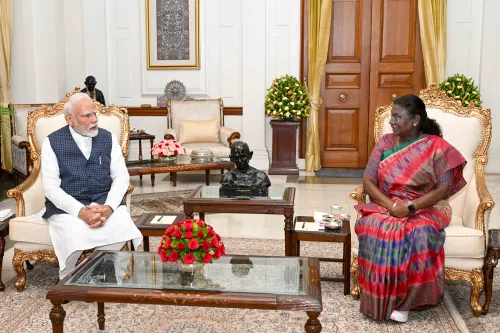
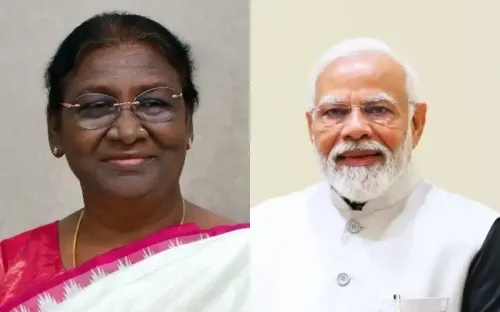
Prime Minister Narendra Modi on Wednesday, June 10, 2026, publicly responded on X to warm wishes extended by President of India Droupadi Murmu, expressing gratitude and attributing all achievements of his government to the collective efforts and aspirations of the Indian people.
In his reply, Prime Minister Modi addressed the President as 'Rashtrapati Ji' and wrote: 'I am grateful to you for your warm wishes and kind words. Whatever has been achieved over the years is the result of the collective efforts and aspirations of the people of India. The affection and blessings of 140 crore Indians are my greatest strength.'
Context
The message from Prime Minister Modi came in response to formal wishes conveyed by the President of India, the constitutional head of state. While the specific occasion prompting the President's message has not been officially confirmed, the exchange follows an established protocol of formal communication between the two highest constitutional offices.
The President of India holds the power to appoint the Prime Minister following elections and traditionally extends wishes on significant governmental or personal milestones. Public acknowledgement of such messages on social media has become a consistent feature of PM Modi's communication style.
Policy Backdrop
Since first assuming office in 2014, Prime Minister Modi has maintained a practice of responding publicly to messages from the President on X — then Twitter — particularly after electoral victories or governmental milestones. This pattern has been consistent across multiple terms in office.
The framing of achievements as a product of 'collective efforts and aspirations of the people' rather than individual leadership is a recurring motif in Modi's public messaging. It reinforces a communication strategy centred on popular legitimacy and direct engagement with citizens, bypassing conventional media intermediaries.
Stakeholders and Impact
The exchange between the two constitutional offices, while ceremonial in tone, carries symbolic weight for Indian citizens — the 140 crore people PM Modi explicitly invoked as the source of his government's mandate and strength. Such public acknowledgements are closely watched by political observers as signals of institutional harmony between the executive and the constitutional presidency.
For the broader public, the message reinforces the government's positioning that policy outcomes are a shared national achievement rather than the result of any single leader's decisions — a framing that has defined BJP's electoral communication since 2014.
What's Next
Attention will now turn to the next session of Parliament, where formal addresses by the President to both Houses typically outline the government's legislative priorities and achievements. Any such address is expected to further elaborate on the milestones that prompted this exchange between the two offices.
Political analysts will also watch whether this public interaction precedes a broader government communication campaign, as the Modi administration has historically used such moments to anchor larger outreach efforts around governance milestones.
Point of View
Politically deliberate in substance. By attributing all achievements to '140 crore Indians,' Modi reinforces the populist legitimacy framework that has anchored BJP's communication strategy across three terms since 2014. The choice to respond publicly on X rather than through official channels alone signals the continued primacy of direct-to-citizen messaging in this administration's playbook. The exchange also projects institutional cordiality between the constitutional presidency and the elected executive at a moment when such optics carry political value.
NationPress
19 Sept 2026
Frequently Asked Questions
Why did PM Modi thank the President of India on X?
PM Modi responded publicly on X to warm wishes extended by President Droupadi Murmu, expressing gratitude and attributing governmental achievements to the people of India.
What did PM Modi say about 140 crore Indians?
PM Modi stated that 'the affection and blessings of 140 crore Indians are my greatest strength,' framing public support as the foundation of his government's work.
What was the occasion for the President's wishes to PM Modi?
The specific occasion has not been officially confirmed; the exchange follows an established pattern of the President extending formal wishes on significant governmental or personal milestones.
How has PM Modi used X to communicate with constitutional authorities?
Since 2014, PM Modi has consistently used X to publicly acknowledge messages from the President, particularly after electoral victories or major governmental milestones.
What does PM Modi's message say about BJP's communication strategy?
The message reflects a long-standing BJP strategy of crediting policy outcomes to collective public effort rather than individual leadership, reinforcing popular legitimacy in executive communication.